Home
About
Links
Hobbycraft
Photos
Downloads
|
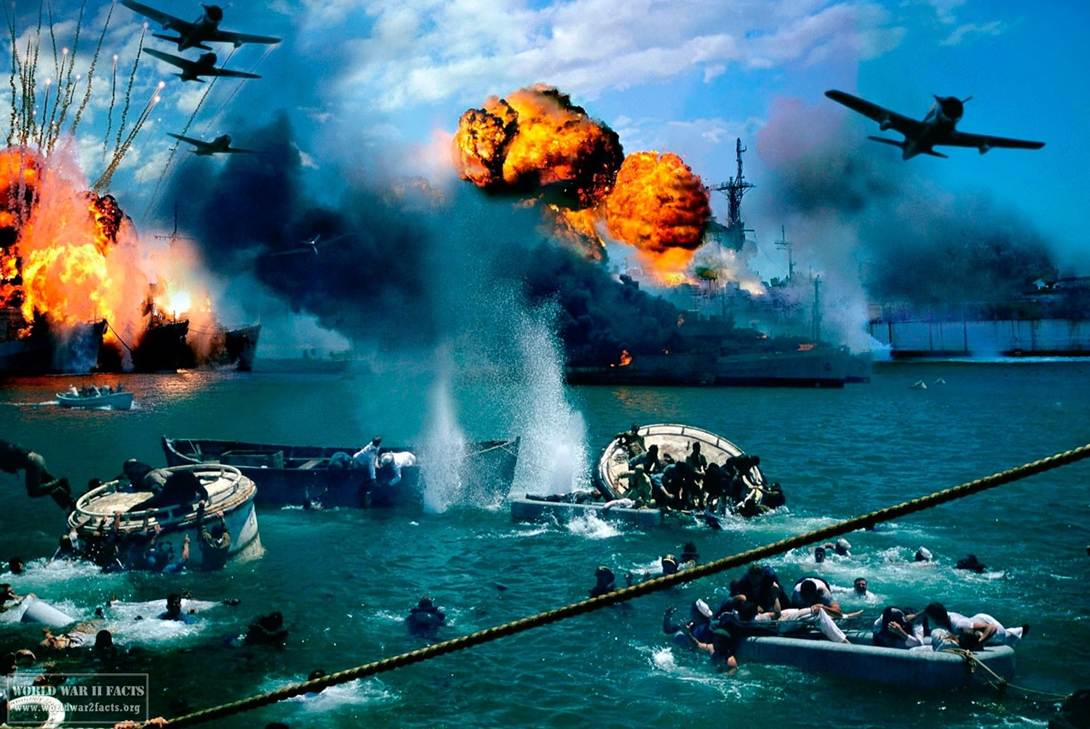
1941 United States entered World war II, On
December 8, the day after Japan
attacked American and British territories in Asia and the Pacific, including
at Pearl Harbor in Hawaii, leading the United States to enter the war against
Japan and Germany.
Japan
conquered much of coastal China and Southeast Asia, but its advances in the
Pacific were halted in June 1942 at the Battle of Midway. In early 1943, Axis
forces were defeated in North Africa and at Stalingrad in the Soviet Union,
and that year their continued defeats on the Eastern Front, an Allied
invasion of Italy, and Allied offensives in the Pacific forced them into
retreat on all fronts. In 1944, the Western Allies invaded France at
Normandy, as the Soviet Union recaptured its pre-war territory and the US
crippled Japan's navy and captured key Pacific islands. The
war in Europe concluded with the liberation of German-occupied territories;
invasions of Germany by the Western Allies and the Soviet Union, which
culminated in the fall of Berlin to Soviet troops soon after Hitler committed
suicide and Germany's unconditional surrender on May 8, 1945. On
August 6 and 9, the US dropped atomic bombs on Hiroshima and Nagasaki in
Japan.
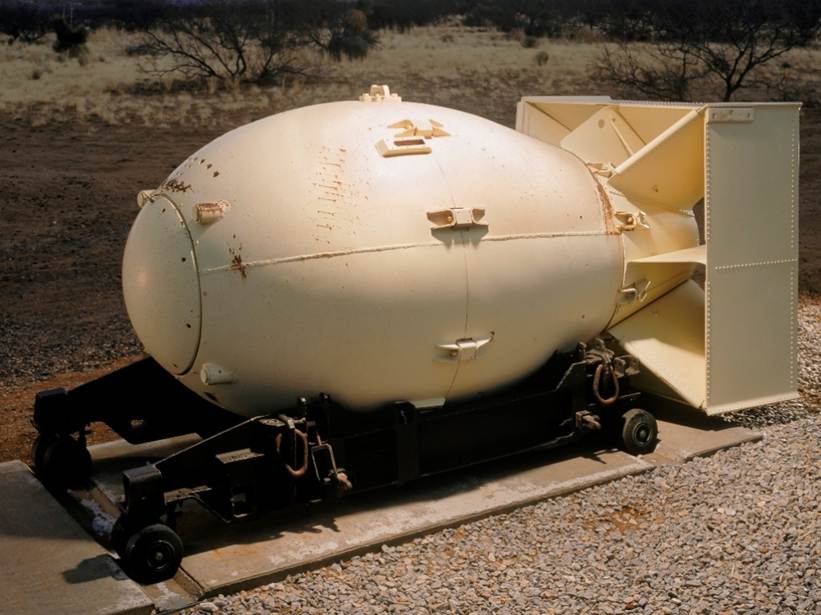
💥 Hiroshima – “Little Boy” ·
Type: Uranium-235
gun-type bomb ·
Weight: ~9,700
pounds ·
Length: ~10 feet ·
Diameter: ~28 inches ·
Explosive yield: ~15
kilotons of TNT ·
Dropped on: August
6, 1945 ·
Immediate deaths:
Estimated 70,000–80,000, with total casualties reaching up to 140,000 by the
end of 1945 💥 Nagasaki
– “Fat Man” ·
Type: Plutonium
implosion-type bomb ·
Weight: ~10,800
pounds ·
Length: ~10.7 feet ·
iameter: ~60 inches ·
Explosive yield: ~21
kilotons of TNT ·
Dropped on: August
9, 1945 ·
Immediate deaths:
Estimated 40,000–75,000, with total casualties reaching up to 80,000
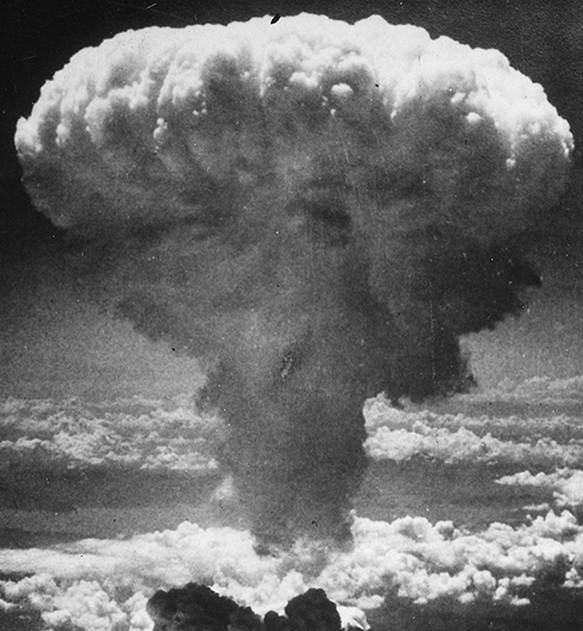
Atomic bomb detonated in Nagasaki Japan
August 6, 1945 These
were the only nuclear weapons ever used in warfare. Their size was dwarfed by
their historical impact—ushering in the nuclear age and prompting Japan’s
surrender just days later. Faced with an imminent Allied invasion, the
prospect of further atomic bombings, and a Soviet declaration of war and
invasion of Manchuria, Japan announced its unconditional surrender on August
15 and signed a surrender document on September 2, 1945. All
territory that had been claimed by Germany was split between the Western and
Eastern Allied countries, and Germany itself was divided likewise. Many other
countries who previously boasted empires lost their own territories in the
years that followed, with the hangover of the Nazi dictatorship leaving bad
associations with colonization. World
War II transformed the political, economic, and social structures of the
world, and established the foundation of international relations for the rest
of the 20th century and into the 21st century. The
United Nations was created to foster international cooperation and prevent
future conflicts, with the victorious great powers—China, France, the Soviet
Union, the UK, and the US—becoming the permanent members of its security
council. The Soviet Union and the US emerged as rival superpowers, setting
the stage for the half-century Cold War. In the wake of Europe's devastation,
the influence of its great powers waned, triggering the decolonization of
Africa and of Asia. Many countries whose industries had been damaged moved
towards economic recovery and expansion. There
can be no real statistical measurement of the human and material cost of
World War II. The money cost to governments involved has been estimated at
more than $1,000,000,000,000 but this figure cannot represent the human
misery, deprivation, and suffering, the dislocation of peoples and of
economic life, or the sheer physical destruction of property that the war
involved.
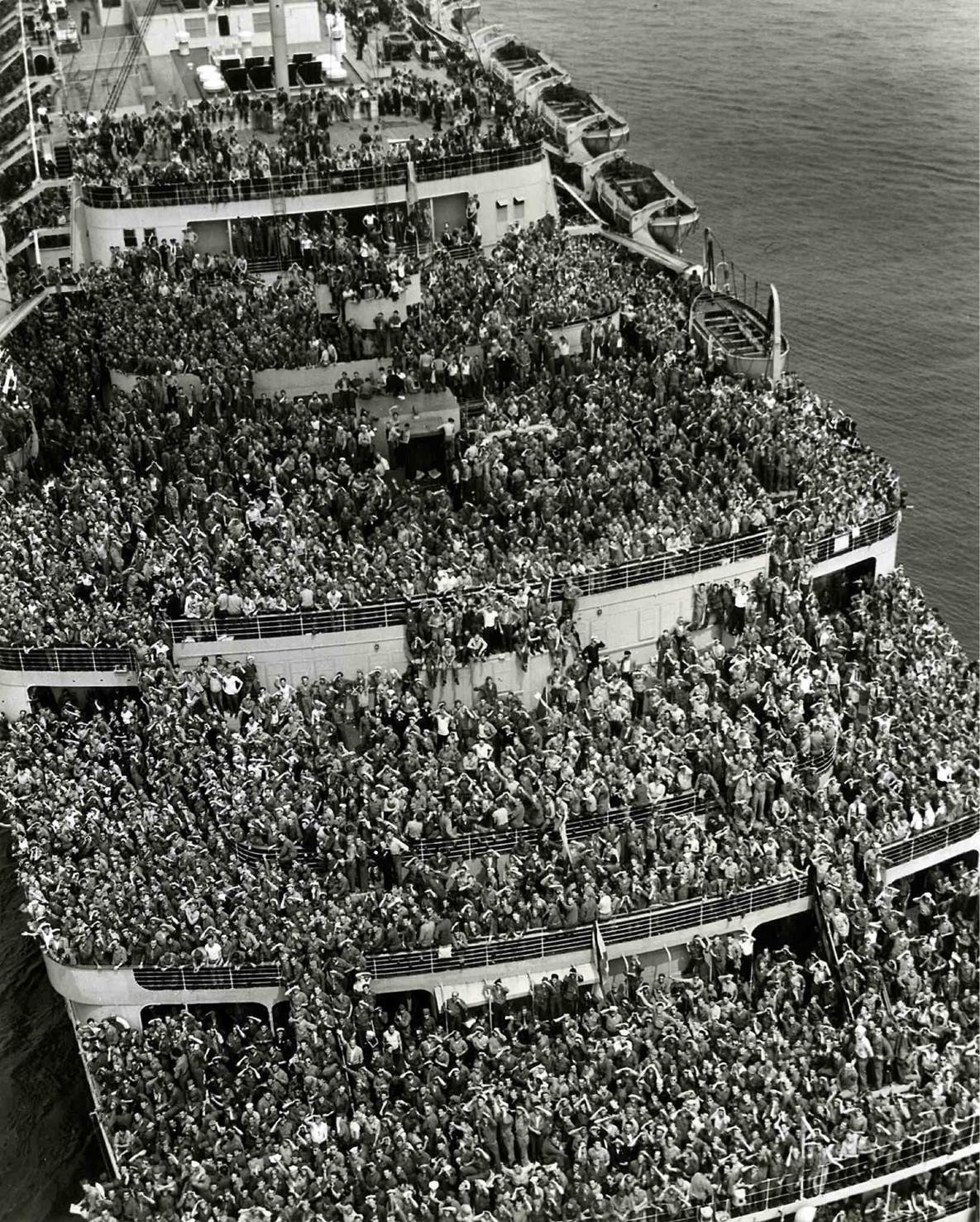
Ocean liner "Queen Elizabeth"
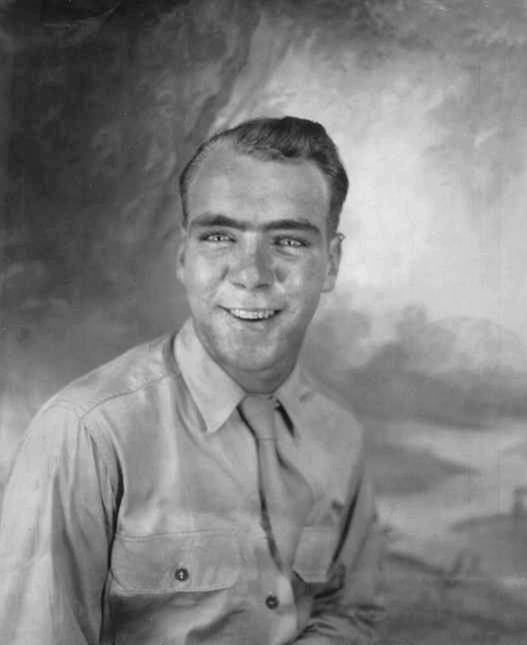
bringing American troops into New York Harbor at the end of WWII, 1945 * * * My brother
Clem (July 2, 1925 – July 26, 1991) served in the Air Force during the war.
He was a tail gunner in a bomber aircraft, tasked with defending
against enemy fighters from the rear. Operating in cramped compartments often
in uncomfortable kneeling positions. There were approximately 18,000 B-17
tail gunners served during the war with around 5,000 casualties. I remember
him talking about being shot down over Germany, and described shrapnel
passing thru where he was moments before bending over to pick up his pencil. |

|
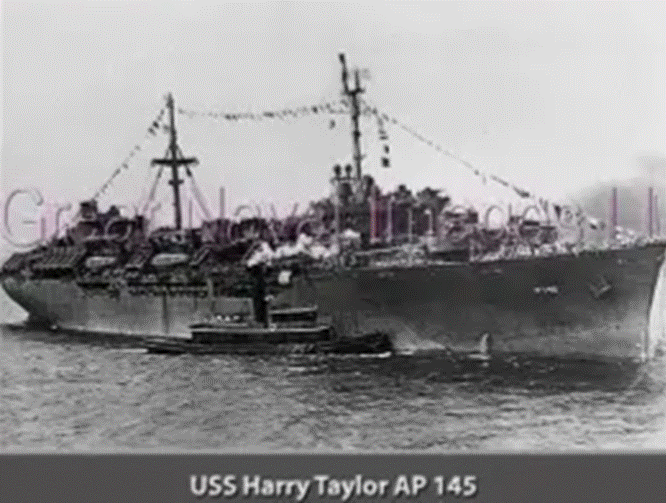
1943 USS
General Harry Taylor transport ship launched, in the United States Navy in World War II
named in honor of U.S. Army Chief of Engineers Harry Taylor. Sailed from San Francisco on 23 June 1944 with troop
reinforcements for Milne Bay, New Guinea. After returning to San Francisco on
3 August with veterans of the Guadalcanal campaign embarked, she continued
transport voyages between San Francisco and island bases in the western
Pacific. During the next 10 months, she steamed to New Guinea, the Solomons,
New Caledonia, the Marianas, the New Hebrides, the Palaus, and the
Philippines, carrying troops and supplies, until 29 June 1945 when she
departed San Francisco for duty in the Atlantic. Decommissioned on 13 June 1946 at Baltimore. She was stricken
from the Navy Register on 3 July 1946. The General Harry Taylor had been part of the US Army Transport
Service (USAT) up until March 1950 when she became part of the Military Sea
Transport Service (MSTS).
Placed in reserve in 1958, she was transferred to the U.S. Air
Force in 1961 and renamed USAFS General Hoyt S. Vandenberg in 1963 in honor
of the former Air Force Chief of Staff. She was reacquired by the U.S. Navy
in 1964 as USNS General Hoyt S. Vandenberg. In 1957, she took part in the Hungarian Relief program,
transporting several thousand refugees of the short-lived Hungarian
Revolution to Australia. She was placed in ready reserve on 19 September
1957; stricken from the Naval Register on 10 July 1958 and transferred back
to the Maritime Administration the same day. She was placed in the National
Defense Reserve Fleet at Beaumont, Texas. General Harry Taylor was then transferred to the U.S. Air Force,
on 15 July 1961, and was renamed USAFS General Hoyt S. Vandenberg on 11 June
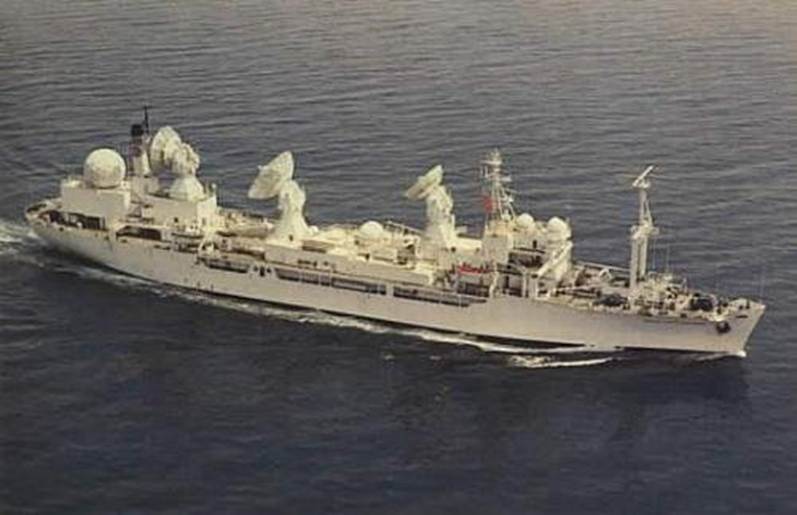
1963. On 1 July 1964, General Hoyt S. Vandenberg was acquired by the
Navy and designated T-AGM-10, as a missile range instrumentation ship, one of
ten such ships transferred from the Commander, Air Force Eastern Test Range,
to MSTS. In 1974 the ship, commanded by Captain Anderson, deployed to Dakar,
Senegal, to participate in the Global Atmospheric Research Program.
After conversion into a missile range instrumentation ship "Equipped with extremely accurate and discriminating radar
and telemetry equipment," she tracked and analyzed "re-entry bodies
in the terminal phase of ballistic missile test flights," carrying out
those missile and spacecraft tracking duties in both Atlantic and Pacific
waters until her retirement in 1983. She was ultimately stricken from the
Naval Vessel Register on 29 April 1993. In 1998, some scenes of the horror/sci-fi film Virus were filmed
aboard the ex-General Hoyt S. Vandenberg. The ship substituted for a
fictional Russian vessel called the Akademik Vladislav Volkov, and some of
the Cyrillic lettering applied for the film is still visible on the hull
today. The ship was transferred to the Maritime Administration on 1 May
1999. Her projected transfer to the state of Florida, for use as an
artificial reef, received approval on 13 February 2007. The ship was sunk 6
miles off the Florida Keys in the Florida Keys National Marine Sanctuary On 12 April 2009, the Vandenberg left the shipyard in Norfolk,
VA and began the long tow to Key West. On 22 April 2009 she arrived in the
Key West Harbor where she was moored at the East Quay Pier. The sinking took
place on Wednesday, 27 May 2009. *
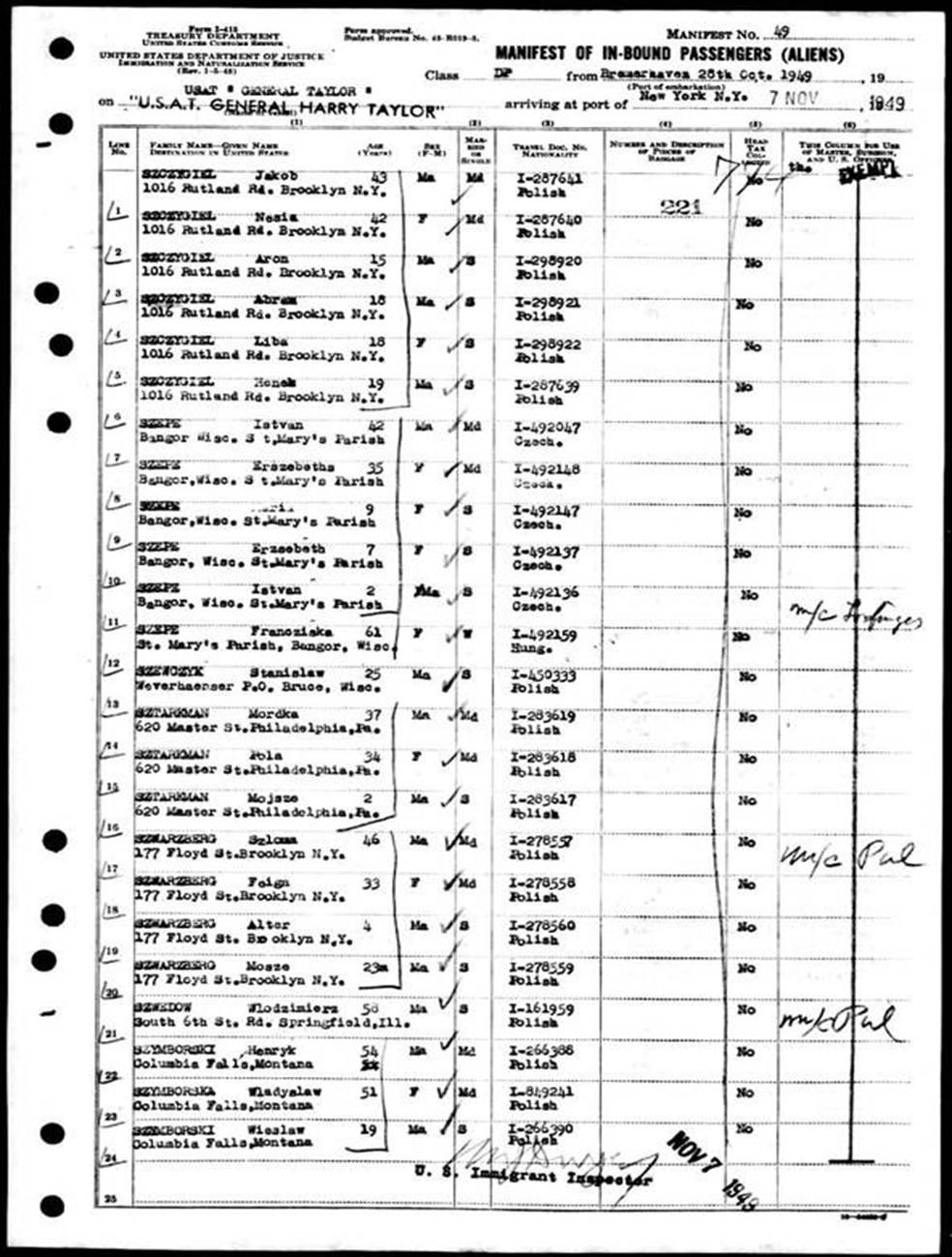
* * Wife Mary’s family took this ship from Bremerhaven Germany to New York October 28 – November 7, 1949
Manifest of in-bound passengers
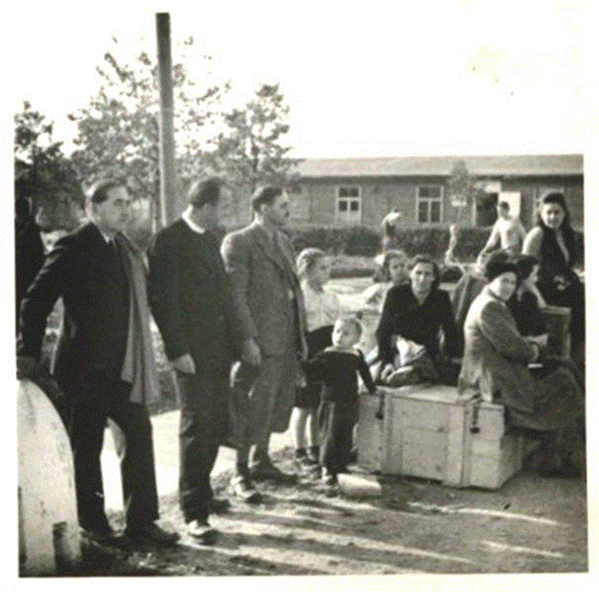
They
had to get inspected, disinfected, given shots, and waited 2 weeks. The women and children in one barracks and
the men in another.
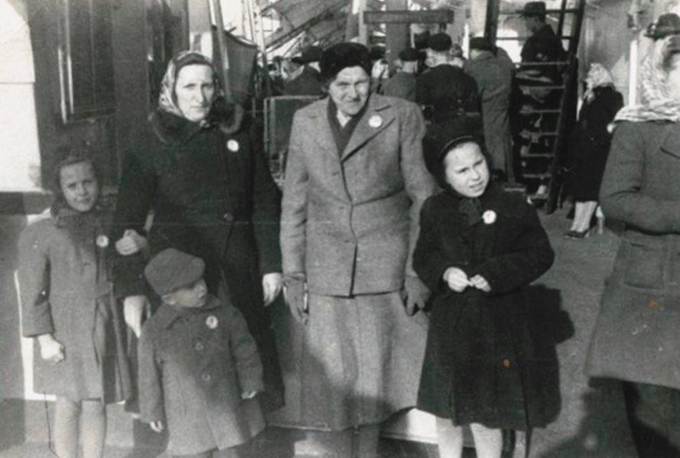
One night Mary (age 9) fell off the upper bunk bed onto the floor and had some bruising on my side. It had to be kept secret to avoid being prevented from sailing. We were loaded onto the USS General Harry Taylor for their trip to New York. Women and children got cabins, single women had quarters on the lower level. Her grandmother was sent to the lower level, but her mother snuck her back to stay with them. They tied scarves to bunk beds to keep them from sliding from side to side. The men were at the back lower part of ship, they had to work swabbing the deck and kitchen work. Most of the passengers were seasick. Lots of food was prepared for Thanksgiving, but few could eat. Daily drills to make sure people knew how and where to go in case of emergency.
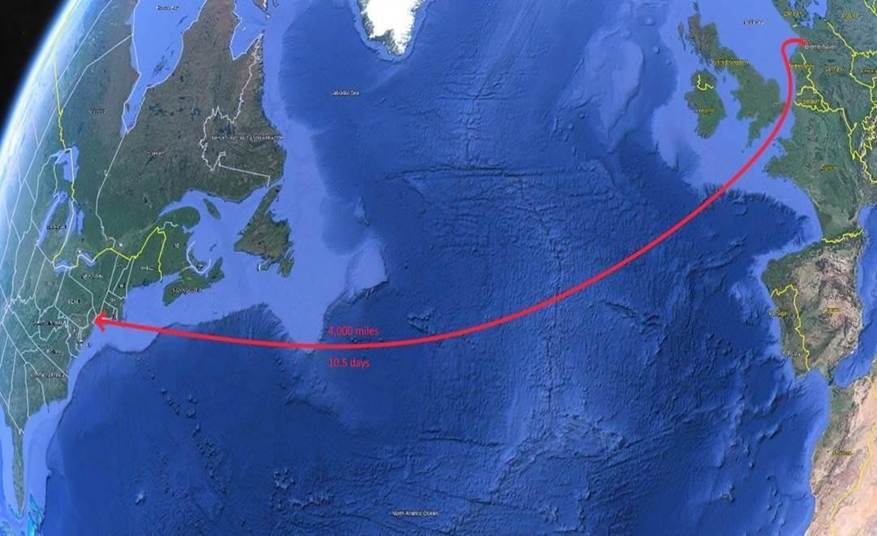
Route from Bremerhaven Germany to New York October 28 –
November 7, 1949
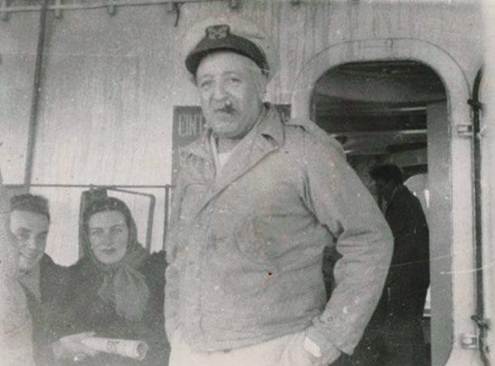
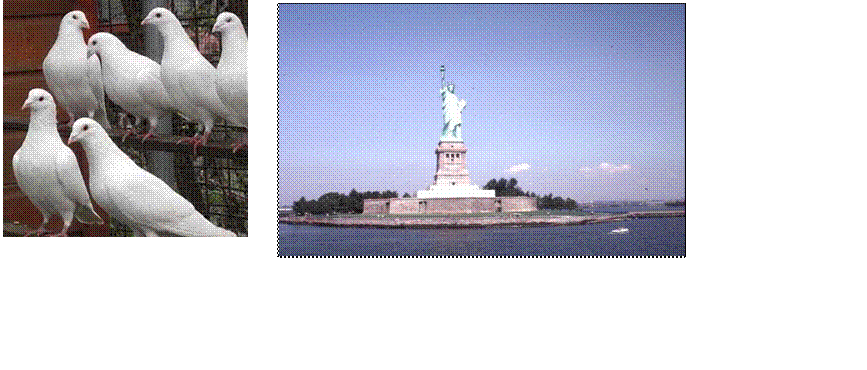
Ship Captain When the ship got close to New York they released carrier pigeons. The method for letting the destination port know that we were arriving.
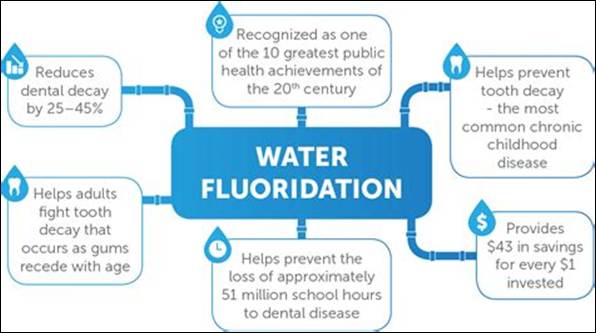
1945 Fluoridation of drinking water,
in the United States began on January 25, Grand Rapids, Michigan2. It was the
first city in the world to add fluoride to its public water supply
specifically to prevent tooth decay. This initiative was part of a long-term
study sponsored by the U.S. Surgeon General and later overseen by the
National Institute of Dental and Craniofacial Research. The results were
striking: over 15 years, the rate of cavities among nearly 30,000
schoolchildren dropped by more than 60%. By 1960, fluoridation had expanded
widely, reaching about 50 million Americans, and it became a cornerstone of
public health policy. In 1999 reaches an estimated 144 million persons in the
United States. Fluoridation safely and inexpensively benefits both children
and adults by effectively preventing tooth decay, regardless of socioeconomic
status or access to care. Fluoridation has played an important role in the
reductions in tooth decay (40%-70% in children) and of tooth loss in adults
(40%-60%) In
the first part of the 20th century, dental caries [dental decay and cavities]
were very prevalent, costly conditions that caused a lot of suffering, and
impacted the entire population. There was a lot of tooth loss in children,
and there were toothaches and abscesses related to extensive dental decay.
The problems left many Americans with no teeth at all.
|