Home
About
Links
Hobbycraft
Photos
Downloads
|
1830 🌍 950 million
|
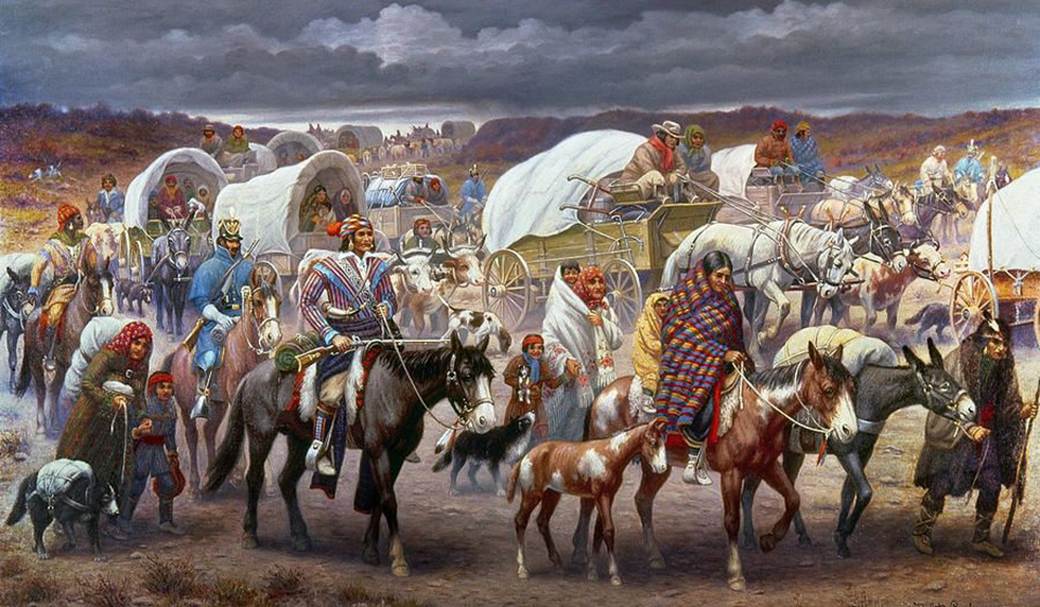

1836 🌍 1 billion
|
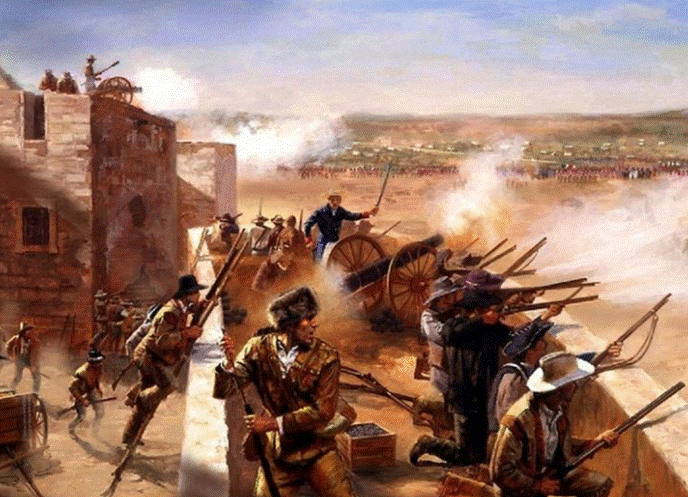
Battle
of the Alamo,
was a pivotal event and military engagement in the Texas Revolution.
Following a 13-day siege, Mexican troops under President General Antonio
López de Santa Anna reclaimed the Alamo Mission near San Antonio de Béxar
(modern-day San Antonio, Texas, United States). About
one hundred Texians, wanting to defy Mexican law and maintain the institution
of chattel slavery in their portion of Coahuila y Tejas by seeking secession
from Mexico, were garrisoned at the mission at the time, with around a
hundred subsequent reinforcements led by eventual Alamo co-commanders James
Bowie and William B. Travis. On
February 23, approximately 1,500 Mexicans marched into San Antonio de Béxar
as the first step in a campaign to retake Texas. In the early morning hours
of March 6, the Mexican Army advanced on the Alamo. After repelling two
attacks, the Texians were unable to fend off a third attack. As Mexican
soldiers scaled the walls, most of the Texian fighters withdrew into interior
buildings. Those who were unable to reach these points were slain by the
Mexican cavalry as they attempted to escape. Almost all of the Texian
inhabitants were killed. Several
noncombatants were sent to Gonzales to spread word of the Texian defeat. The
news sparked both a strong rush to join the Texian army and a panic, known as
"The Runaway Scrape", in which the Texian army, most settlers, and
the government of the new, self-proclaimed but officially unrecognized
Republic of Texas fled eastward toward the U.S. ahead of the advancing
Mexican Army. Santa Anna's execution of surrendering soldiers during the
battle inspired many Texians and Tejanos to join the Texian Army. The Texians
defeated the Mexican Army at the Battle of San Jacinto, on April 21, 1836,
ending the conquering of the Mexican state of Coahuila y Tejas by the newly
formed Republic of Texas.
|

1837
|
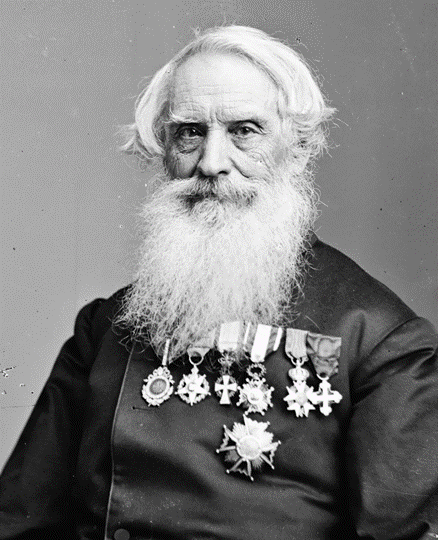
Samuel
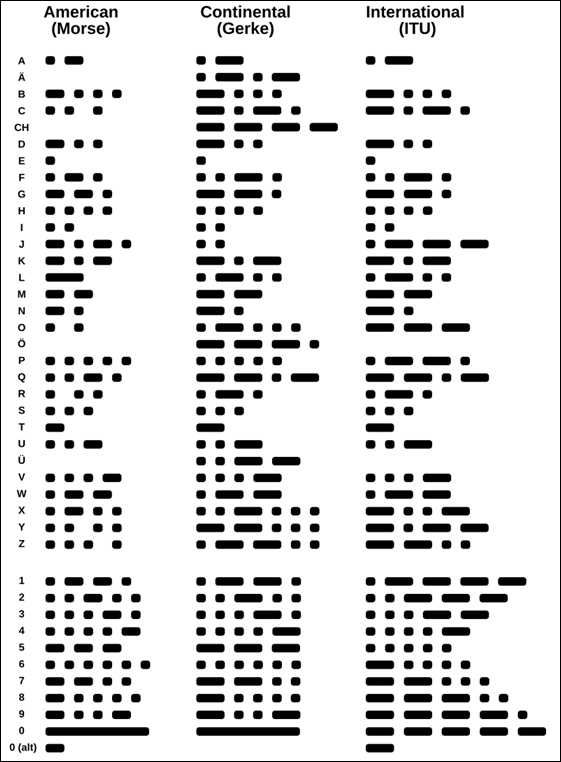
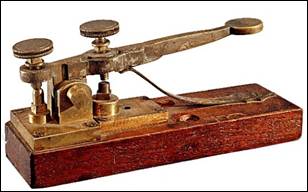
Morse invents Morse code, a telecommunications method which
encodes text characters as standardized sequences of two different signal
durations, called dots and dashes, or dits and dahs. Morse code is named
after Samuel Morse, one of several developers of the code system. Morse's preliminary proposal for a telegraph code was replaced
by an alphabet-based code developed by Alfred Vail, the engineer working with
Morse; it was Vail's version that was used for commercial telegraphy in North
America. Friedrich Gerke was another substantial developer; he simplified
Vail's code to produce the code adopted in Europe, and most of the alphabetic
part of the current international (ITU) "Morse" is copied from
Gerke's revision. The ITU International Morse code encodes the 26 basic Latin
letters A to Z, one accented Latin letter (É), the Indo-Arabic numerals 0 to
9, and a small set of punctuation and messaging procedural signals
(prosigns). There is no distinction between upper and lower case letters Each Morse code symbol is formed by a sequence of dits and dahs.
The dit duration can vary for signal clarity and operator skill, but for any
one message, once the rhythm is established, a half-beat is the basic unit of
time measurement in Morse code. The duration of a dah is three times the
duration of a dit (although some telegraphers deliberately exaggerate the
length of a dah for clearer signaling). Each dit or dah within an encoded
character is followed by a period of signal absence, called a space, equal to
the dit duration. The letters of a word are separated by a space of duration
equal to three dits, and words are separated by a space equal to seven dits. Morse code can be memorized and sent in a form perceptible to
the human senses, e.g. via sound waves or visible light, such that it can be
directly interpreted by persons trained in the skill. Morse code is usually
transmitted by on-off keying of an information-carrying medium such as
electric current, radio waves, visible light, or sound waves. The current or
wave is present during the time period of the dit or dah and absent during
the time between dits and dahs. To increase the efficiency of transmission, Vail designed the
original alphabetic code so that the duration of each symbol was
approximately inverse to the frequency that the character it represents
occurs in typical English text. Unfortunately, in the course of the revisions
that led to the current, international ITU Morse code, the assignment of
codes to characters in a few cases became non-optimal, although many
encodings are: For instance, the most common letter in English, the letter E,
has the shortest code – a single dit. Because the Morse code elements are
specified relatively, by proportion, rather than by a fixed duration, the
code is usually sent at the highest rate that the receiver is capable of
decoding.
Samuel Morse |

1845
|
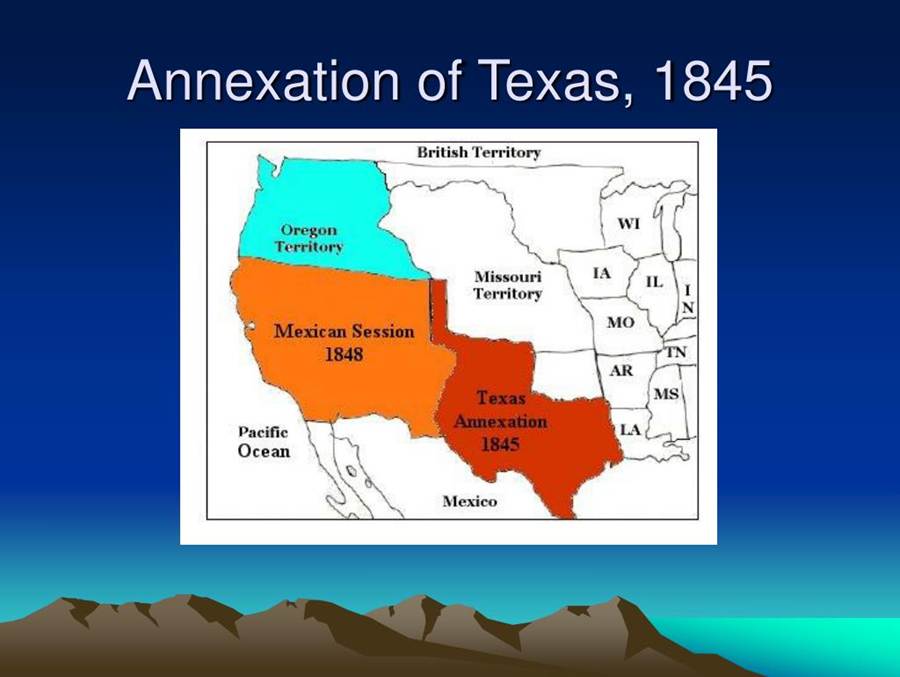
Texas
is annexed, and a dispute over
the area between the Rio Grande and the Nueces River brought about the
Mexican American War. U.S. troops invaded Mexico in February 1847, and
Winfield Scott captured Mexico City on September 14, 1847. In the Treaty of
Guadalupe Hidalgo, signed on February 2, 1848, Mexico gave up its claim to
Texas and also ceded area now in the U.S. states of New Mexico, Utah, Nevada,
Arizona, California, and western Colorado. Texas claimed most of this
additional area but later relinquished it in the Compromise of 1850. The
American Civil War brought disruption to the state. Texas had seceded from
the Union on January 28, 1861. During the war Texans had to defend themselves
from attacks by Native Americans, from Mexican encroachments, and from
federal gunboats and invading soldiers. Federal forces ultimately gained
control of the lower Gulf Coast but were unable to move far inland. When news
of the Emancipation Proclamation freeing slaves finally reached Texas on June
19, 1865, more than two years after Abraham Lincoln had issued the
proclamation—the newly freed slaves immediately began to celebrate with
prayer, feasting, song, and dance, spurring the national holiday known as
Juneteenth.
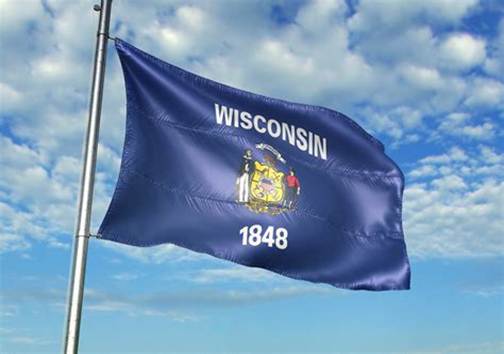
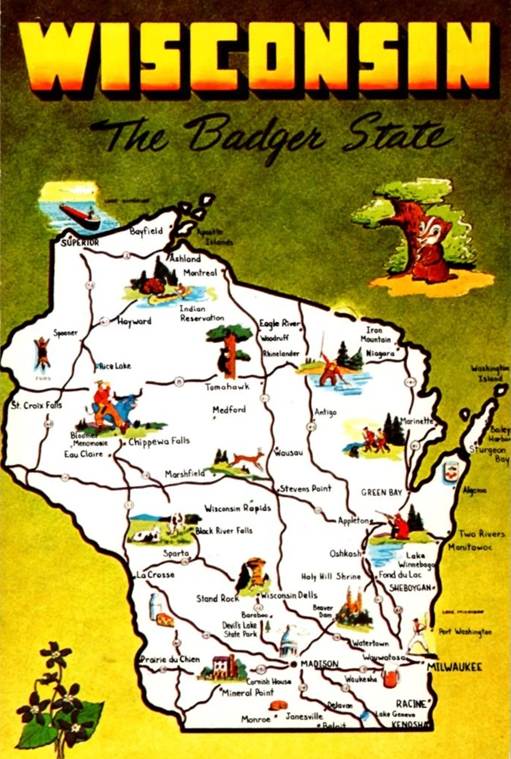
1848 Wisconsin
became a state, it was the 30th state to join the
United States. Wisconsin was originally part of the Northwest Territory,
established after the American Revolution. The territory was created on in
1836, and included present-day Wisconsin, Minnesota, and parts of Iowa, North
and South Dakota. In 1634, French explorer Jean Nicolet landed at Green Bay,
becoming the first European to visit the lake-heavy northern region that
would later become Wisconsin. In 1763, at the conclusion of the French and
Indian Wars, the region, a major center of the American fur trade with Native
American tribes, passed into British control.
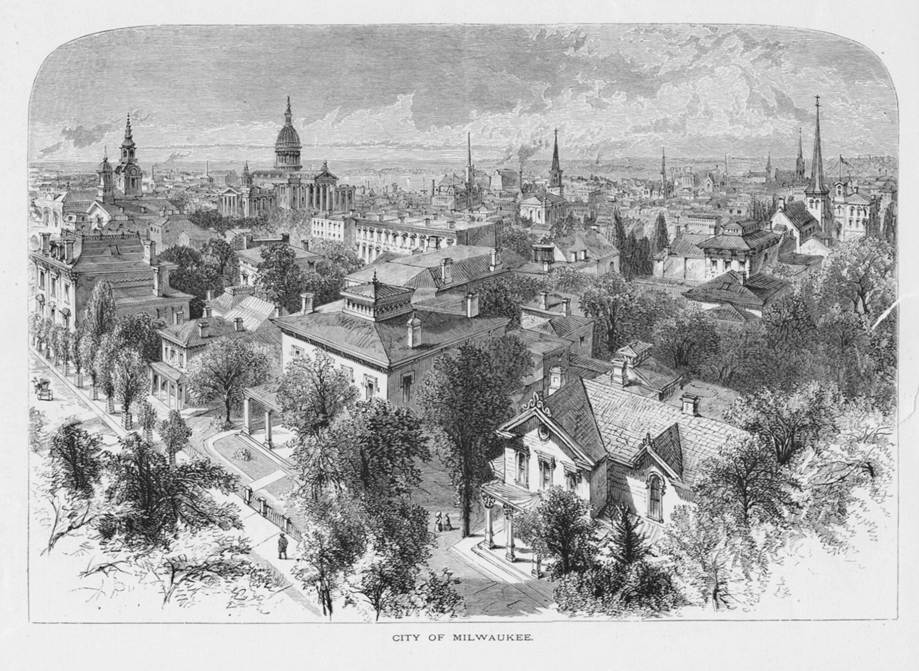
Milwaukee was incorporated as a city in 1846, two years before
Wisconsin became a state. Two decades later, at the end of the American Revolution, the
region came under U.S. rule and was governed as part of the Northwest
Territory. However, British fur traders continued to dominate Wisconsin from
across the Canadian border, and it was not until the end of the War of 1812
that the region fell firmly under American control.
In the first decades of the 19th century, settlers began
arriving via the Erie Canal and the Great Lakes to exploit Wisconsin’s
agricultural potential, and in 1832 the Black Hawk War ended Native American
resistance to white settlement. In 1836, after several decades of governance
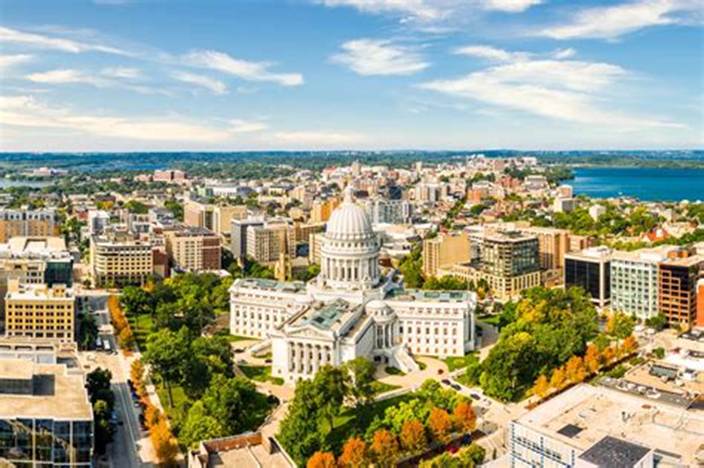
as part of other territories, Wisconsin was made a separate entity. Madison,
located midway between Milwaukee and the western centers of population, was
named the territorial capital.
Madison
|


1849 🌍 1.3 billion
|
California
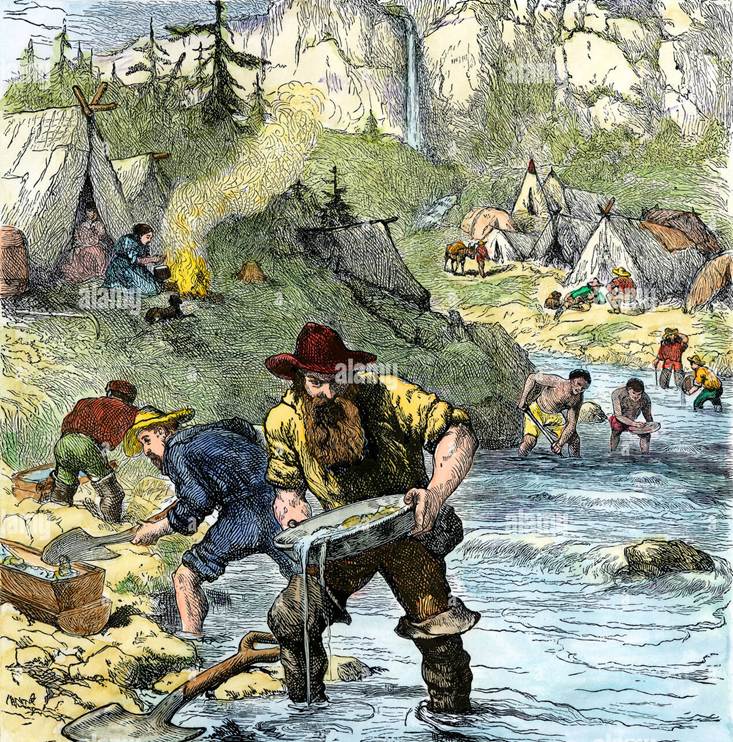
gold rush, when
gold was discovered by James W. Marshall at Sutter's Mill in Coloma,
California. The
news spread quickly, prompting migration from various regions, including Oregon,
Hawaii, and Latin America. Around 25,000 people arrived in California. The
California Gold Rush was a pivotal event in U.S. history, leading to
California's statehood in 1850 and shaping the region's economic and social
landscape. It also had severe consequences for Native American populations,
who faced displacement and decline due to the influx of settlers. The
Gold Rush led to advancements in communication, including the establishment
of the Pony Express and telegraph lines.
1854 Beginning of
Republican party,
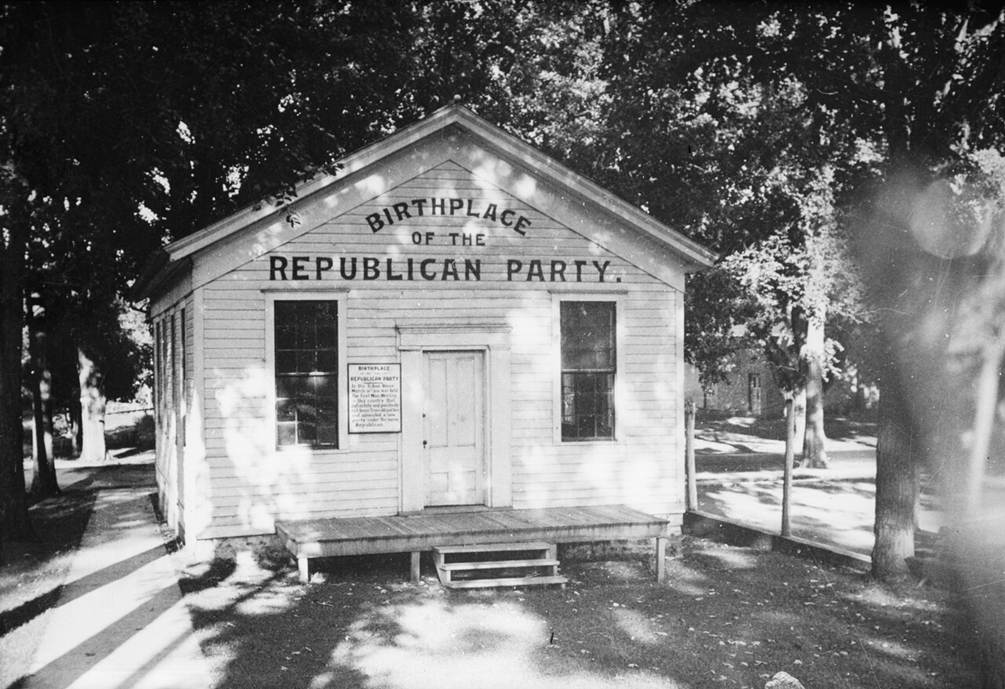
a name for a new anti-slavery party was held in a Ripon, Wisconsin
schoolhouse on March 20. The party opposed the expansion of slavery into new
territories and selected a statewide slate of candidates. The Midwest took
the lead in forming state Republican Party tickets; apart from St. Louis and
areas adjacent to free states, there were no efforts to organize the Party in
the southern states.
Schoolhouse
in Ripon, Wisconsin The
new Republican Party envisioned modernizing the United States, emphasizing
expanded banking, more railroads and factories, and giving free western land
to farmers ("free soil") as opposed to letting slave owners buy up
the best properties. It vigorously argued that free market labor was superior
to slavery and was the very foundation of civic virtue and true
republicanism; this was the "Free Soil, Free Labor, Free Men"
ideology. Without using the term "containment", the Republican
Party in the mid-1850s proposed a system of containing slavery. The
election of Lincoln as president in 1860 opened a new era of Republican
dominance based in the industrial North and agricultural Midwest. The
Republican Party name was christened in an editorial written by New York
newspaper magnate Horace Greeley. Greeley printed in June 1854: "We
should not care much whether those thus united (against slavery) were
designated 'Whig,' 'Free Democrat' or something else; though we think some
simple name like 'Republican' would more fitly designate those who had united
to restore the Union to its true mission of champion and promulgator of
Liberty rather than propagandist of slavery."
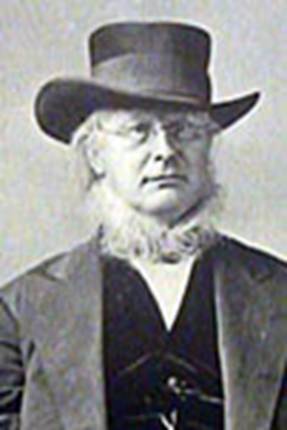
Horace
Greeley Under
Republican congressional leadership, the Thirteenth Amendment to the United
States Constitution—which banned slavery in the United States—passed the
Senate in 1864 and the House in 1865.
1856 John
Wolever (my grandfather) was born, February
3, in Pennsylvania
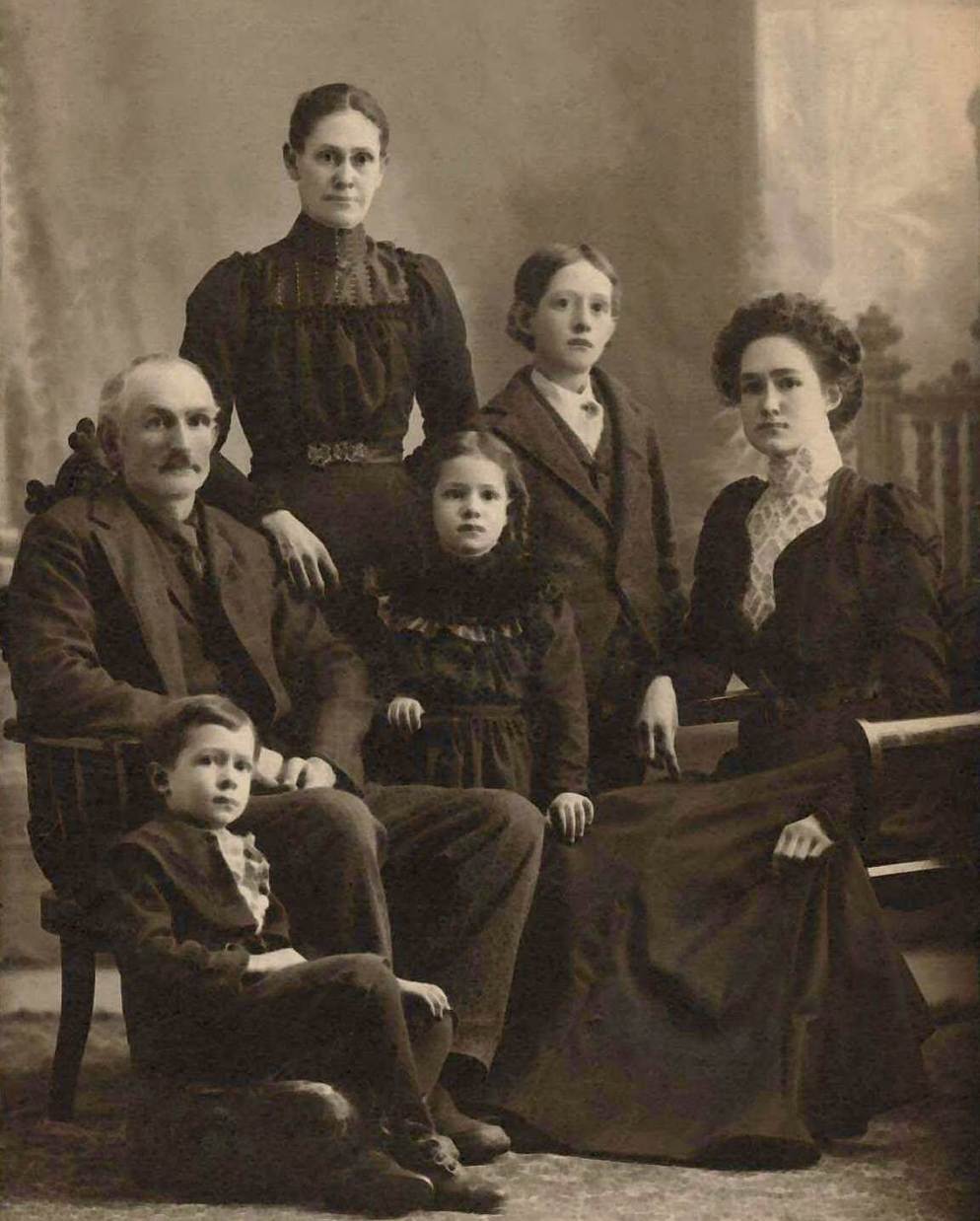
John Wolever (in chair), Mary Katherine Bonderman (wife),
Willis Wolever (son), Alice (daughter), Nell (daughter) center, Harry Mortin
Wolever (son) front
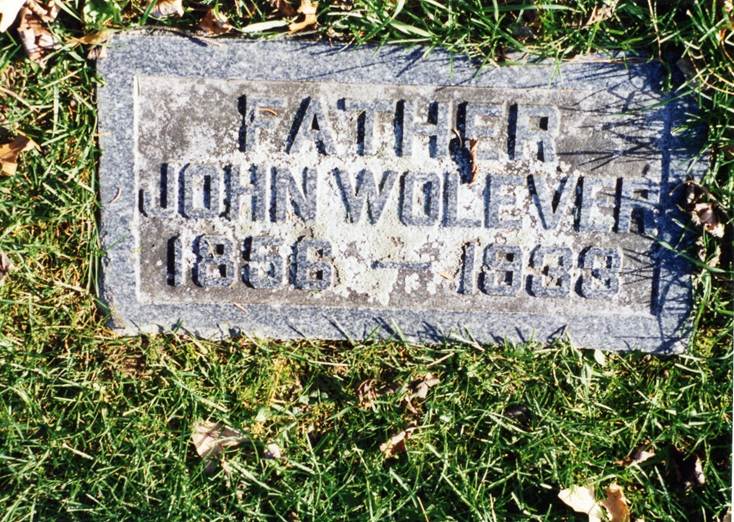
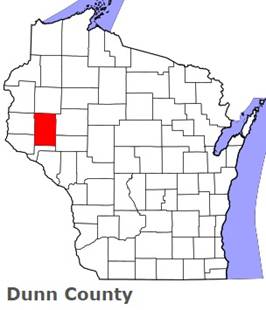
Grandfather John Wolever gravestone at Colfax WI Died Dec 4, 1933 at Dunn county WI
|