Home
About
Links
Hobbycraft
Photos
Downloads
3,300,000 (3.3 million years ago)
|
The Stone Age, the prehistoric cultural stage, or level of human
development, was characterized by the creation and use of stone tools.
Divided into three separate periods—Paleolithic Period (old stone age 3.3
million until about 10,000), Mesolithic Period (middle stone age
20,000-10,000 BC), and Neolithic Period (new stone age 10,000-2,000 BC)—based
on the degree of sophistication in the fashioning and use of tools. |
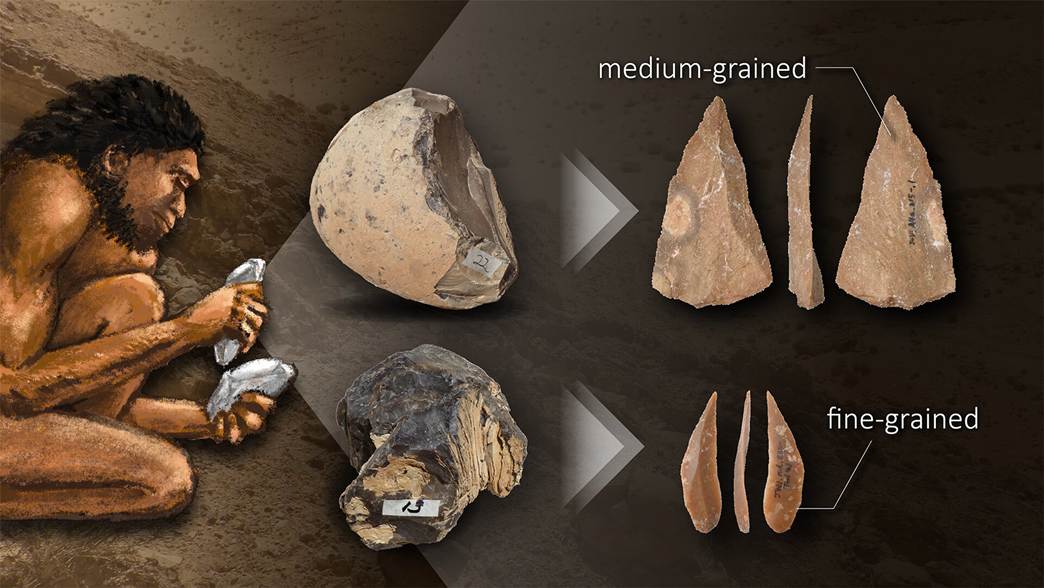
Paleolithic period (3.3
million – 11,700)
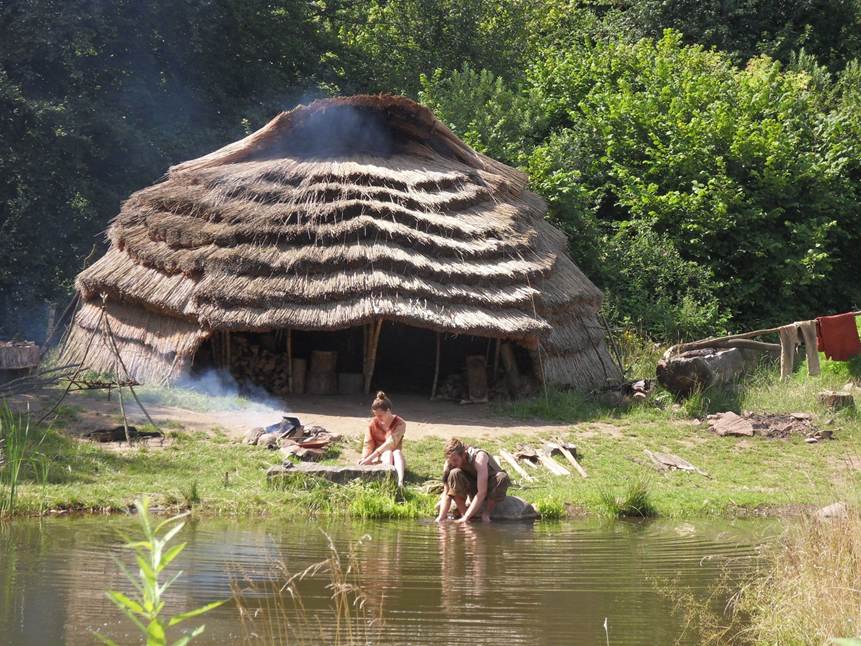
Mesolithic age
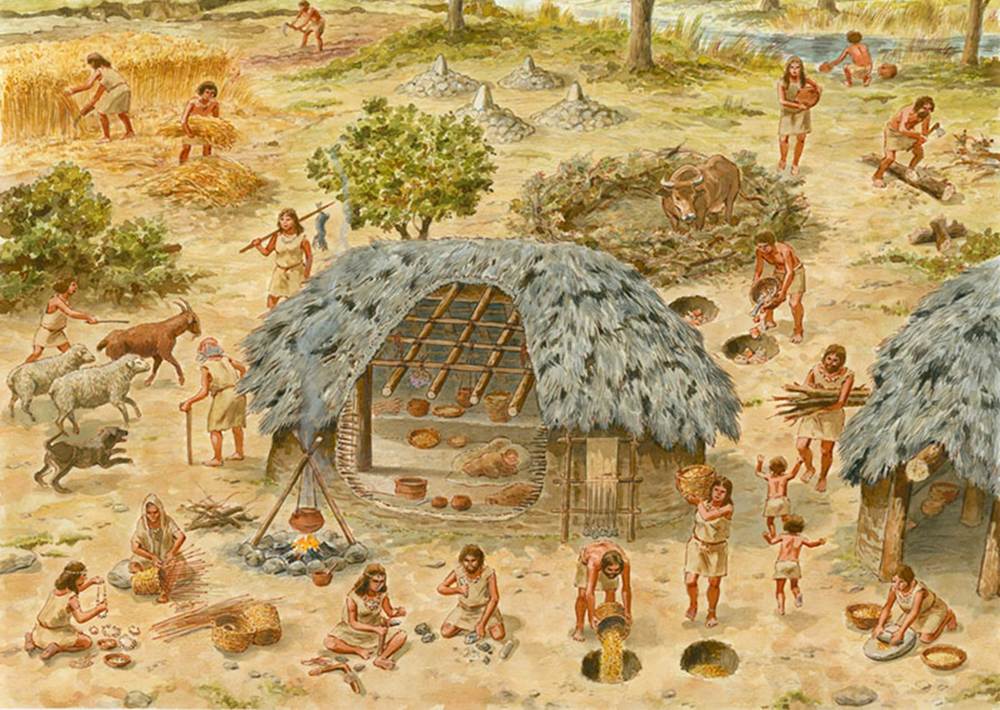
Neolithic age (10,000 –
2,000)
1,500,000
|
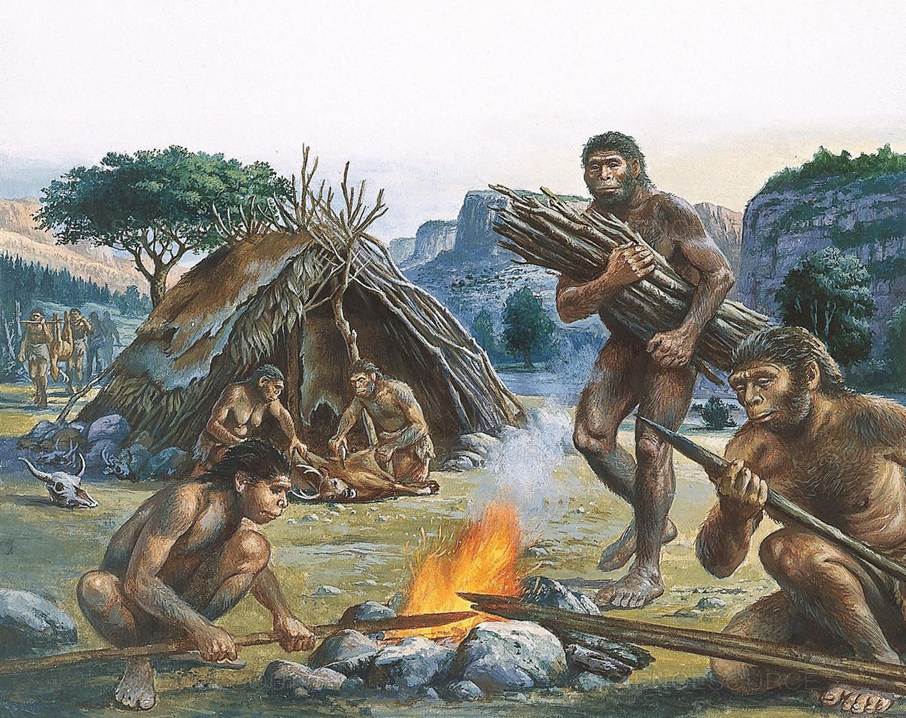
Earliest
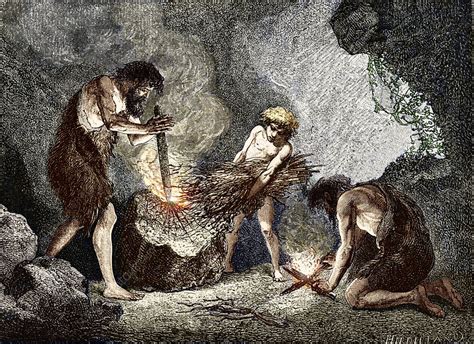
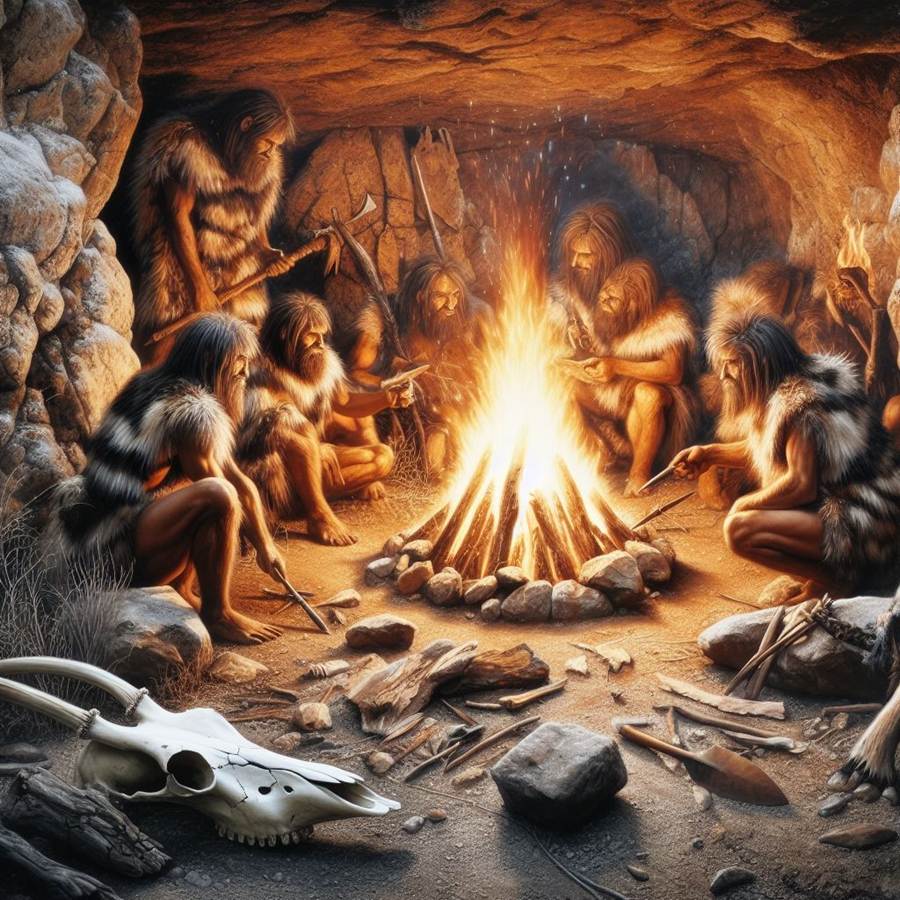
control of fire, by early humans, was a critical technology enabling the evolution of
humans. Fire provided a source of warmth and lighting, protection from
predators (especially at night), a way to create more advanced hunting tools,
and a method for cooking food. These
cultural advances allowed human geographic dispersal, cultural innovations,
and changes to diet and behavior. Additionally, creating fire allowed human
activity to continue into the darker and colder hours of the evening. Three
main components are needed for fire. 1.
There must be a fuel to burn 2.
Oxygen must be available since combustion is essentially an
oxidation process that gives off heat and light 3.
There must be a heat or ignition source that allows the
fire to begin We
would not expect fire on a barren Earth; there must be plant life on land
that can provide a fuel source. And vegetation fires can’t occur until the
oxygen level in the atmosphere has reached around 15%. (It is 21% today.)
This is why we smother a fire with a blanket or sand, pump carbon dioxide on
it, or even flood it with water to extinguish it — to cut off the oxygen. The
main sources of ignition before humans appeared were lightning strikes. The
first stage of human interaction
with fire, perhaps as early as 1.5 million years ago in Africa, is likely to
have been opportunistic. Fire may have simply been conserved by adding fuel,
such as dung that is slow burning. A fire would have been useful not only for
light and warmth at night, but to frighten off predatory animals, and the
smoke would have been effective in keeping insects away. This ability to
“stretch” fire was a novel feat, only developed by humans. The
second stage was to gain the
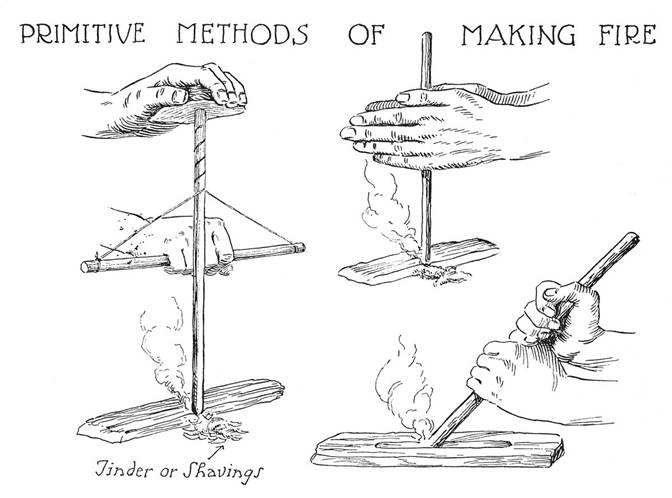
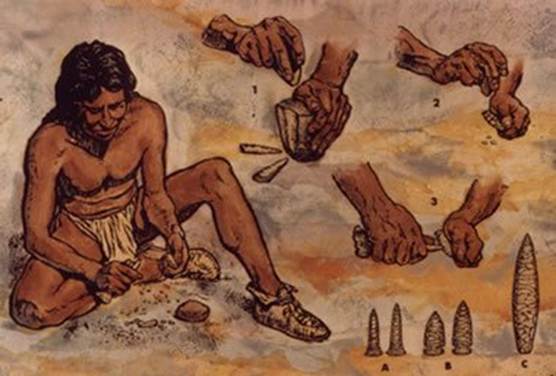
ability to start a fire. The use of flints to start fire may have occurred as
far back as 400,000 years ago, but concrete evidence only comes from as
recently as 40,000 years ago. Archaeologists have yet to ascertain, even in
coarse chronological terms — when in our early prehistory fire became part of
the human tool kit. The discovery of fire by humans as a convoluted process
that took place over a long period of time.
The
third stage, in which humans
began to use and control fire on a regular and widespread basis, may have
started only 7,000 years ago. This may have included the use of fire for land
clearance for agriculture and even for warfare. Besides
taking advantage of these benefits, our ancestors experimented extensively
with fire over thousands of years and grasped the significance of its power
to transform the properties of other materials available in the landscape.
They eventually learned to use fire to improve their weaponry (like heating
flint to improve its knapping quality) and to assemble composite implements
by hafting pointed stone tools onto branches using adhesives prepared with
heat—such as tar and ocher. In addition, cooking food must radically have
transformed the hominin diet, reducing the likelihood of contracting
bacterial diseases and parasites from meat and other foodstuffs, while
opening up innovative pathways toward enlarging the paleo diet (boiling,
smoking, drying, etc.). Later
still, during the Middle and Upper Paleolithic periods, our human
predecessors used firelight to venture into deep cave systems to perform
ritual activities and create art on the cave walls, bringing it to life with
the play of torchlight. Toward the end of the Paleolithic, humans continued
to explore the powerful transformative qualities of fire, eventually learning
to obtain and maintain the high temperatures necessary to transform clay into
pottery and, later, to melt metal ores into usable items that would, once
again, revolutionize the human story.
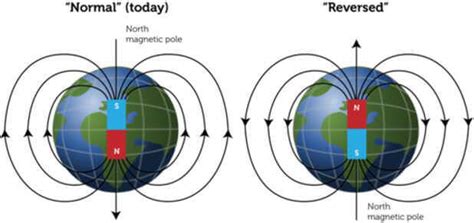
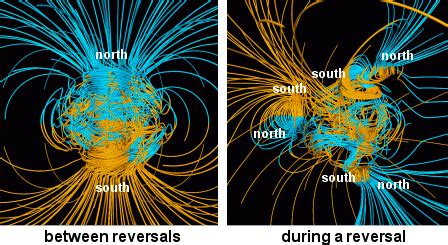
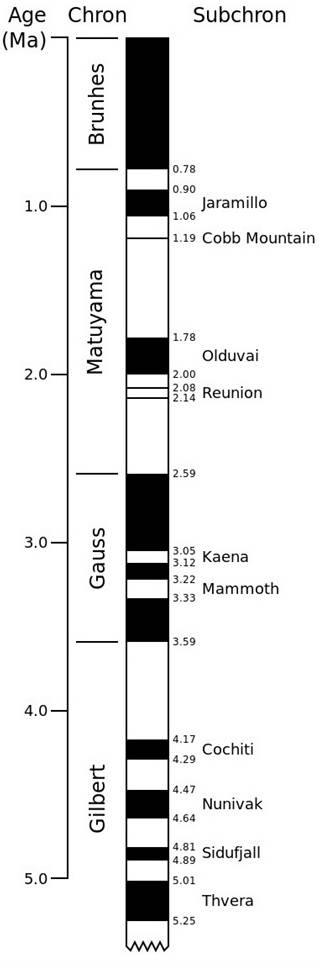
780,000 Geomagnetic reversal, known as the Brunhes reversal, occurred. A magnetic pole reversal, or geomagnetic reversal, occurs when the orientation of Earth's dipole field changes so that magnetic north becomes south and vice versa. This behavior arises from complex fluid motions in the planet's liquid outer core, where the geodynamo continually generates and maintains the global magnetic field.
The process should not be confused with a shift in Earth's rotational or geographic poles, which remain almost unchanged during a magnetic reversal. Instead, the change is purely electromagnetic, altering how compass needles align and how the magnetosphere interacts with charged particles streaming from the Sun. In magnetosphere science, this distinction is crucial because it separates internal field dynamics from the planet's physical orientation in space.
Reversals typically unfold over thousands of years, not decades, making a sudden flip within a human lifetime extremely unlikely. No reliable method exists to forecast the exact timing of a magnetic pole reversal. For everyday life at the surface, the impacts of a magnetic pole reversal would likely be modest. Compasses would gradually point in new directions as the poles migrate, requiring updates in navigation charts and systems that still rely on magnetic bearings. Modern GPS depends on satellite signals and not directly on the magnetic field, so its core functionality would remain intact. There have been at least 183 reversals over the last 83 million years. The latest, the Brunhes reversal, occurred 780,000 years ago Some sources estimate the most recent four reversals took on average 7,000 years to occur.
Historically, geomagnetic reversals have not been linked to major extinction events or significant changes in climate. Fossil records and geological data indicate stability in ecosystems during past reversals. |