Home
About
Links
Hobbycraft
Photos
Downloads
1930
|
George Soros is born, Budapest
Hungary is a Hungarian-born American financier, author, philanthropist, and
activist whose success as an investor made him one of the wealthiest men in
the world. He is also known as a powerful and influential supporter of
liberal social causes. Soros,
who was born into a prosperous Jewish family, had his upbringing disrupted by
the Nazis’ arrival in Hungary in 1944. The family split up and used false
papers to avoid being sent to concentration camps. In 1947 they moved to
London. He joined the London merchant bank Singer & Friedlander. In 1956
he moved to New York City, where he worked initially as an analyst of
European securities. In
1973 Soros established the Soros Fund that subsequently spawned a range
of associated companies. His daring investment decisions caused the funds to
grow rapidly. In
1992 when the British government devalued the pound sterling. Through his
Quantum group of companies, Soros had sold billions
of pounds during the days preceding devaluation, much of it purchased with
borrowed money. Afterward Soros bought back pounds, repaid the money he had
borrowed, and made a profit of about $1 billion. Soros
has been broadly associated with left-leaning and progressive ideas for
decades while his Open Society Foundations have donated to liberal causes. In
the U.S., Soros has been a critic of the war on drugs for decades, supported
same-sex marriage efforts, migrant protections, promoted criminal justice
reform and was a vocal proponent of legalizing medical marijuana, among other
issues. Roseanne
Barr, who spread several conspiracies in a social media frenzy, wrote,
“George Soros is a Nazi who turned in his fellow Jews [to] be murdered in
German concentration camps and stole their wealth.” Theories
spread on social media over the last decade have claimed Soros funded
protests after Trump’s 2016 election, Black Lives Matter protests in 2016 and
in 2020 and pro-Palestinian demonstrations on college campuses, other
theories allege Soros operated antifa. Open Society Foundations do fund
organizations that often participate in such protests.
|


|
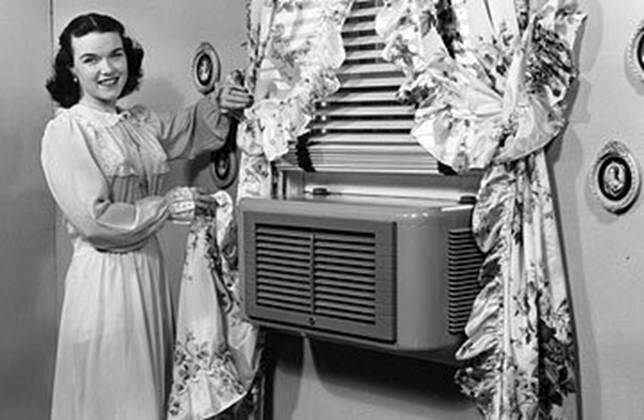
1931 Window air conditioners invented, the
design revolutionized home climate control by fitting an air conditioning
system into a compact unit designed for placement in a standard window frame.
The innovation made efficient cooling accessible for residential and small
commercial settings. Units
were initially costly—up to $10,000 (over $125,000 today after inflation)—so
adoption was limited to the wealthy. However, the promise of home comfort
sparked public interest, leading to rapid advancements and competition among
manufacturers.
|

|
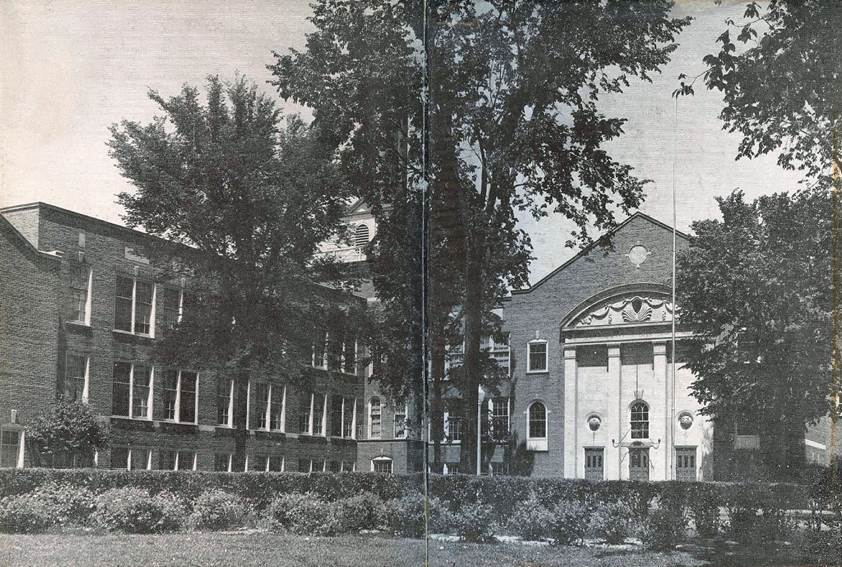
1933 Plymouth
High School opens at a
cost of $265,000.
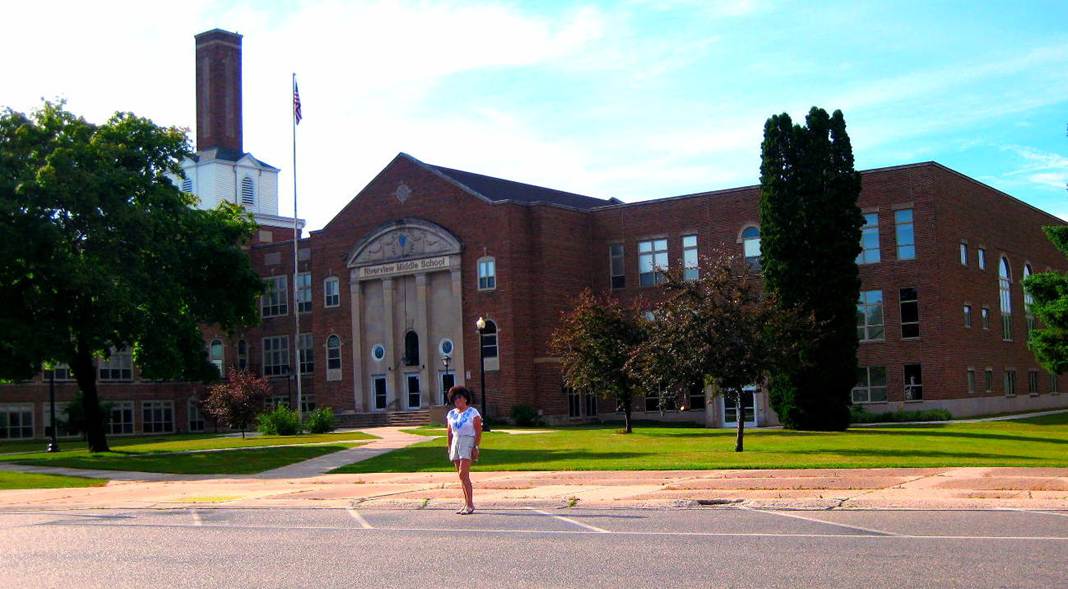
This is where I went to high school (Fall of 1954-Spring of
1958, Mary was one year later.
My Sr yearbook picture
Taken 2016, Mary at old high school later converted to middle
school More information on my website at: http://vernonite.com/photos.places1.wisconsin.plymouth1.phs.html Includes my 1958 yearbook (find link below diploma).
1934 Poynette Game farm beginning, the
state of Wisconsin purchased 500 acres of land for the raising and studying
of pheasants and other animals and named the new site the Wisconsin State
Experimental Game and Fur Farm. In 1938, the Works Progress Administration (WPA) began
renovating existing structures and adding new facilities to the Farm. Some of
these facilities included much-needed storage facilities like a 75-foot barn,
refrigeration facilities, slaughterhouses, and new pens for animals like
raccoons. WPA carpenters also constructed a sawmill for use in future
projects undertaken by the WPA in the future of the site. The WPA also
constructed a residence building to be used by the farm manager, with an
adjoining lecture hall. A transformer building was constructed on the property to hold
the farm’s main electrical grid. The project cost a total of $84,928 split
between funds from the WPA and a sponsor. The WPA donated a total of $50,131
on the project, while the sponsor spent $34,797. An average of 62 workers
worked on the project during its 5 years from 1936
to 1941. The completion of the project enabled the Conservation Department to
“more than double” the annual production of game bird chucks for release
throughout Wisconsin, as taken from the 1938 Biennial Report to the State
Conservation Commission. Because of the farm’s new facilities, game and animal stocking
were positively impacted in the local community and
around the state, seeing an increase in recreational hunting. The farm and
adjoining MacKenzie Center served (and still serve) as a beacon of
conservation efforts, with many tourists and prospective conservationists.
The farm educates visitors on the importance of conservation and other works
of nature. The farm was often a destination spot, with classes winning field
trips to go visit. The WPA also sent workers to manage the farm, although by
the end of the New Deal, their numbers dwindled. The farm was eventually
closed as a separate entity and conjoined with the MacKenzie Center (which is
located right next to the farm), which is how it now operates today. The goals of the State Game Farm and the pheasant stocking
program are to provide quality pheasant hunting opportunities on public and
private lands, promote safe and ethical behavior in the field, and cooperate
with conservation groups dedicated to promoting pheasant hunting in the
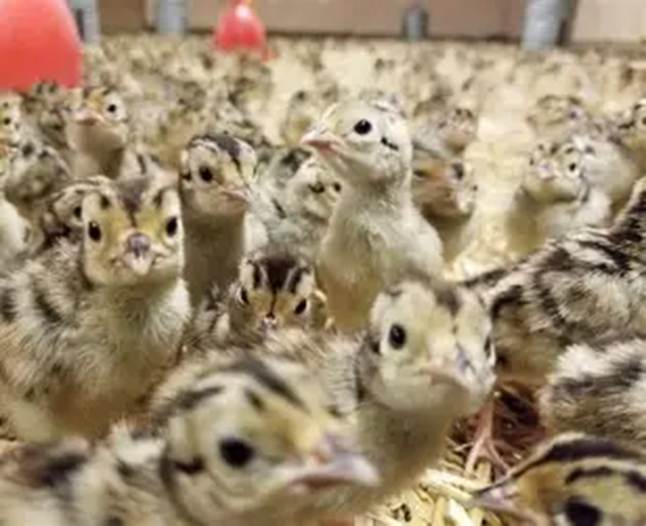
state. There are a number of programs the DNR uses to accomplish these goals. All ring-necked pheasants the DNR provides are produced at the
State Game Farm. Approximately 300,000 eggs are incubated during the pheasant
production season. Weekly hatches occur from early April through mid July. At the end of the hatching season,
approximately 230,000 chicks will be hatched. Many of these chicks will be
reared on the State Game Farm, with some going to conservation clubs
participating in the Day-old Chick program. Hen chicks are also available for
sale to the public.
*
* *
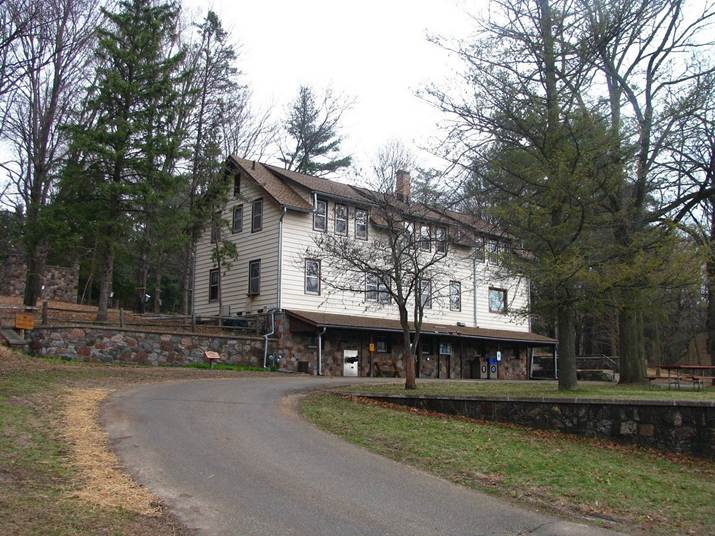
Where John and Liz Semo and family lived
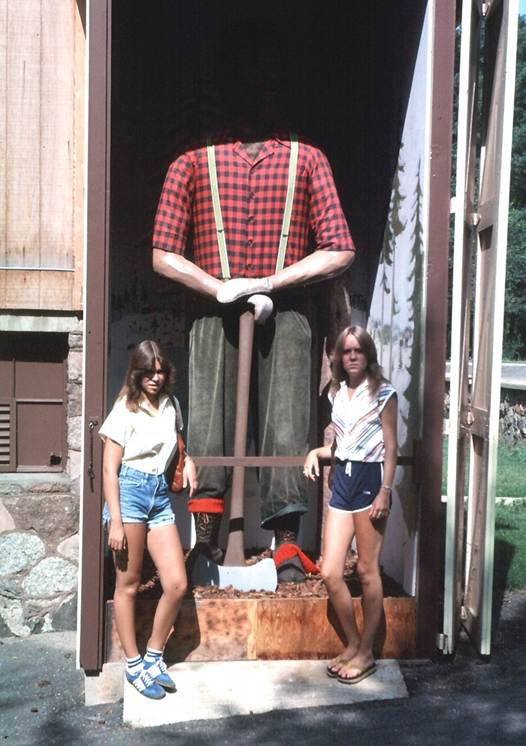
Cathy Church and friend
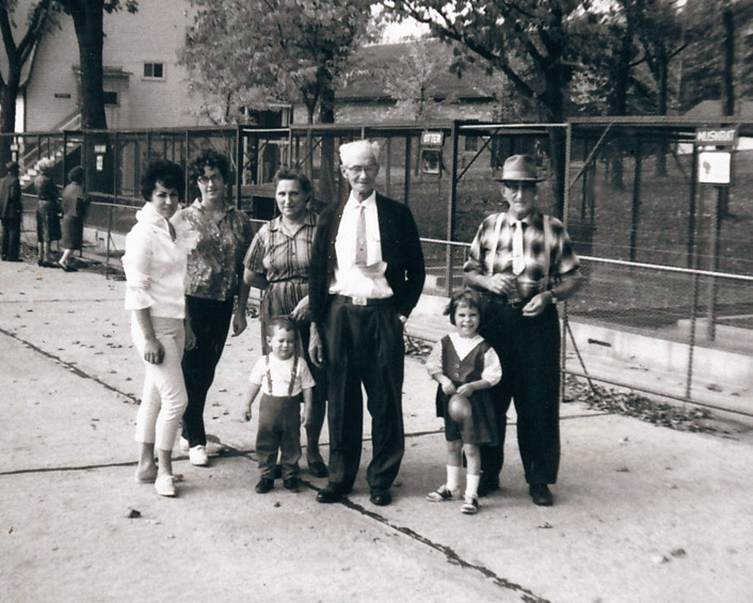
(kids) Bob and Cathy Wolever Mary Wolever, Liz Semo, Elizabeth Szepe, Harry Wolever, Willis
Wolever
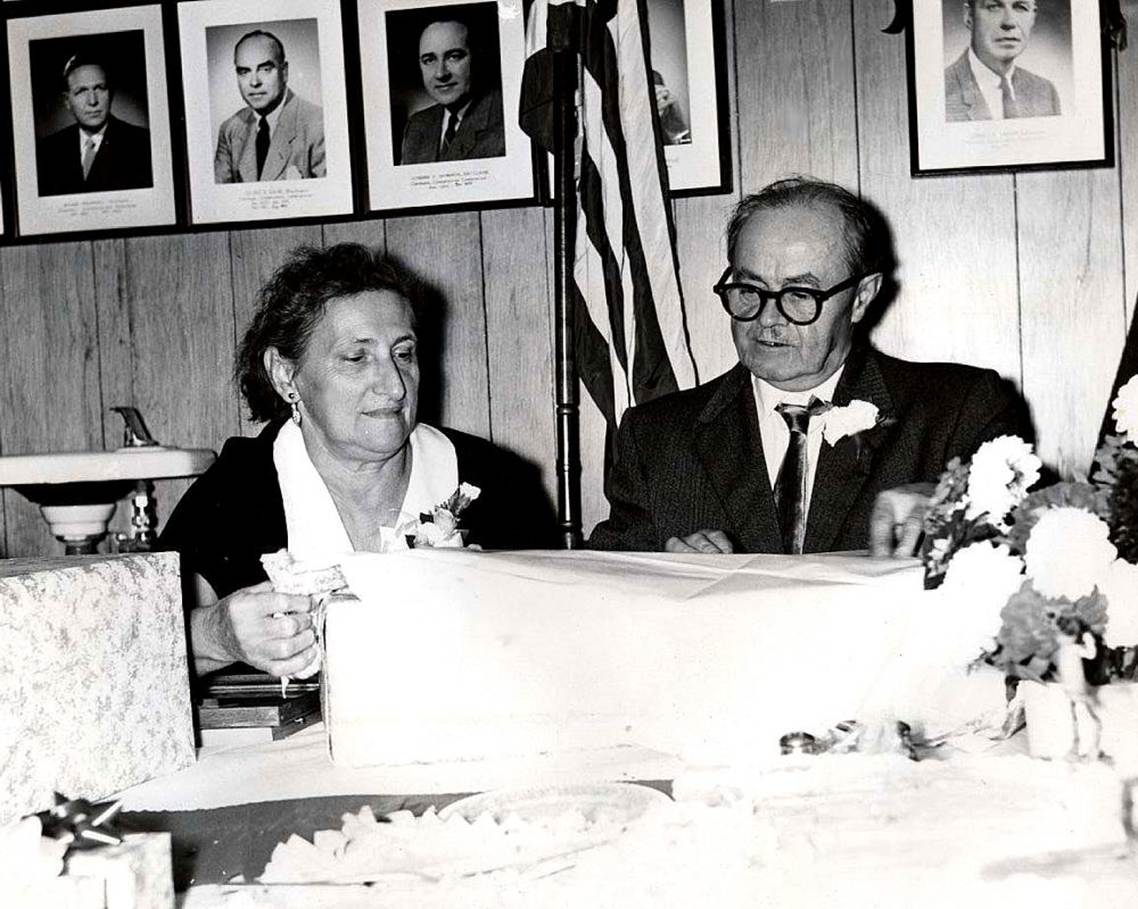
Elizabeth and Steve Szepe at his retirement
from The Poynette Game Farm
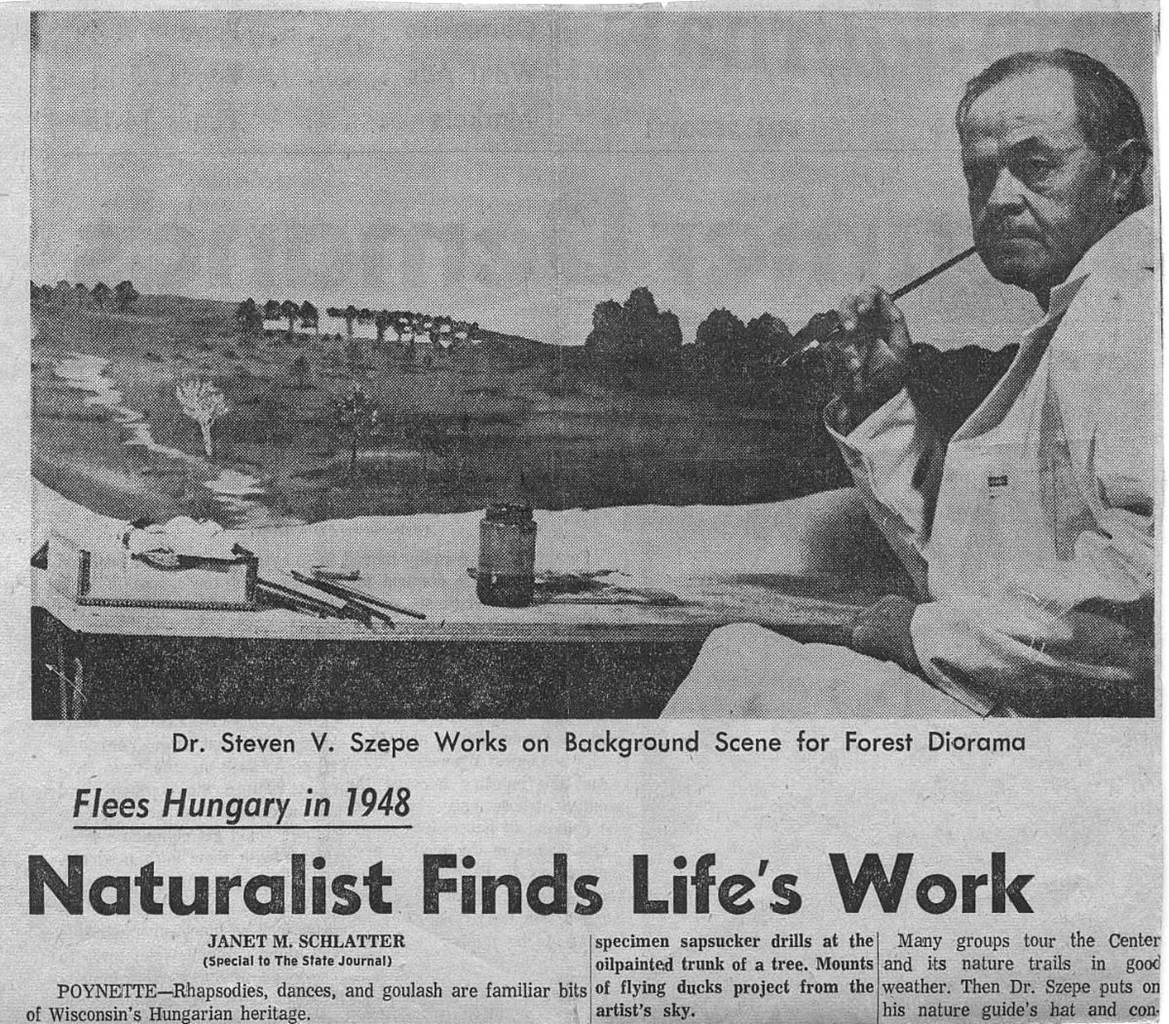
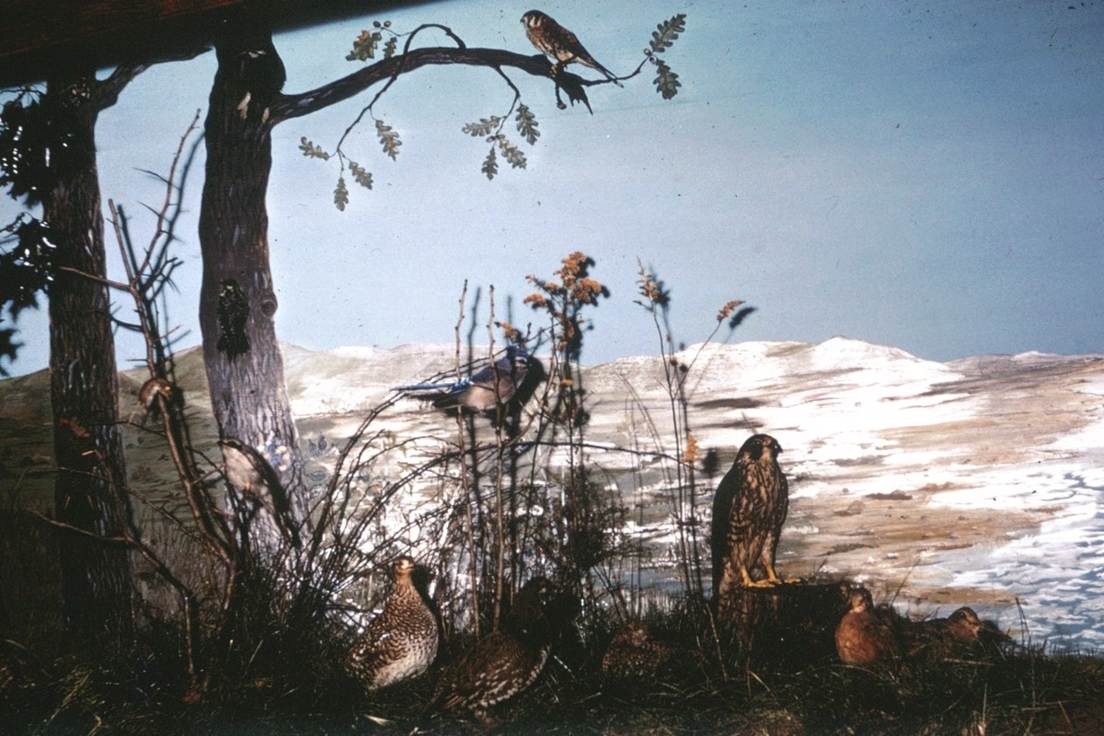
Scene from museum, painted by Steve Szepe
Conservation center museum – painted by Steve Szepe |