Home
About
Links
Hobbycraft
Photos
Downloads
|
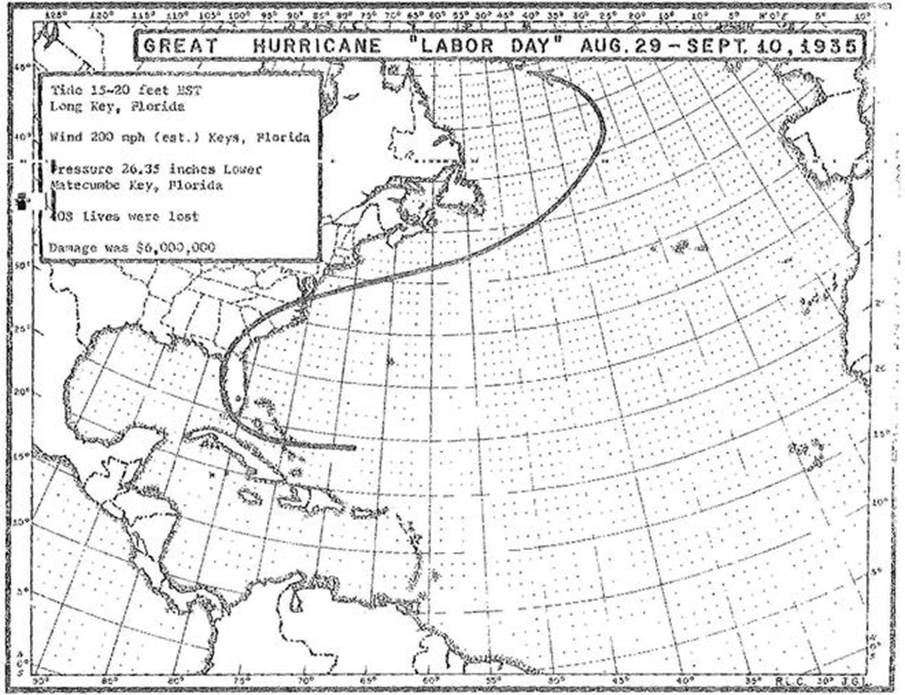
1935 Hurricane “Labor Day” was an extremely powerful and devastating Atlantic hurricane that struck the southeastern United States. The most intense tropical cyclone known to make landfall in the Western Hemisphere, having the lowest sea level pressure ever officially recorded on land—a central pressure of 892 millibars (26.3 inHg)—suggesting an intensity of between 186 and 189 mph. It struck Florida and lasted for 10 days—from September 1 to September 10, 1935.
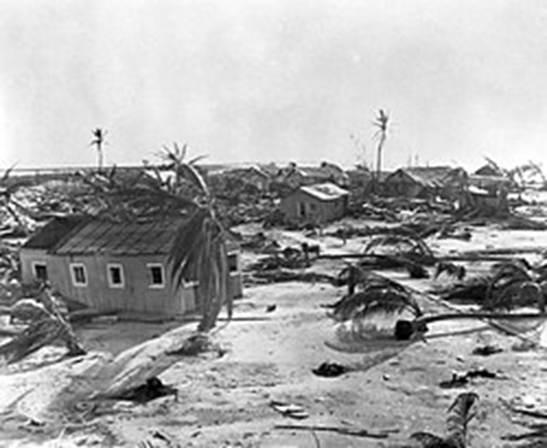
In the Upper Florida Keys, the hurricane left a path of near-total destruction, centered on what is today the village of Islamorada, although the hurricane's destructive path was narrower than most tropical cyclones. Its eye was 8 mi across and the fiercest winds extended 20 mi off the center.
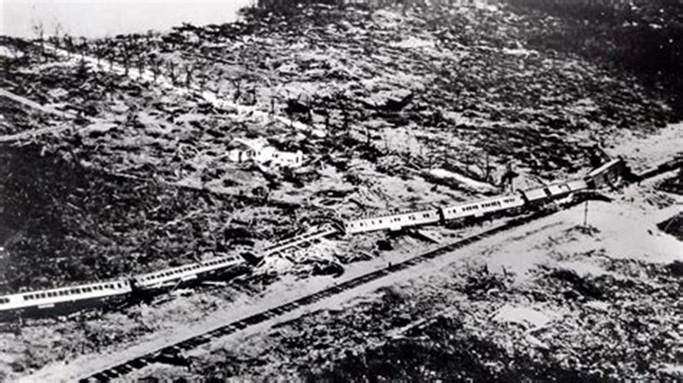
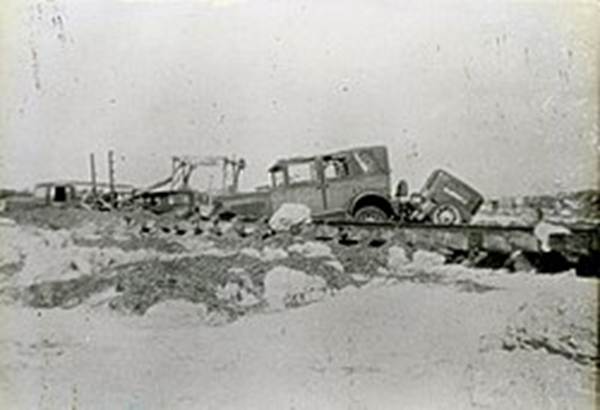
Upper Florida Keys experienced winds from 150 to 200 mph , while gusts probably went above 200 mph. Tides reached high enough to wash away crossties and railroad tracks of the Florida East Coast Railway, which had viaducts that were 30 ft above the average water level. Additionally, storm surge ranged from 18 to 20 ft in height.
Flattened a 30-mile stretch of the Keys
Matecumbe Ferry Slip One of the deadliest hurricanes in U.S. history, particularly
affecting Florida. Approximately 490 people died as a result of the
hurricane. It struck workers' camps of World War I veterans who were
constructing the Overseas Highway. About 260 veterans lost their lives in
these camps.
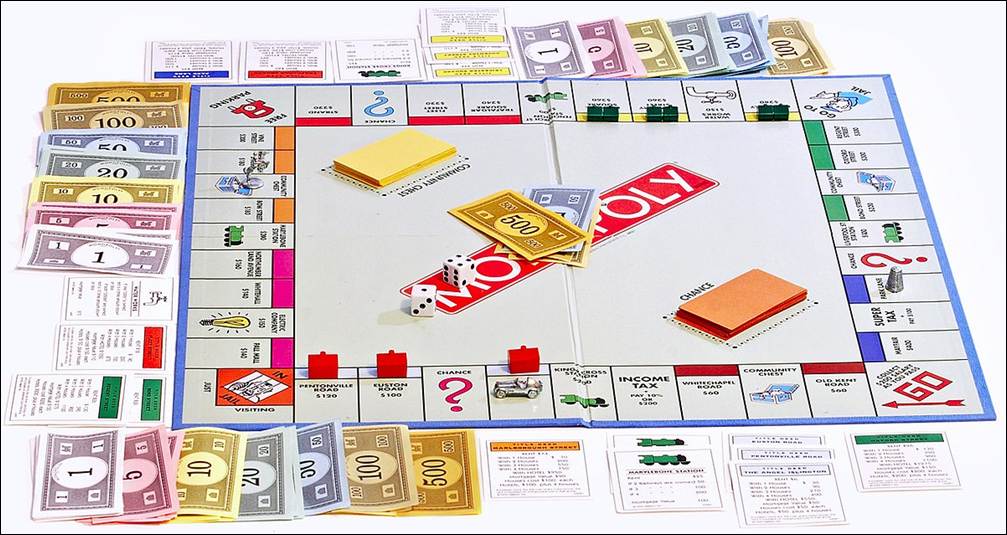
Monopoly game hit the shelves, a
multiplayer economics-themed board game. Players roll two dice to move around
the game board, buying and trading properties and developing them with houses
and hotels. Players collect rent from their opponents and aim to drive them
into bankruptcy. Money can also be gained or lost through Chance and
Community Chest cards and tax squares. Players receive a salary every time
they pass "Go" and can end up in jail, from which they cannot move
until they have met one of three conditions. House rules, hundreds of
different editions, many spin-offs, and related media exist. The
Monopoly game board consists of forty spaces containing twenty-eight
properties—twenty-two streets (grouped into eight distinct color groups),
four railroads, and two utilities—three Chance spaces, three Community Chest
spaces, a Luxury Tax space, an Income Tax space, and the four corner squares:
GO, (In) Jail/Just Visiting, Free Parking, and Go to Jail. The
game was a smash hit upon its release, and has gone on to sell over 275
million copies since its inception.
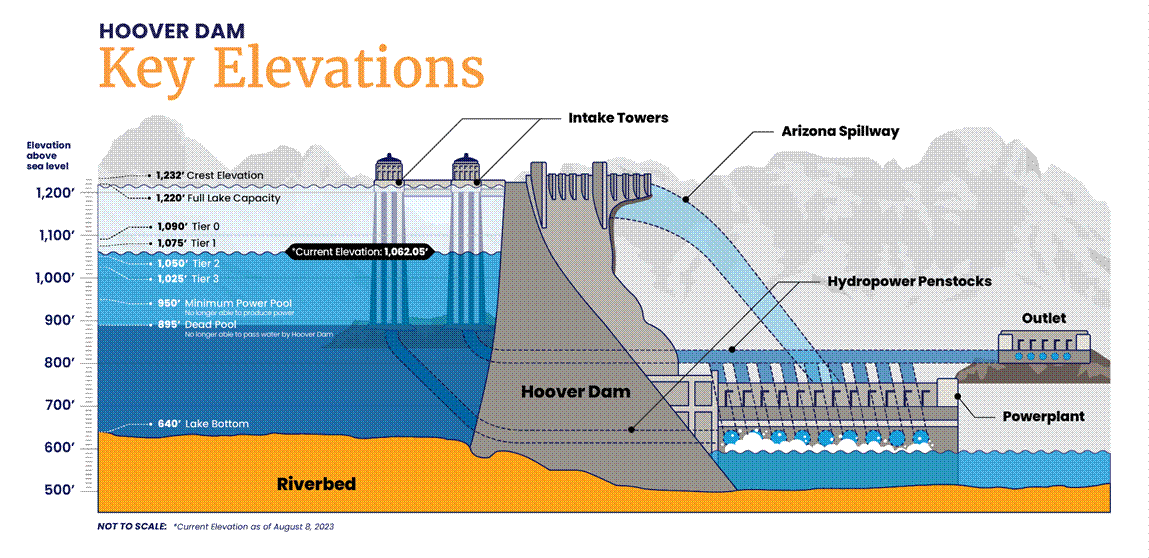
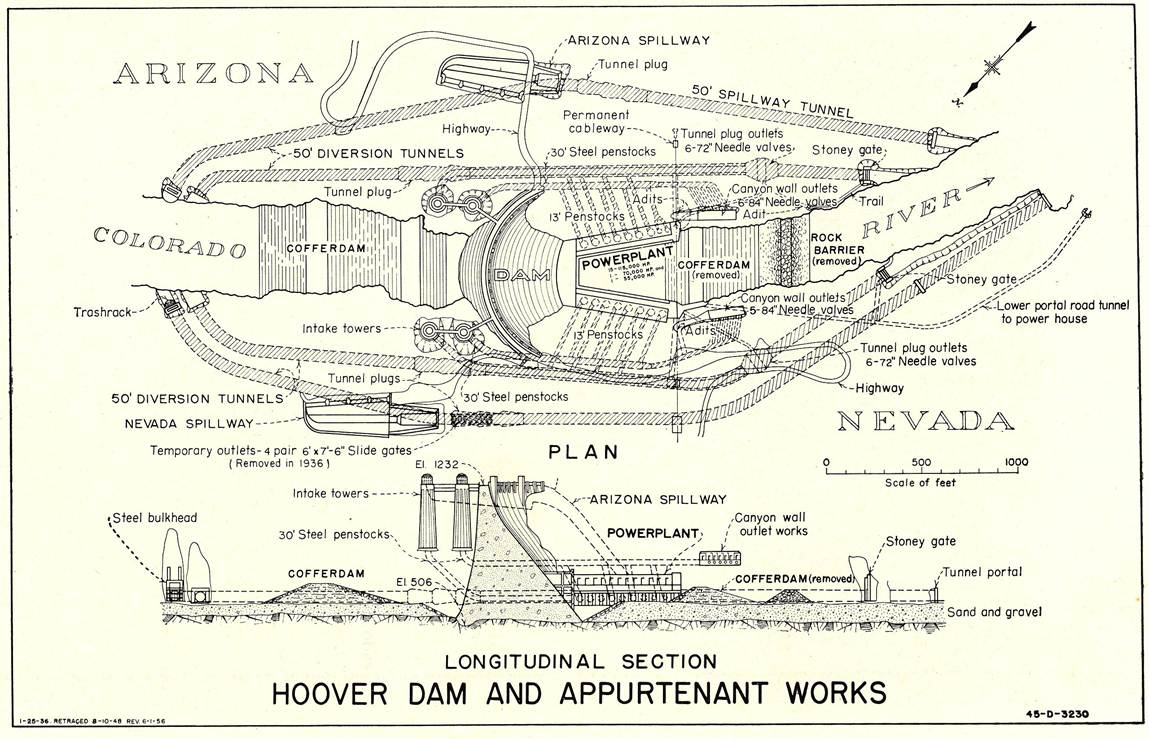
1937 Hoover
dam begins operation, a concrete arch-gravity dam in the
Black Canyon of the Colorado River, on the border between the U.S. states of
Nevada and Arizona. Constructed between 1931 and 1936, during the Great
Depression, it was dedicated on September 30, 1935, by President Franklin D.
Roosevelt. Its construction was the result of a massive effort involving
thousands of workers, and cost over 100 lives. Bills passed by Congress
during its construction referred to it as Hoover Dam (after President Herbert
Hoover), but the Roosevelt administration named it Boulder Dam. In 1947,
Congress restored the name Hoover Dam. A total of 3,250,000 cubic yards of concrete was used in the dam
before concrete pouring ceased on May 29, 1935. More than 582 miles of
cooling pipes were placed within the concrete. Overall, there is enough
concrete in the dam to pave a two-lane highway from San Francisco to New
York. Concrete cores were removed from the dam for testing in 1995; they
showed that "Hoover Dam's concrete has continued to slowly gain
strength" and the dam is composed of a "durable concrete having a
compressive strength exceeding the range typically found in normal mass
concrete".
The dam's generators provide power for public and private
utilities in Nevada, Arizona, and California. Hoover Dam is a major tourist
attraction, with 7 million tourists a year. The first three Allis Chalmers built Francis turbine-generators,
all on the Nevada side, began operating. In March 1937. September
1939, four more generators were operating, and the dam's power plant became
the largest hydroelectricity facility in the world. The final generator was
not placed in service until 1961, bringing the maximum generating capacity to
1,345 megawatts at the time. There are two lanes for automobile traffic across the top of the
dam, which formerly served as the Colorado River crossing for U.S. Route 93.
In the wake of the September 11 terrorist attacks, authorities expressed
security concerns and the Hoover Dam Bypass project was expedited. Pending
the completion of the bypass, restricted traffic was permitted over Hoover
Dam. Some types of vehicles were inspected prior to crossing the dam while
semi-trailer trucks, buses carrying luggage, and enclosed-box trucks over 40
ft long were not allowed on the dam at all and were diverted to U.S. Route 95
or Nevada State Routes 163/68. The four-lane Hoover Dam Bypass opened on
October 19, 2010.
Bypass in front of the dam
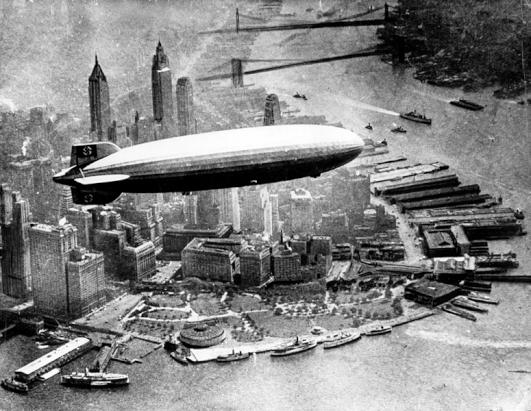
The
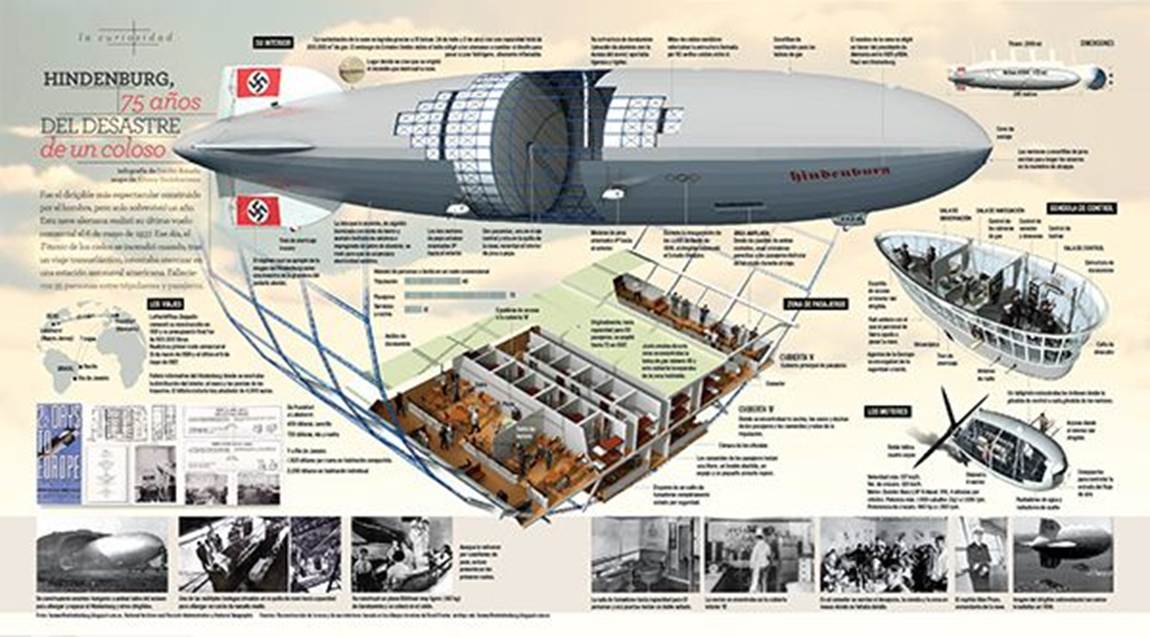
Hindenburg disaster was
an airship accident (May 6) in Manchester Township, New Jersey, United
States. The LZ 129 Hindenburg was a German commercial passenger-carrying
rigid airship, the lead ship of the Hindenburg class, the longest class of
flying machine and the largest airship by envelope volume.
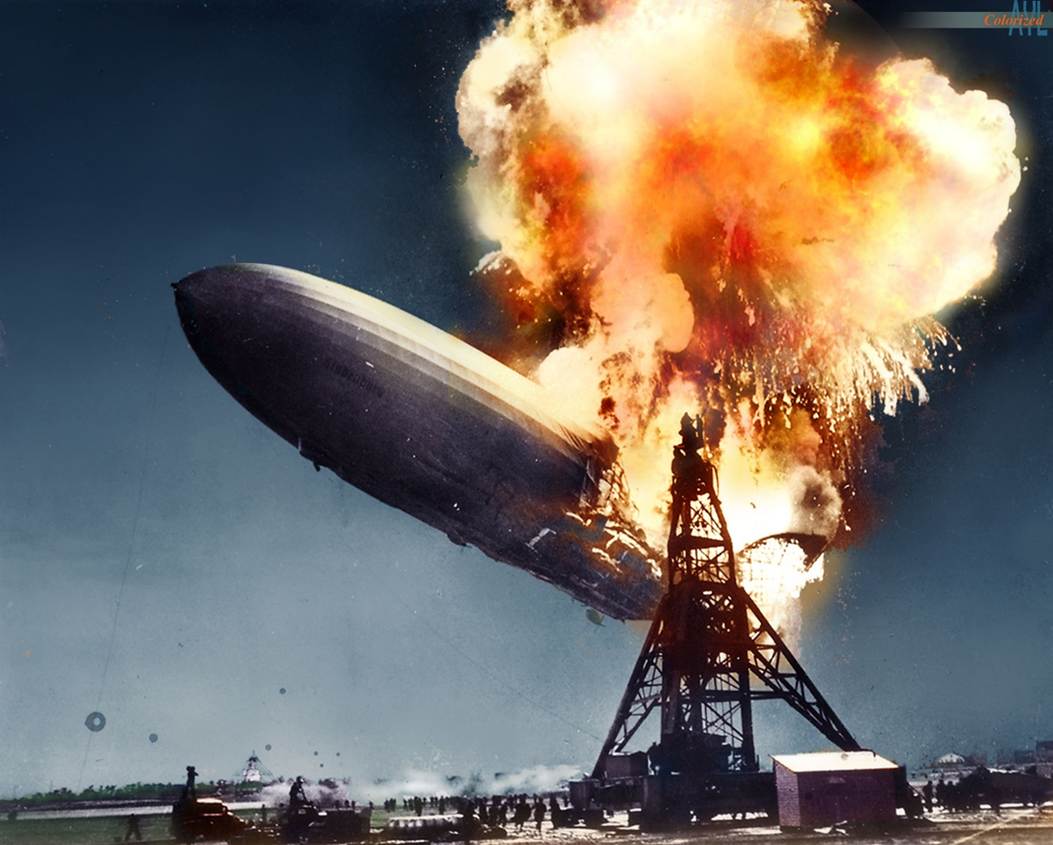
Filled with hydrogen, it caught fire and was destroyed during
its attempt to dock with its mooring mast at Naval Air Station Lakehurst. The
accident caused 35 fatalities (13 passengers and 22 crewmen) among the 97
people on board (36 passengers and 61 crewmen), and an additional fatality on
the ground. The Hindenburg made ten trips to the United States in 1936.
After opening its 1937 season by completing a single round-trip passage to
Rio de Janeiro, Brazil, in late March, the Hindenburg departed from
Frankfurt, Germany, on the evening of May 3, on the first of ten round trips
between Europe and the United States that were scheduled for its second year
of commercial service. American Airlines had contracted with the operators of
the Hindenburg to shuttle passengers from Lakehurst to Newark for connections
to airplane flights.
Carrying only half its full capacity of passengers (36 of 70)
and crewmen (61, including 21 crewman trainees) during the accident flight,
the Hindenburg was fully booked for its return flight. Around 7:00 p.m. EDT (23:00 UTC), at an altitude of 650 feet
(200 m), the Hindenburg made its final approach to the Lakehurst Naval Air
Station. This was to be a high landing, known as a flying moor because the
airship would drop its landing ropes and mooring cable at a high altitude,
and then be winched down to the mooring mast. This type of landing maneuver
would reduce the number of ground crewmen but would require more time.
Although the high landing was a common procedure for American airships, the
Hindenburg had performed this maneuver only a few times in 1936 while landing
in Lakehurst. At 7:21 p.m., while the Hindenburg was at an altitude of 295 ft
(90 m), the mooring lines were dropped from the bow; the starboard line was
dropped first, followed by the port line. The port line was
overtightened[further explanation needed] as it was connected to the post of
the ground winch. The starboard line had still not been connected. A light
rain began to fall as the ground crew grabbed the mooring lines. At 7:25 p.m., a few witnesses saw the fabric ahead of the upper
fin flutter as if gas was leaking. Others reported seeing a dim blue flame –
possibly static electricity, or St. Elmo's Fire – moments before the fire on
top and in the back of the ship near the point where the flames first
appeared. The Hindenburg caught fire and quickly became engulfed in flames. The flames quickly spread forward first consuming cells 1 to 9,
and the rear end of the structure imploded. Almost instantly, two tanks (it
is disputed whether they contained water or fuel) burst out of the hull as a
result of the shock of the blast. Buoyancy was lost on the stern of the ship,
and the bow lurched upwards while the ship's back broke; the falling stern
stayed in trim.
As the tail of the Hindenburg crashed into the ground, a burst
of flame came out of the nose, killing 9 of the 12 crew members in the bow.
There was still gas in the bow section of the ship, so it continued to point
upward as the stern collapsed down. The cell behind the passenger decks
ignited as the side collapsed inward, and the scarlet lettering reading
"Hindenburg" was erased by flames as the bow descended. The
airship's gondola wheel touched the ground, causing the bow to bounce up
slightly as one final gas cell burned away. At this point, most of the fabric
on the hull had also burned away and the bow finally crashed to the ground.
Although the hydrogen had finished burning, the Hindenburg's diesel fuel
burned for several more hours.
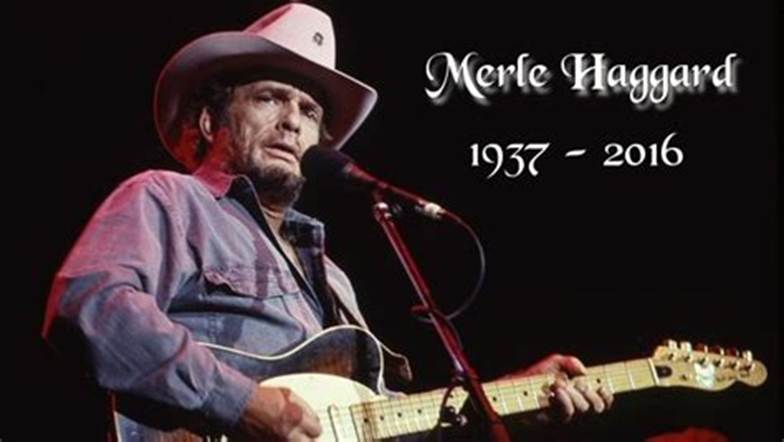
Merle
Haggard was born, an
influential American country music singer-songwriter born on April 6, 1937,
in Oildale, California. He overcame a troubled childhood and a history of
criminal activity, including time in prison, to become a celebrated artist
with 38 number-one hits and numerous awards. His family moved from Oklahoma during the Great Depression after
their farm burned down. Haggard's father, James, worked for the Santa Fe
Railroad and died when Merle was nine. This loss deeply affected him and
shaped his future. Haggard faced a troubled youth, marked by criminal activities
and time in juvenile detention. He learned to play guitar at age 12,
influenced by country music legends. His early experiences with hardship and
crime would later inspire his songwriting. Haggard's music career began after he was released from San
Quentin State Prison in 1960. The Hag wound up only serving 2 years of his 15
year sentence at San Quentin (the only prison that could hold him). He was
eventually pardoned by California Governor Ronald Regan. He was inspired by a
Johnny Cash concert while incarcerated. He quickly gained popularity,
becoming a central figure in the Bakersfield sound, a style of country music
characterized by its raw and honky-tonk influences.
Over his career, Haggard recorded more than 70 albums and had 38
number-one hits on the US country charts. His songs often reflected his life
experiences, including struggles with poverty and the working class. He passed away on April 6, 2016, his 79th birthday, from
pneumonia.
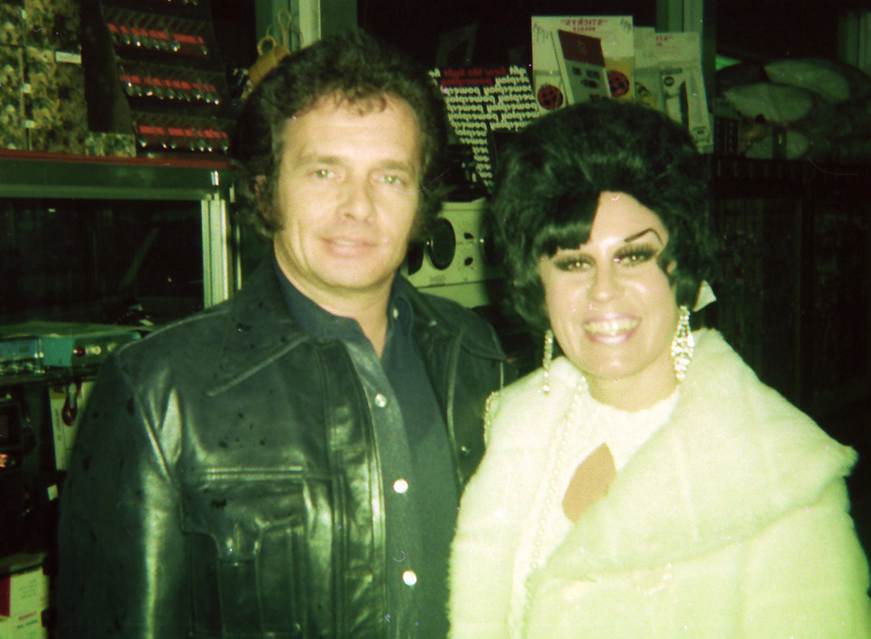
Merle Haggard and Mary Wolever
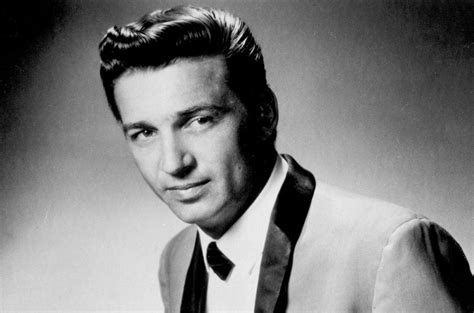
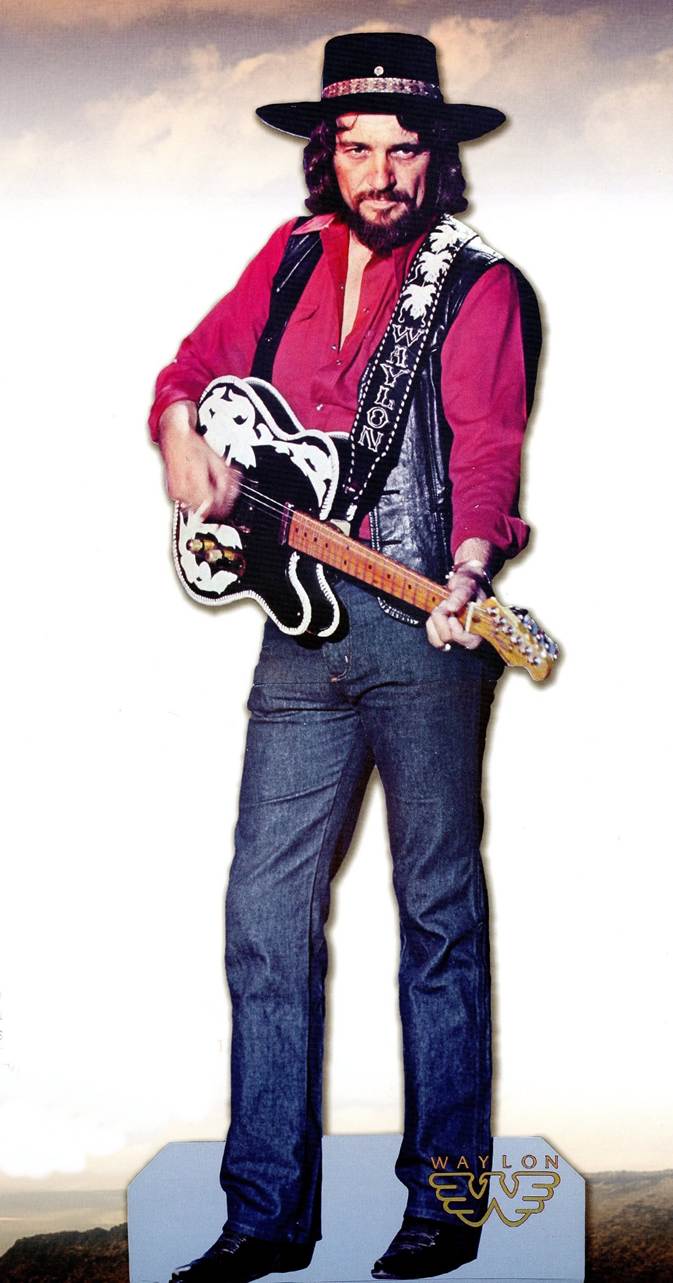
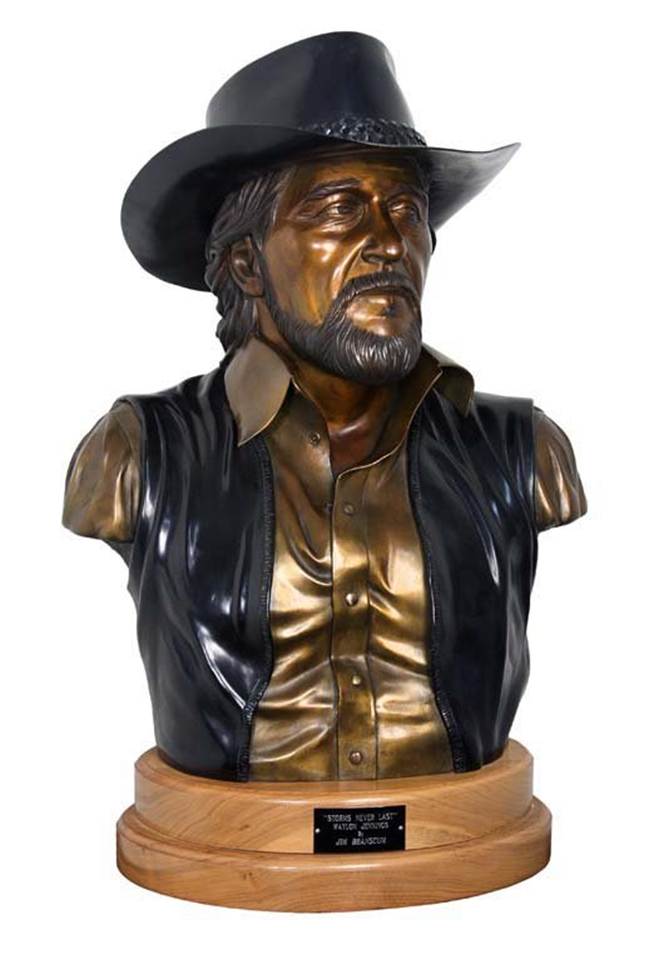
Waylon
Jennings was born, an American country music singer,
songwriter, musician, and actor. He is considered one of the pioneers of the
outlaw movement in country music.
Jennings started playing guitar at age eight and performed at
fourteen on KVOW radio, after which he formed his first band, the Texas
Longhorns. Jennings left high school at age sixteen, determined to become a
musician, and worked as a performer and DJ on KVOW, KDAV, KYTI, KLLL, in
Coolidge, Arizona, and Phoenix. In 1958, Buddy Holly arranged Jennings's first recording
session, a cover of “Jole Blon,” and hired him to play bass. Jennings gave up
his seat on the ill-fated flight in 1959 that crashed and killed Holly, J. P.
"the Big Bopper" Richardson and Ritchie Valens.
Jennings was born on June 15, 1937, on the J. W. Bittner farm
near Littlefield, Texas. He was the son of Lorene Beatrice (née Shipley,
1919–2006) and William Albert Jennings (1911–1968). The Jennings family line
descended from Irish and Black-Dutch. He was the oldest of four children,
followed by Tommy Jennings (1941–2019), James Jennings, and Bo Jennings
(1950–2018). The Shipley line descended from his great-grandfather, a farmer
and lawman from Tennessee, with Jennings adding that "along the way, a
lot of Indian blood mixed in," including Cherokee and Comanche families.
Over the course of his career, Waylon Jennings released 45
studio albums and 49 other albums including 28 compilation albums and 16
collaborations. He sold over 20 million albums worldwide
At one point, Waylon would spend as much as $1,500 per day on
cocaine and amphetamines. This soon led to a $2.5 million drug debt which he
had to work hard to clear. Cigarettes were not left out, Waylon smoked up to
6 packs of cigarettes on a daily basis. In the mid-1980s, he decided to get
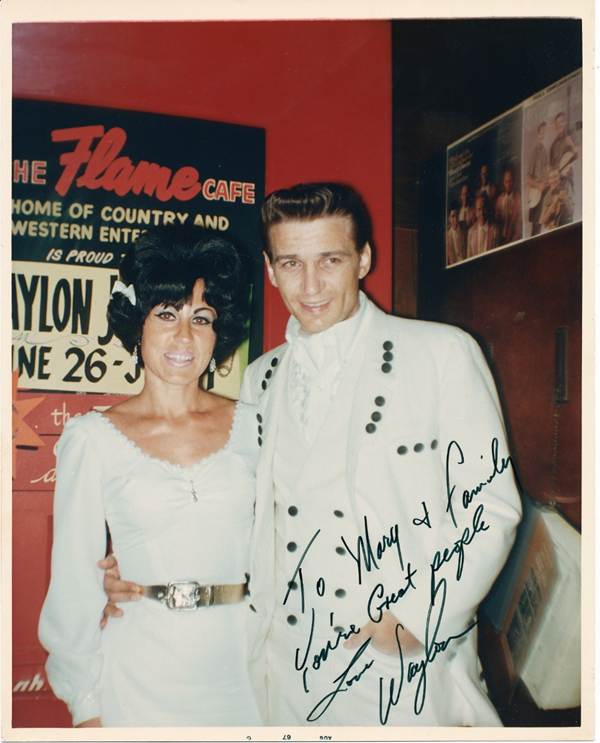
clean, detoxifying himself with plans to take cocaine on an occasional basis. Waylon only began to get clean after his habit started to tell
on his health. He underwent a heart bypass surgery in 1988.
Mary and Waylon He was diagnosed with diabetes in the early 1990s. He continued
to record, and did limited performances on a few tours, but his diabetes
forced surgery to improve circulation in his left leg. The operation failed,
and his left foot was amputated in December 2001, the year he was inducted
into the Country Music Hall of Fame. Jennings died in his sleep from complications of diabetes on
February 13, 2002, at his home in Chandler, Arizona. He was 64 years old. Waylon Jennings married four times and had a total of 6 children
from his wives. He was married to country singer Jessi Colter from October
26, 1969, to the time of his death.
Mary & Margaret Stathis at Waylon’s grave City of Mesa, AZ Cemetery, 1212 N. Center Street |