Home
About
Links
Hobbycraft
Photos
Downloads
|
1925 Beginning
of The Grand Ole Opry, a regular live country-music radio
broadcast originating from Nashville, Tennessee, on WSM, held between two and
five nights per week, depending on the time of year. It was founded on November 28, 1925, by George D. Hay as the WSM
Barn Dance, taking its current name in 1927. Currently owned and operated by
Opry Entertainment, it is the longest-running radio broadcast in U.S.
history. Dedicated to honoring country music and its history, the Opry
showcases a mix of famous singers and contemporary chart-toppers performing
country, bluegrass, Americana, folk, and gospel music as well as comedic
performances and skits. It attracts hundreds of thousands of visitors from around
the world and millions of radio and internet listeners. In the 1930s, the show began hiring professionals and expanded
to four hours. Broadcasting by then at 50,000 watts, WSM made the program a
Saturday night musical tradition in nearly 30 states. In 1939, it debuted
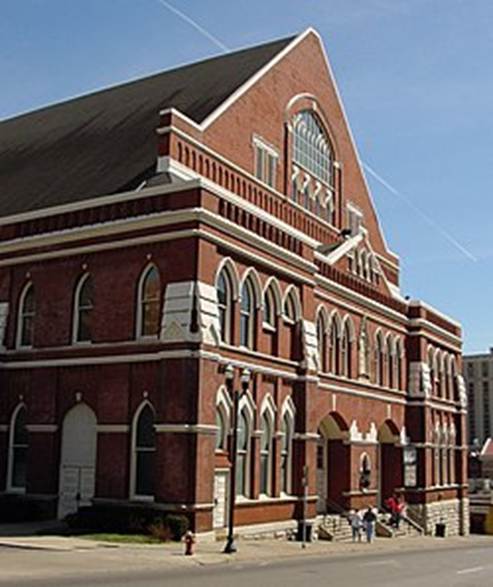
nationally on NBC Radio. The Opry moved to its most famous former home, the
Ryman Auditorium, in 1943. As it developed in importance, so did the city of
Nashville, which became America's "country music capital".
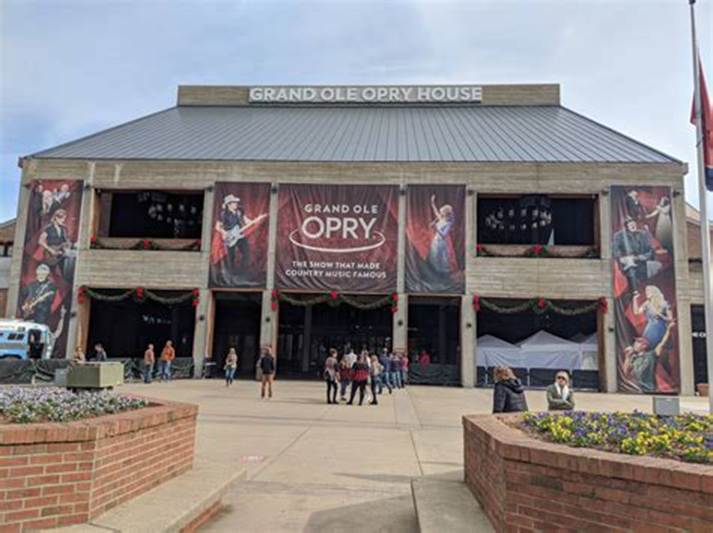
Ryman Auditorium The new Opry venue was the centerpiece of a grand entertainment
complex at that location, which later included Opryland USA Theme Park and
Opryland Hotel. The theme park opened to the public on June 30, 1972, well
ahead of the 4,000-seat Opry House, which debuted nearly two years later, on
Saturday, March 16, 1974. The last show of the Grand Ole Opry at the Ryman
Auditorium was held on March 15, 1974.
Beginning in November 1999, the Opry was held at Ryman
Auditorium for three months, partly due to the ongoing construction of Opry
Mills. The Opry returned to the Ryman for the three winter months every year
until 2019–20, allowing the show to acknowledge its roots while also taking
advantage of a smaller venue during an off-peak season for tourism
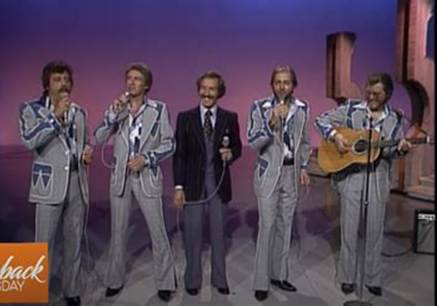
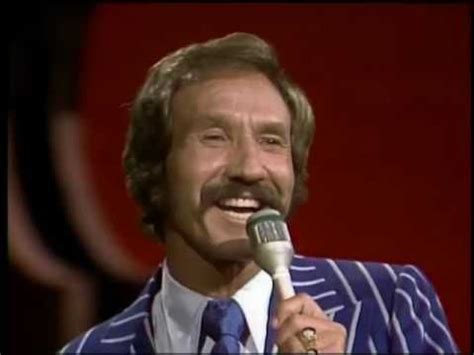
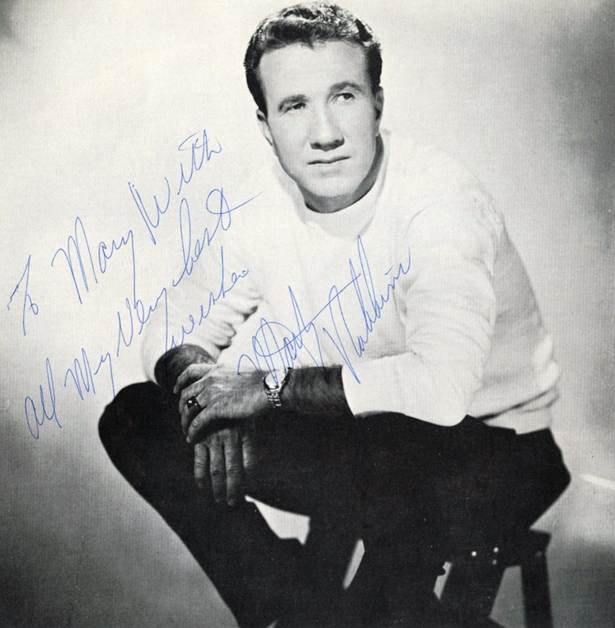
Marty
Robbins is born, an American country and western singer
and songwriter. He was one of the most popular and successful singers of his
genre for most of his nearly four-decade career, which spanned from the late
1940s to the early 1980s. He was also an early outlaw country pioneer. Born in Glendale, Arizona, Robbins taught himself guitar while
serving in the U.S. Navy during World War II, and subsequently drew fame
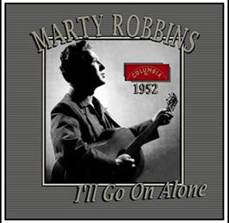
performing in clubs in and around his hometown. In 1952, he released his
first number-one country song, "I'll Go On Alone".
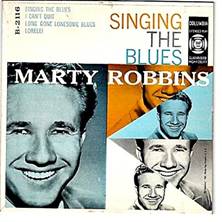
Four years later, he released his second number-one hit
"Singing the Blues",
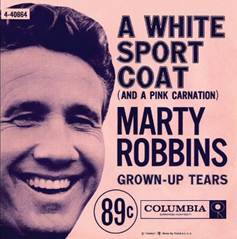
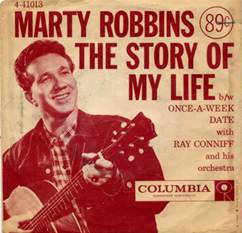
and one year later, released two more number-one hits, "A
White Sport Coat"
and "The Story of My Life".
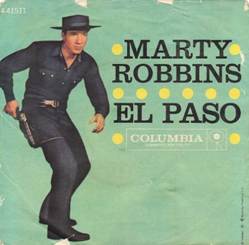
In 1959, Robbins released his signature song, "El
Paso",
for which he won the Grammy Award for Best Country and Western
Recording. The song began Robbins' association with Western balladry, a style
that became a staple of his career. His later releases that drew critical
acclaim include "Don't Worry", "Big Iron", "Devil
Woman", and "Honkytonk Man", the last for which the 1982 Clint
Eastwood film is named, and in which Robbins made his final appearance before
his death. Over the course of his career, Robbins wrote more than 100
songs, recorded more than 500 songs and 60 albums, and won two Grammy Awards,
was elected to the Country Music Hall of Fame and Nashville Songwriters Hall
of Fame, and was named the 1960s Artist of the Decade by the Academy of
Country Music. His songs "El Paso" and "Big Iron" were
ranked by the Western Writers of America among the top-100 Western songs of
all time. Robbins was a commercial success in both the country and pop genres,
and his songs were covered by many other famous artists, including Johnny
Cash, the Grateful Dead, and Elvis Presley. Johnny Cash noted, "there's
no greater country singer than Marty Robbins." His music continues to
have an influence in pop culture today, featuring prominently in several
films, television shows, and video games. Robbins was born Martin David Robinson on September 26, 1925, in
Glendale, a suburb of Phoenix in Maricopa County. His parents, John
"Jack" Robinson (1889–1975) and Emma Heckle (1889–1970) divorced in
1937 when Robbins was 12 years old. His maternal grandfather, "Texas Bob" Heckle
(1847-1931), who was a traveling salesman, raconteur, and local medicine man.
Robbins later recalled: "He had two little books of poetry he would
sell. I used to sing him church songs and he would tell me stories. A lot of
the songs I've written were brought about because of stories he told me. Like
'Big Iron' I wrote because he was a Texas Ranger. At least he told me he
was.” Robbins dropped out of high school in Glendale before his time
in the Navy, and worked as an amateur boxer, dug ditches, drove trucks,
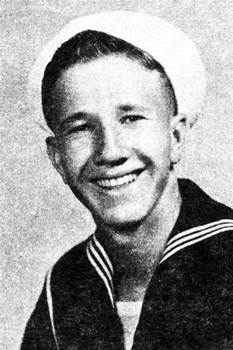
delivered ice, and served as a mechanic's helper. At 17, Robbins left home to serve in the U.S. Navy as an LCT
coxswain during World War II.
He was stationed in the Solomon Islands in the Pacific theater.
To pass the time during the war, he learned to play the guitar, started
writing songs, and came to love Hawaiian music. After his discharge from the military in 1947 and his marriage
the following year, Robbins began to play at local venues in Phoenix, In the
early 1950s, Marty moved on to host his own show on KTYL and then his own
television show Western Caravan on KPHO-TV in Phoenix.
Robbins was a symbol of the Nashville establishment that younger
country fans abandoned in the '70s for the bleached-denim "outlaw
school" of Waylon Jennings and Willie Nelson. Robbins belonged to the
Jim Reeves era, and wore his embroidered cowboy suits proudly. Best known for
the Western ballad, "El Paso", his career also touched the rock 'n'
roll side of country in songs like "White Sport Coat and a Pink
Carnation", and he kept a touch of the dude about him to the end. In 1980, Robbins appeared on the PBS music program Austin City
Limits (season five).
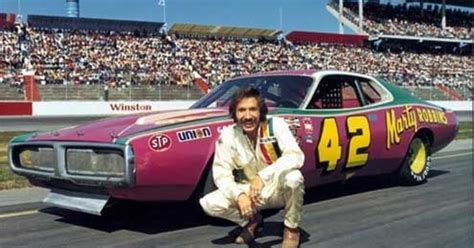
In addition to his recordings and performances, Robbins was an
avid race car driver, competing in 35 career NASCAR Grand National Series
races with six top-10 finishes, including the 1973 Firecracker 400. In 1967,
Robbins played himself in the car-racing film Hell on Wheels. Robbins was
partial to Dodges prepared by NASCAR Hall-of-Famer Cotton Owens, and owned
and raced Chargers and then a 1978 Dodge Magnum. Marty Robbins may be best known as the country singer who
amassed 43 top-10 records over a career that spanned three decades, but in
his heart, he was a race car driver. Blessed with a surprising amount of
talent behind the wheel, his NASCAR Cup career included 35 starts over 17
years, along with six top-10 finishes.
He was also the driver of the 60th Indianapolis 500 Buick
Century pace car in 1976. His last race was in a Junior Johnson-built 1982
Buick Regal in the Atlanta Journal 500 on November 7, 1982, a month before
his death. In 1948, Robbins married Marizona Baldwin, who claimed she had
always wanted to marry a singing cowboy. They had a son, Ronnie, and a
daughter, Janet. Robbins developed cardiovascular disease early in life and
suffered a first myocardial infarction in 1969. After his third heart attack
on December 2, 1982, he underwent quadruple coronary artery bypass surgery.
He did not recover and died on December 8 at St. Thomas Hospital in
Nashville. He was 57 years old.
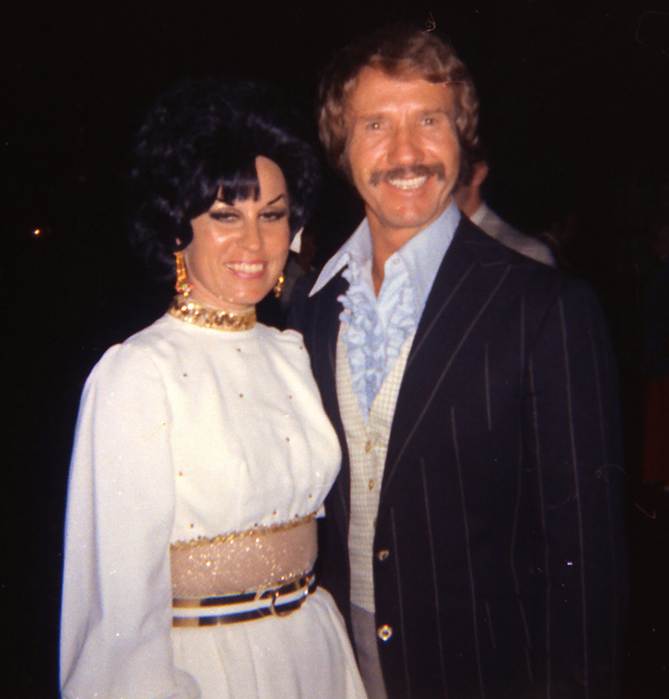
Mary Wolever and Marty
|