Home
About
Links
Hobbycraft
Photos
Downloads
|
1919 The
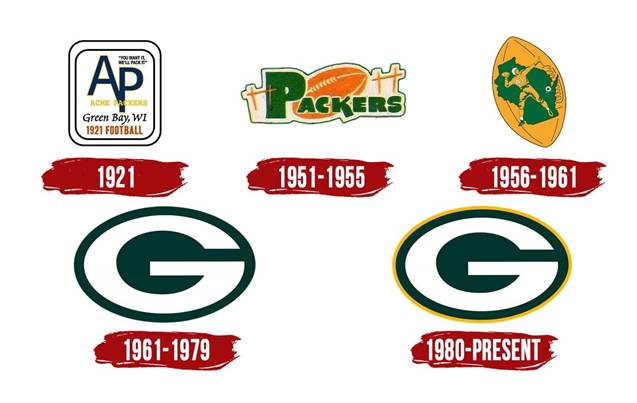
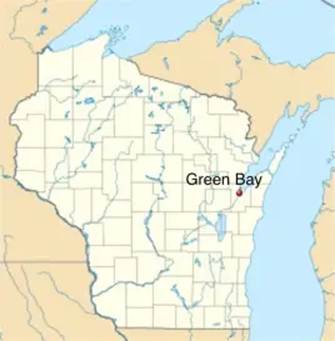
Green Bay Packers founded,
have a rich history marked by numerous championships, legendary players, and
significant milestones in the NFL. ü
1919: The Green Bay Packers are founded
by Earl "Curly" Lambeau and George Whitney Calhoun. The team is
initially sponsored by the Indian Packing Company. ü
1921: The Packers join the American
Professional Football Association (APFA), which later becomes the NFL. They
play their first league game against the Chicago Staleys (now Bears). ü
1929-1944: The Packers win six NFL
championships, establishing themselves as a dominant force in the league. ü
1960s: Under head coach Vince Lombardi,
the Packers win five NFL championships, including the first two Super Bowls
(Super Bowl I and II) in 1966 and 1967. ü
1965: City Stadium is renamed Lambeau
Field in honor of Curly Lambeau after his passing. ü
1992: Brett Favre becomes the starting
quarterback, leading the team to a Super Bowl victory in 1997 (Super Bowl
XXXI). ü
2010: The Packers win their fourth Super
Bowl championship, defeating the Pittsburgh Steelers in Super Bowl XLV. ü
2021: The Packers continue to be a
competitive team in the NFL, maintaining a strong fan base and a unique
community ownership structure. ü
13 NFL Championships: The Packers hold
the record for the most NFL championships, including four Super Bowl
victories. ü
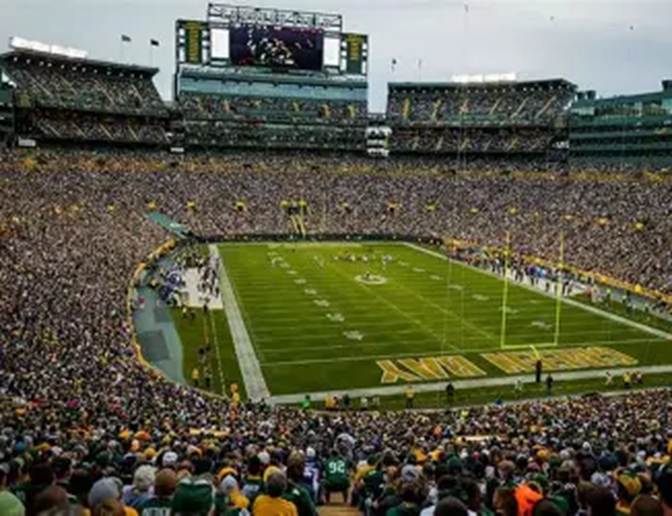
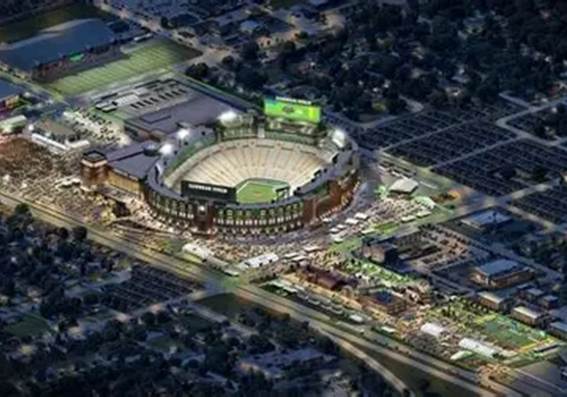
Iconic Lambeau Field: The team's home
since 1957, Lambeau Field is known for its storied history and passionate fan
base, often referred to as "Cheeseheads." ü
The Green Bay Packers remain one of the
oldest and most successful franchises in NFL history, with a legacy that
continues to grow each season.
Grand
Canyon National Park, established
by act of congress in 1919 becoming the 17th national park in the
United States. The age of the Grand Canyon has been a subject of scientific
debate, distinguishing the age of the rocks from the age of the gorge itself.
The rocks visible in the walls are ancient, ranging from the
270-million-year-old Kaibab Limestone at the rim to the nearly
2-billion-year-old Vishnu Schist at the river level. However, the formation
of the canyon as a continuous, mile-deep gorge is much more recent. The prevailing scientific consensus supports the “young canyon”
hypothesis, which posits that the modern Grand Canyon was carved by the
Colorado River in its current path starting about 5 to 6 million years ago.
Evidence includes sediments found at the canyon’s western end that date the
river’s establishment to this time. Current
archaeological evidence suggests that humans inhabited the Grand Canyon area
as far back as 4,000 years ago and at least were passers-through for 6,500
years before that. Radiocarbon dating of artifacts found in limestone caves
in the inner canyon indicate ages of 3,000 to 4,000 years. In the 1950s
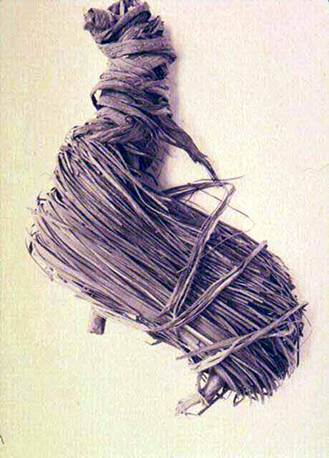
split-twig animal figurines were found in the Redwall
Limestone cliffs of the Inner Gorge that were dated in this range. These
animal figurines are a few inches in height and made primarily from twigs of willow
or cottonwood.
This
and other evidence suggest that these inner canyon dwellers were part of
Desert Culture; a group of semi-nomadic
hunter-gatherer Native American. Prospectors
in the 1870s and 1880s staked mining claims in the canyon. They hoped that
previously discovered deposits of asbestos, copper, lead, and zinc would be
profitable to mine. Access to and from this remote region and problems getting ore out of the canyon and its rock made the whole
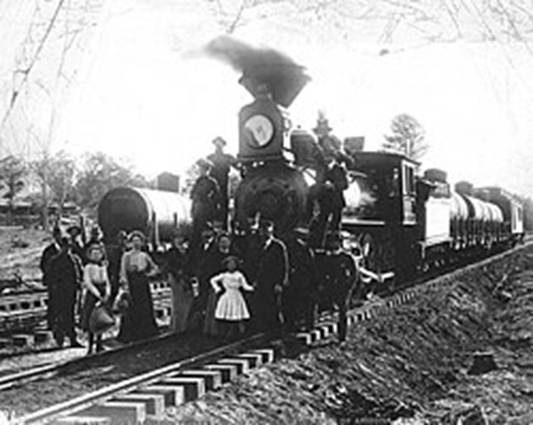
exercise not worth the effort. A rail
line to the largest city in the area, Flagstaff, was completed in 1882 by the
Santa Fe Railroad. Stage coaches started to bring
tourists from Flagstaff to the Grand Canyon the next year—an eleven-hour trip
greatly reduced in 1901 when a spur of the Santa Fe Railroad to Grand Canyon
Village was completed.
The
first scheduled train with paying passengers of the Grand Canyon Railway
arrived from Williams, Arizona, on September 17 that year. The 64-mile long trip cost $3.95 ($129 as of 2024), and
naturalist John Muir later commended the railroad for its limited
environmental impact. Competition
with the automobile forced the Santa Fe Railroad to cease operation of the
Grand Canyon Railway in 1968 (only three passengers were on the last run).
The railway was restored and service reintroduced in 1989, and it has since
carried hundreds of passengers a day. Trains remained the preferred way to
travel to the canyon until they were surpassed by the auto in the 1930s. By
the early 1990s more than a million automobiles per year visited the park. A
cable car system spanning the Colorado went into operation at Rust's Camp,
located near the mouth of Bright Angel Creek, in 1907. Former U.S. President
Theodore Roosevelt stayed at the camp in 1913. That, along with the fact that
while president he declared Grand Canyon a U.S. National Monument in 1908,
led to the camp being renamed Roosevelt's Camp. In 1922 the National Park
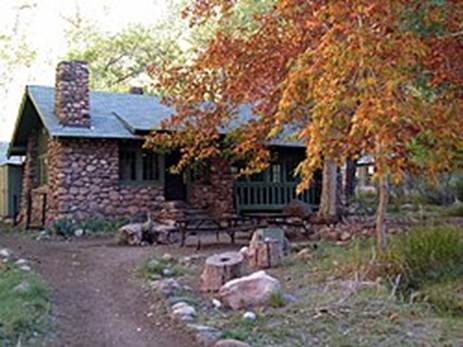
Service gave the facility its current name, Phantom Ranch. It
sits at the bottom of Grand Canyon, on the east side of Bright Angel Creek, a
little over half a mile north of the Creek's confluence with the Colorado
River.
Hiking
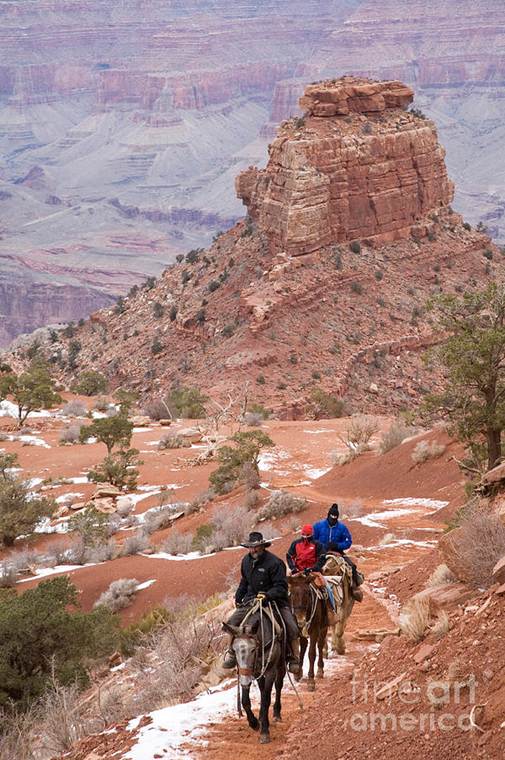
trails, along old Indian trails, were established about 1935. The
world-famous mule rides down Bright Angel Trail were mass-marketed by the El
Tovar Hotel. By the early 1990s, 20,000 people per year made the journey into
the canyon by mule, 800,000 by hiking, 22,000 passed through the canyon by
raft, and another 700,000 tourists fly over it in air tours (fixed-wing
aircraft and helicopter). In 1991 nearly 400 search and rescues were
performed, mostly for unprepared hikers who suffered from heat exhaustion and
dehydration while ascending from the canyon (normal exhaustion and injured
ankles are also common in rescuees) The
Bright Angle Tral originates at Grand Canyon Village on the south rim of the
Grand Canyon, descending 4380 feet to the Colorado River. It has an average
grade of 10% along its entire length, but over two thirds of the elevation
change occurs within the first 4.9 mi to Havasupai
Gardens. The trail ends at the Colorado River, where the River Trail
continues another 1.9 mi to the Bright Angel Campground and Phantom Ranch. These common method used to access Phantom Ranch is by hikers and mules.
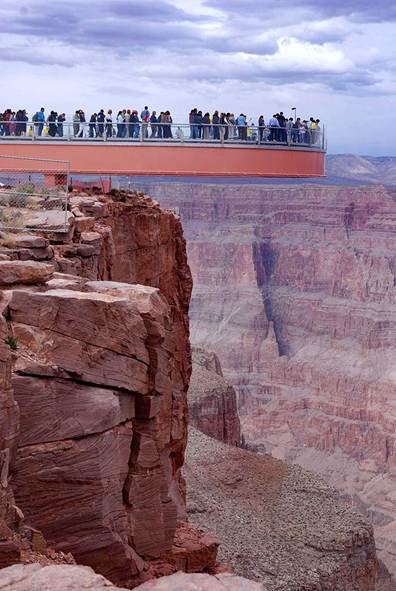
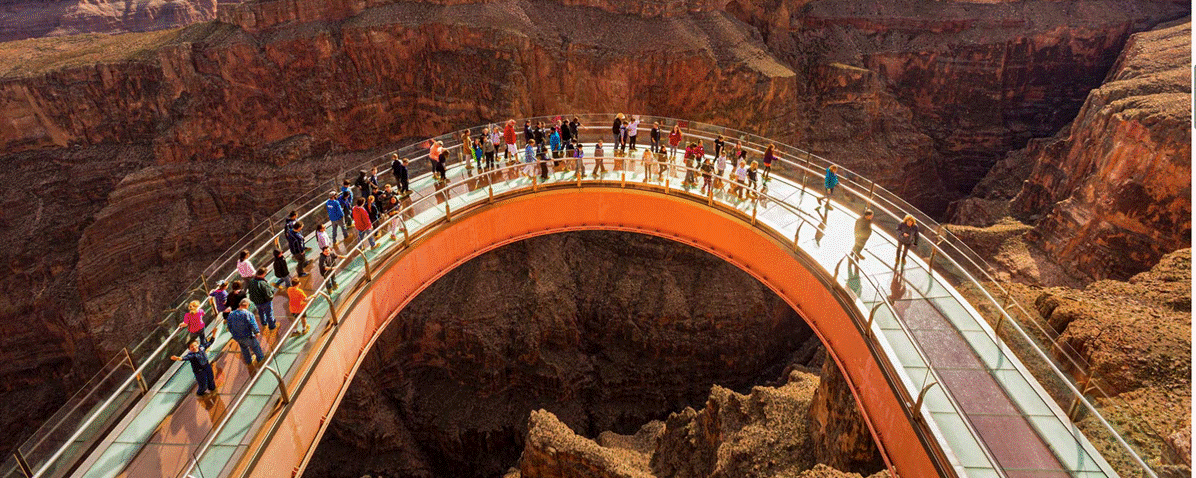
Skywalk is located at Grand Canyon West’s Eagle Point on the
Hualapai Reservation and is not affiliated with Grand Canyon National Park.
|

|
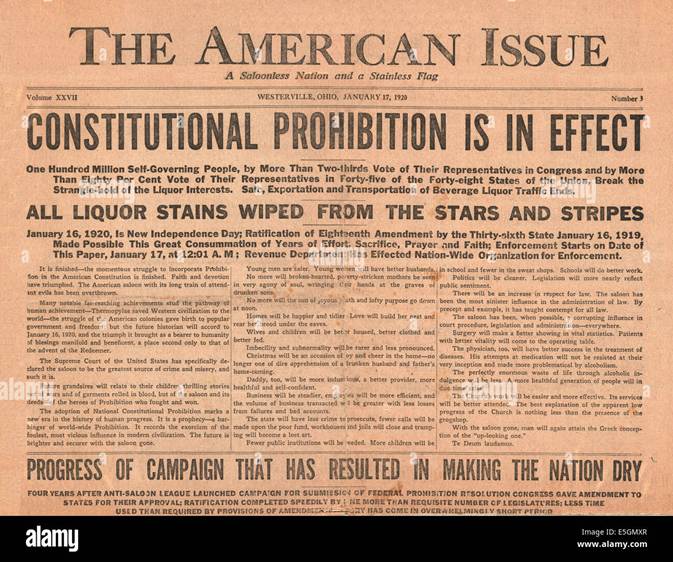
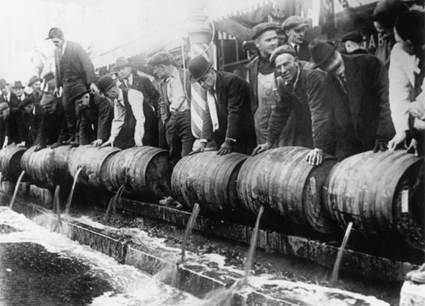
1920 🌍 1.9 billion Prohibition, in
the United States lasted from 1920 to 1933. It was enacted through the
Eighteenth Amendment, which prohibited the manufacture, sale, and
transportation of alcoholic beverages. The
movement aimed to reduce alcohol consumption and its associated social issues
but led to the rise of illegal activities and organized crime. Entire illegal
economies (bootlegging, speakeasies, and distilling operations) flourished.
The earliest bootleggers began smuggling foreign-made commercial liquor into
the United States from across the Canadian and Mexican borders and along the
seacoasts from ships under foreign registry.
|

|
Women’s rights to vote,
the Nineteenth Amendment to the United States Constitution, ratified on
August 18, 1920, prohibits the denial of the right to vote based on sex,
thereby granting women the right to vote. This amendment was the result of a
long struggle for women's suffrage in the U.S. and marked a significant
expansion of voting rights. After
adoption of the Nineteenth Amendment, women still faced political
limitations. Women had to lobby their state legislators, bring lawsuits, and
engage in letter-writing campaigns to earn the right to sit on juries. In
California, women won the right to serve on juries four years after passage
of the Nineteenth Amendment.
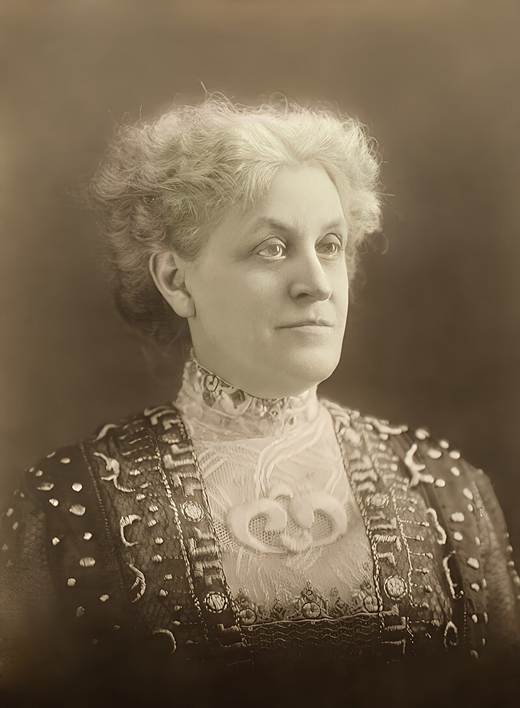
Carrie
Chapman Catt, President of the National American Woman Suffrage Association, organized the "Winning Plan" that
helped secure passage of the Nineteenth Amendment
Beginning
of commercial airlines, many small regional
airlines operated in the 1920s in the United States. Many of them merged or
were acquired late in the decade by the first developing nationwide airlines,
such as Eastern Airlines, Pan Am, American Airlines, and TWA. After
World War II, commercial aviation grew rapidly, using mostly ex-military
aircraft to transport people and cargo. The experience used in designing
heavy bombers such as the Boeing B-29 Superfortress and Avro Lancaster could
be used for designing heavy commercial aircraft. The Douglas DC-3 also made
for easier and longer commercial flights. With the Boeing 707, Pan Am made
its first scheduled flight between New York City and Paris on 26 October
1958. The
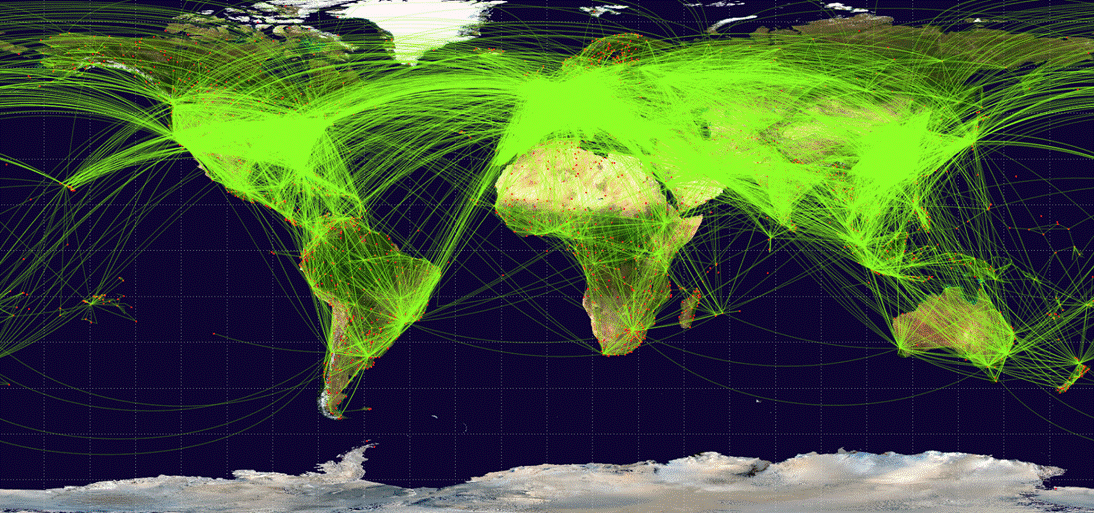
number of commercial airplanes in the sky at any given time fluctuates
minute-by-minute, and air travel varies by time of day and day of week. There
are between 12,000 and 14,000 planes in the sky at the same time on an
average day. Commercial flights make up about two-thirds of those airplanes,
followed by general aviation, business, and cargo planes. There
are anywhere from 160,000 to 200,000 planes landing on a typical day.
Route map of the world's scheduled
commercial airline traffic, 2024 |