Home
About
Links
Hobbycraft
Photos
Downloads
|
1975 Beginning of Microsoft,
Gates and Allen formed a partnership. Microsoft began small but had a huge
vision—a computer on every desktop and in every home. Over the next few
years, Microsoft began to change the way we work. Microsoft
worked on the first version of a new operating system called “Windows because
it best described the boxes or computing “windows” that were fundamental to
the new system In 1980, Microsoft reached a significant agreement with IBM to
provide an operating system for its first personal computer, the IBM PC.
Microsoft bought an existing operating system, QDOS, for $50,000, which they
modified and branded as MS-DOS. The IBM PC was a huge success and Microsoft's
operating system became the standard for PC compatibility, giving the company
a market dominance that it held for subsequent decades. On
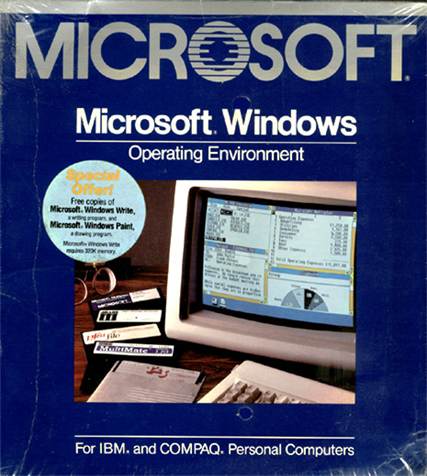
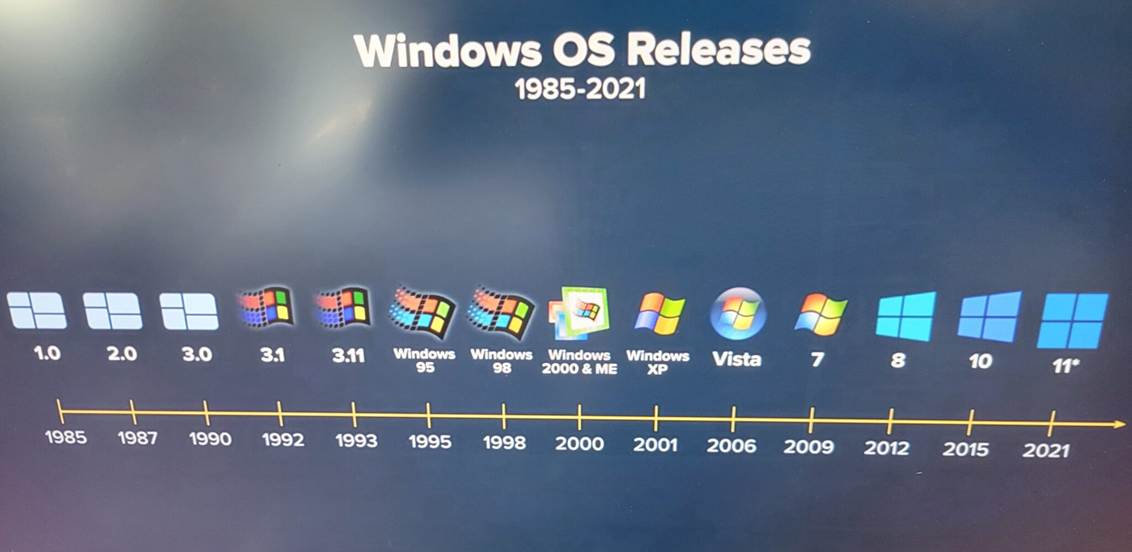
November 20, 1985, Microsoft shipped Windows 1.0.
required a minimum of 256 kilobytes (KB), two double-sided floppy disk
drives, and a graphics adapter card.
Windows 1.0 retail box
Windows 95 was launched by Microsoft on August 24, 1995, and it
marked a significant evolution in the company's Windows operating system
line. Featuring a new user-friendly interface, Windows 95 introduced the
Start button, taskbar, and desktop, elements that would become integral to
the Windows brand. The operating system also included support for 32-bit
applications, greater multitasking capabilities, and plug-and-play hardware
interactions.
Steve Ballmer was named the chief executive officer of Microsoft
Corporation on January 13, 2000, succeeding Bill Gates in this role. Ballmer
had been with Microsoft since 1980 and had played a key role in its success.
As CEO, he oversaw the company's continued growth and its expansion into new
markets, such as cloud computing and hardware production. Despite various
criticisms, during his tenure, Microsoft remained a dominant force in the
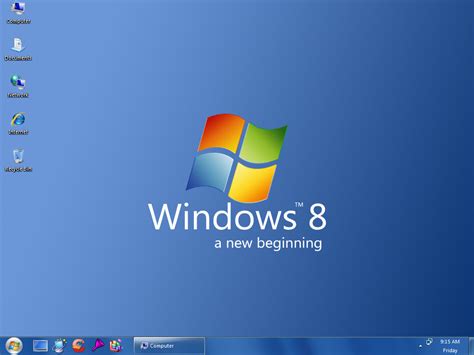
technology industry. Microsoft released Windows 8 on October 26, 2012, which brought
significant changes to the Windows operating system. Designed with a focus on
touch capability to compete with tablets, Windows 8 introduced the 'Metro'
interface with live tiles and a new Start screen. While innovative, it
received mixed reactions due to its departure from the traditional desktop
interface and learning curve for users. Nevertheless, it showcased
Microsoft's intent to bridge PC and mobile experiences.
In a significant acquisition announcement on May 10, 2011,
Microsoft stated it would purchase Skype Technologies for $8.5 billion. The
deal was completed by October 2011, with Skype becoming a division within
Microsoft. This acquisition was a strategic move to strengthen Microsoft's
communication capabilities. Skype provided a popular platform for video and
voice calls, complementing Microsoft’s existing communication technologies
like Lync and enhancing its consumer and enterprise offerings. On April 25, 2014, Microsoft completed its acquisition of
Nokia's Devices and Services business for approximately $7.2 billion. The
acquisition included Nokia's mobile phone assets, with an aim to enhance
Microsoft's Windows Phone ecosystem. The move was seen as an attempt by
Microsoft to gain a foothold in the smartphone market and compete with
Android and iOS. Although it initially strengthened Microsoft's mobile
presence, the acquisition struggled to achieve its intended impact. Microsoft Corporation announced on June 13, 2016, its
acquisition of LinkedIn for $26.2 billion, marking one of the largest deals
in tech history. LinkedIn, a leading professional networking platform,
aligned with Microsoft's goals of integrating professional cloud and
networking services. The purchase was aimed at capitalizing on LinkedIn's
global popularity to expand its presence in enterprise social networking and
enhance its productivity services. Windows 11 was officially released on October 5, 2021. It was
made available as a free upgrade for eligible Windows 10 devices starting on
that date.
On January 18, 2022, Microsoft announced its agreement to
acquire Activision Blizzard in a deal valued at $68.7 billion, which if
completed, will be the largest acquisition in the history of the video game
industry. The acquisition aims to bolster Microsoft's gaming presence with
popular franchises like Call of Duty, World of Warcraft, and Candy Crush, and
to strengthen its position in the growing markets of cloud gaming and
metaverse applications.
The
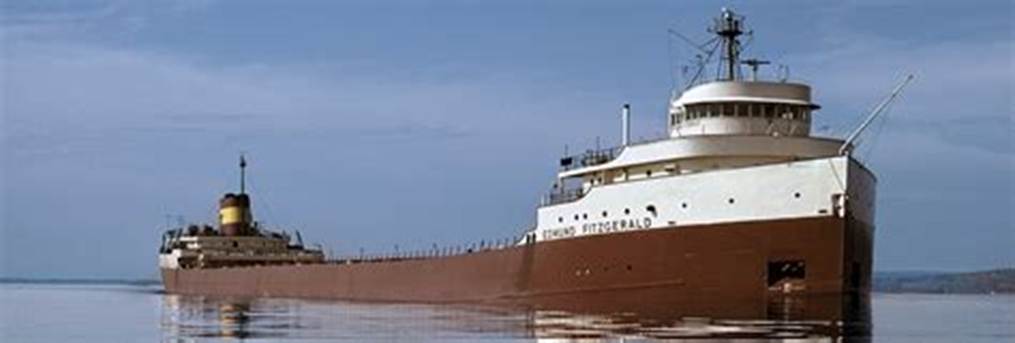
Edmund Fitzgerald sunk, in Lake Superior during a storm, was sailing near the Arthur M Anderson, which
would be the first to search for survivors. The SS Edmund Fitzgerald great
lakes freighter took on water, developed a list, and lost radar, but no
distress signal was sent. Captain McSorley’s last communication with the
Arthur M Anderson was, “We are holding our own.” A significant search was
undertaken but found only debris. The ship broke into two pieces. All 29 crew
were lost and never recovered.
She
embarked on her final voyage from Superior, Wisconsin, near Duluth, carrying
a full cargo of taconite ore pellets. Caught the next day in a severe storm
with near-hurricane-force winds and waves up to 35 feet high. Sank in
Canadian (Ontario) waters 530 feet deep, about 17 miles from Whitefish Bay
near the twin cities of Sault Ste. Marie, Michigan, and Sault Ste. Marie,
Ontario. Fitzgerald
was the first laker built to the maximum St. Lawrence Seaway size, which was
730 feet long, 75 feet wide, and with a 25-foot draft. The vertical height of
the hull was 39 ft. The inside height of the cargo hold was 33 ft 4 in. She
was the largest ship on North America's Great Lakes and remains the largest
to have sunk there.
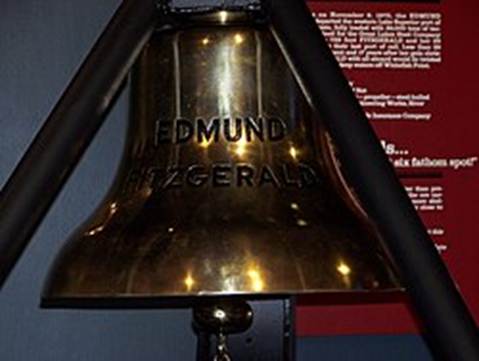
The bell from Edmund
Fitzgerald on display at the Great Lakes Shipwreck Museum
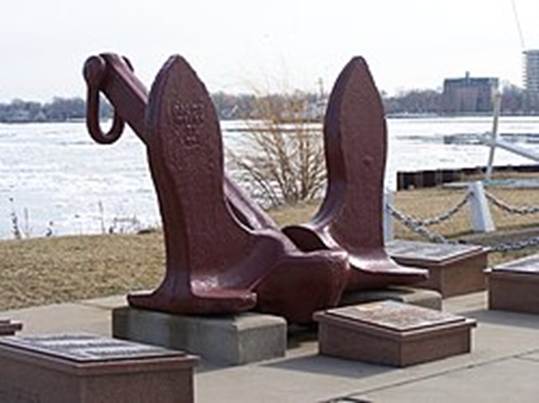
Edmund Fitzgerald bow
anchor on display at the Dossin Great Lakes Museum |


|
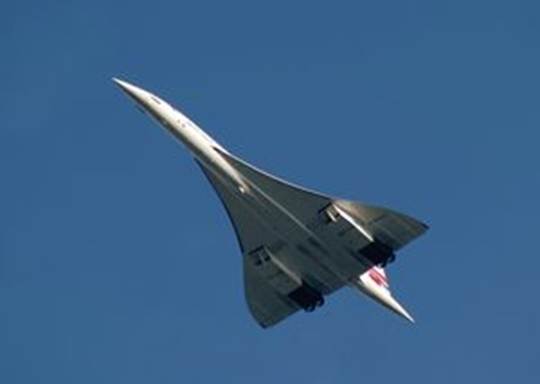
1976 Concorde,
the first supersonic passenger-carrying commercial airplane (or supersonic
transport, SST), built jointly by aircraft manufacturers in Great Britain and
France. The Concorde made its first transatlantic crossing on September 26,
1973, and it inaugurated the world’s first scheduled supersonic passenger
service on January 21, 1976 The Concorde had a maximum cruising speed of 1,354 miles per
hour, or Mach 2.04 (more than twice the speed of sound), allowing the
aircraft to reduce the flight time between London and New York to about three
hours.
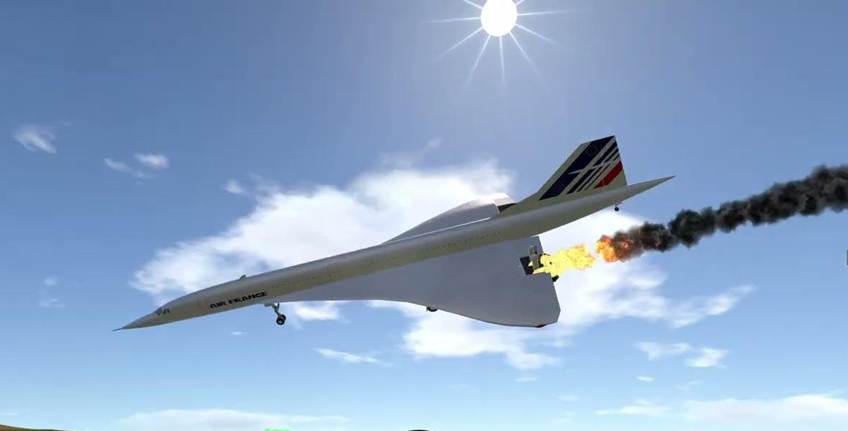
On July 25, 2000, a Concorde en route from Paris to New York
City suffered engine failure shortly after takeoff when debris from a burst
tire caused a fuel tank to rupture and burst into flames. The aircraft
crashed into a small hotel and restaurant. All 109 persons on board,
including 100 passengers and 9 crew members, died; 4 people on the ground
were also killed.
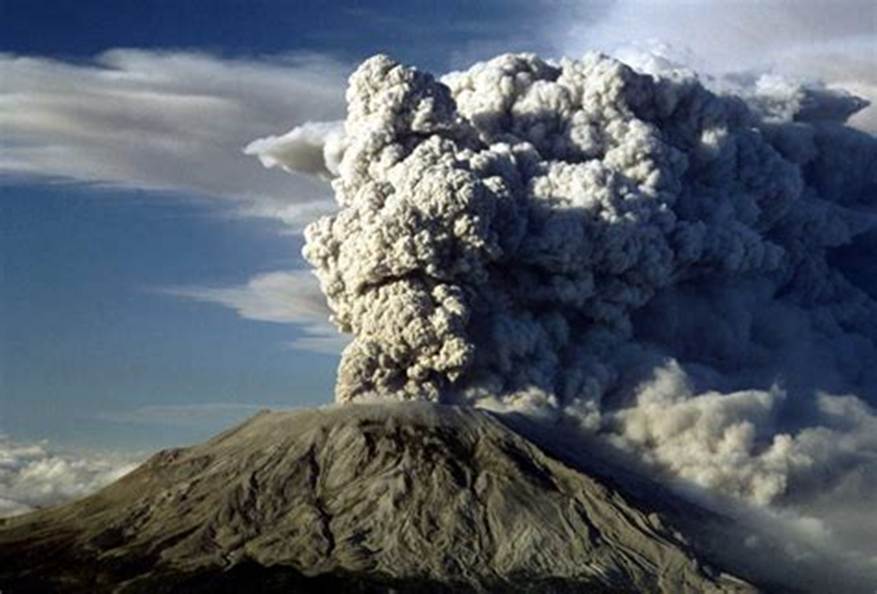
1980 Mount
St Helens erupts, which began with a series of
earthquakes in March, culminated in a major explosive event on May 18,
resulting in the largest landslide in recorded history and significant
ecological devastation. Over $1 billion in property damage, a total of 57
people and thousands of animals were killed, and trees over an area of some
200 square miles were blown down by the lateral air blast. At the event’s
end, Mount Saint Helens’s volcanic cone had been completely blasted away; in
place of its 9,677-foot peak was a horseshoe-shaped crater with a rim
reaching an elevation of 8,363 feet. Further eruptions occurred until 1986,
and a dome of lava grew intermittently in the crater. Seismic activity
occurred again between 1989 and 1991 (including some small explosions) as
well as in 1995 and 1998. The volcano’s most recent eruptive period, which
was characterized by the partial rebuilding of the lava dome inside the
crater, took place between 2004 and 2008.
Mount Saint Helens has erupted more than 40 times, with large,
explosive eruptions occurring four times between 2340 and 530 BC, as well as
in 1480, 1482, and 1800. After a minor eruption in 1857, it entered a period
of relative quiet that lasted more than a century.
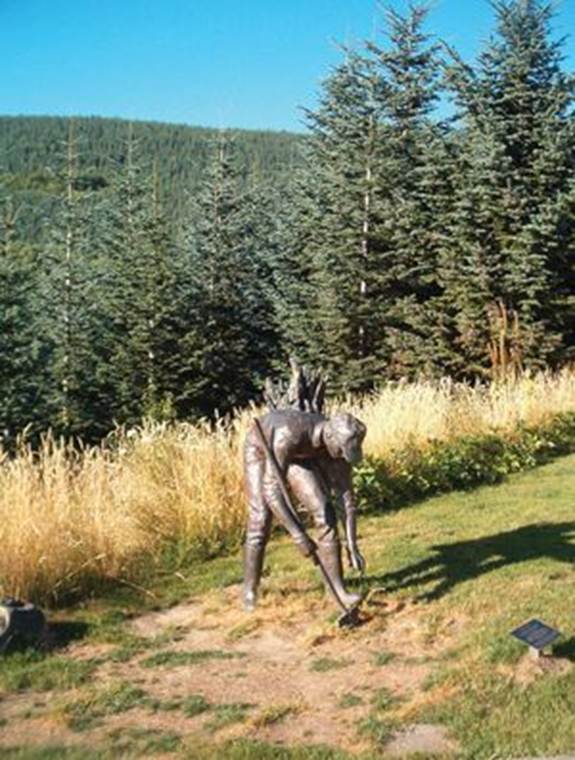
Statue of a man planting trees, dedicated to those who
replanted the area |