Home
About
Links
Hobbycraft
Photos
Downloads
5 BC 🌍 232 million
|
Jesus
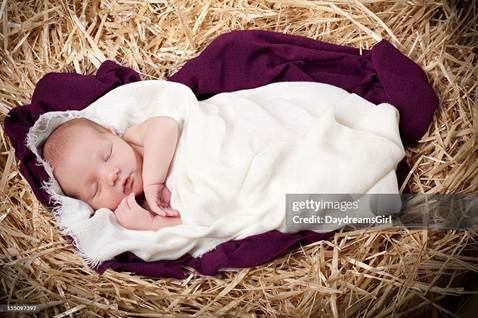
of Nazareth was born, also known as Jesus Christ and by various
other names and titles, was a Jewish preacher and religious leader who lived
during the 1st century. Recognized as the central figure of Christianity—the
world's largest religion—Jesus is regarded by most Christians as the
incarnation of God the Son and the prophesied messiah from the Davidic line,
as described in the Old Testament. Nearly all contemporary scholars of
antiquity agree on the historical existence of Jesus. Information about his
life is primarily found in the Gospels, particularly the four canonical
Gospels of the New Testament. Since the Enlightenment, academic research has
yielded numerous perspectives regarding the historical reliability of these
texts and their reflection of the historical Jesus. According to Christian tradition, as detailed in the Gospels and
the Acts of the Apostles, Jesus was circumcised at eight days old, baptized
by John the Baptist as a young adult, and, following a period of forty days
and nights of fasting in the wilderness, began his ministry. He served as an
itinerant teacher who interpreted divine law with authority and was often
referred to as "rabbi." Jesus frequently engaged in theological
debates with other Jewish leaders, performed healings, taught using parables,
and attracted followers, appointing twelve as his apostles. Jesus was subsequently arrested in Jerusalem, tried by the
Jewish authorities, handed over to the Roman government, and crucified under
the order of Pontius Pilate, the Roman prefect of Judaea. After his death,
his followers asserted that he rose from the dead, and after his ascension,
they formed a community that evolved into the early Christian Church, which
expanded globally. Christian theology holds that Jesus was conceived by the Holy
Spirit, born to the Virgin Mary, performed miracles, established the
Christian Church, died by crucifixion as a sacrifice for the atonement of
sin, rose from the dead, and ascended into Heaven, from where he is expected
to return. Commonly, Christians believe that through Jesus, humanity may be
reconciled with God. The Nicene Creed professes that Jesus will judge the
living and the dead, either before or after their bodily resurrection—a belief
associated with the Second Coming in Christian eschatology. Most Christians
worship Jesus as the incarnation of God the Son, the second person of the
Trinity. His birth is celebrated annually on December 25th (Christmas), his
crucifixion commemorated on Good Friday, and his resurrection observed on
Easter Sunday.
|

CE – Common Era or AD
|
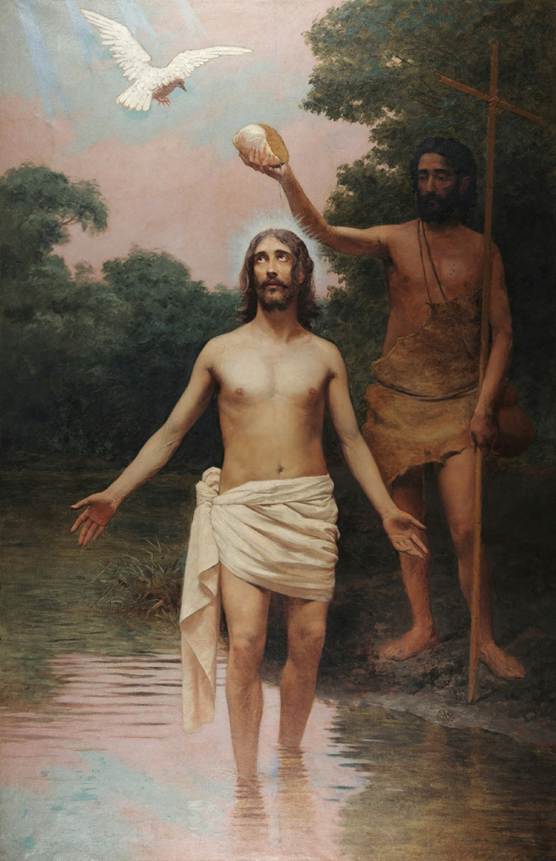
27 Jesus
baptized, by John the Baptist, the ritual purification
of Jesus with water by John the Baptist, was a major event described in the
three synoptic Gospels of the New Testament (Matthew, Mark, and Luke).[a] It
is considered to have taken place at Al-Maghtas (also called Bethany Beyond
the Jordan), today located in Jordan. Along with the crucifixion of Jesus, biblical scholars view it
as one of the two historically certain facts about him, and often use it as
the starting point for the study of the historical Jesus.
|

|
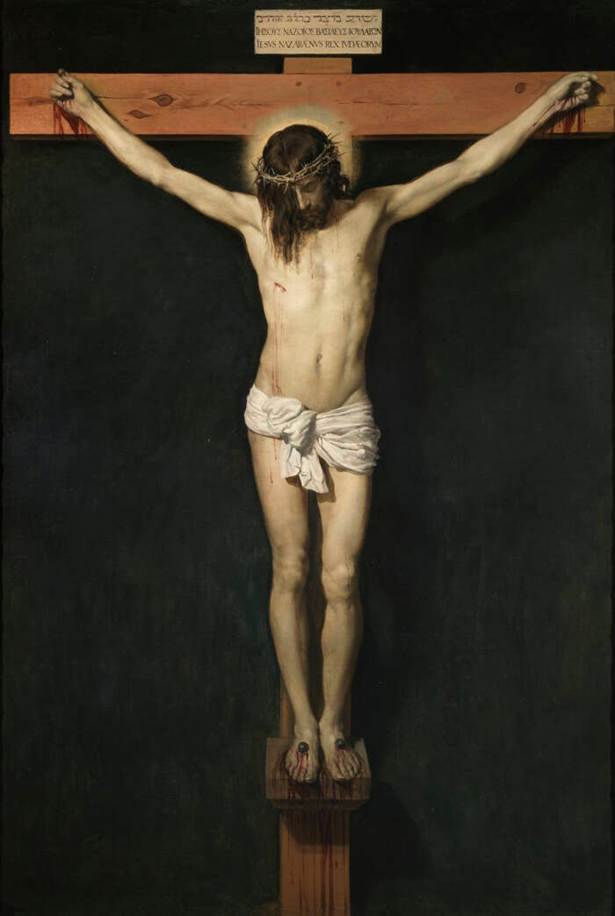
30 Crucifixion of Jesus was the death of Jesus by being
nailed to a cross. Jesus said there was a kingdom greater than Rome and God would
take care of society’s poorest members. And — to the alarm of Jewish leaders
— some of his followers began to believe that he was the Messiah. “I am the way and the truth and the life. No one comes to the
Father except through me,” Jesus said. As John 5:18 further explains: “For this reason they tried all
the more to kill him; not only was he breaking the Sabbath, but he was even
calling God his own Father, making himself equal with God.” But things came
to a head during Passover in 30 C.E., when Jesus traveled to Jerusalem. Then,
he was greeted by adoring crowds who waved palm branches to welcome him. This
was threatening enough to local religious leaders, but when Jesus found
pilgrims exchanging money and sacrificing animals at holy temples, he flew
into a rage and drove them out. The Sanhedrin, a Jewish ruling body composed of priests and
local elites, soon decided that Jesus had gone too far. Not only did his
growing popularity threaten them, but it also threatened peace with Rome. They arranged for his arrest, hoping that he’d be sentenced to
death. Jesus Christ was arrested in the Garden of Gethsemane and put on trial
before the Sanhedrin. The Sanhedrin found him guilty of blasphemy for calling himself
the Son of God. Christianity.com explains that the Jewish leaders of the
Sanhedrin wanted Jesus killed — but they could not order an execution
themselves. So, they took him before the Roman governor of Judaea: Pontius
Pilate. Pilate had become the governor of Judaea some years earlier, around
26 C.E. And now, it fell on him to decide Jesus Christ’s fate. Pilate interrogated Jesus about his alleged crimes. During their
conversation, Pilate seemed to pick up on certain language about “kings” and
“kingdoms.” Jesus tells Pilate: “My kingdom is not of this world. If it were,
my servants would fight to prevent my arrest by the Jewish leaders. But now
my kingdom is from another place.” Pilate responds: “You are a king, then!”
Jesus answers: “You say that I am a king.” Turning to the nearby gathering crowd, Pilate notes that it’s
Passover and that tradition states that he can commute one criminal’s
sentence. But when he asks the crowd whether they want him to release “the
King of the Jews,” they demand that he release another man named Barabbas. Indeed, the Gospels depict Pilate as a reluctant judge in front
of a bloodthirsty mob. As they cry, “Let Him be crucified,” Pilate asks what
“evil” Jesus has done and washes his hands — literally — of Jesus’ death. Jesus was stripped of his clothing and offered vinegar mixed
with myrrh or gall to drink. At Golgotha, he was then hung between two
convicted thieves and, according to the Gospel of Mark, was crucified at the
third hour (9 a.m.), and died by the ninth hour of the day (at around 3:00
p.m.).
|

|
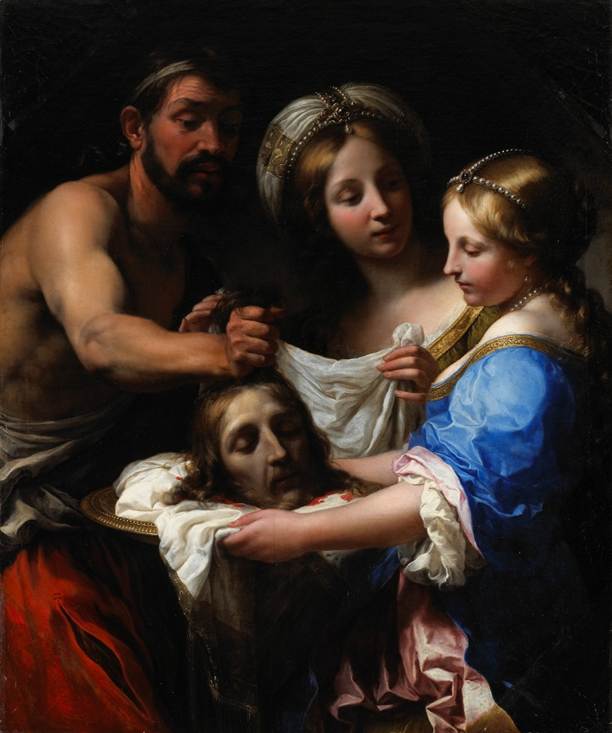
John the Baptist was executed, sentenced to death and subsequently beheaded by Herod Antipas after hearing stories about Jesus, imagines that this is John the Baptist raised from the dead. John rebuked him for divorcing his wife and then unlawfully
wedding Herodias, the wife of his brother Herod Philip I. Herodias's unnamed
daughter dances before Herod, who is pleased and offers her anything she asks
for in return. When the girl asks her mother what she should request, she is
told to demand the head of John the Baptist. Reluctantly, Herod orders the
beheading of John, and his head is delivered to her, at her request, on a
plate. John's disciples take the body away and bury it in a tomb.
Severed head of John the Baptist |

|
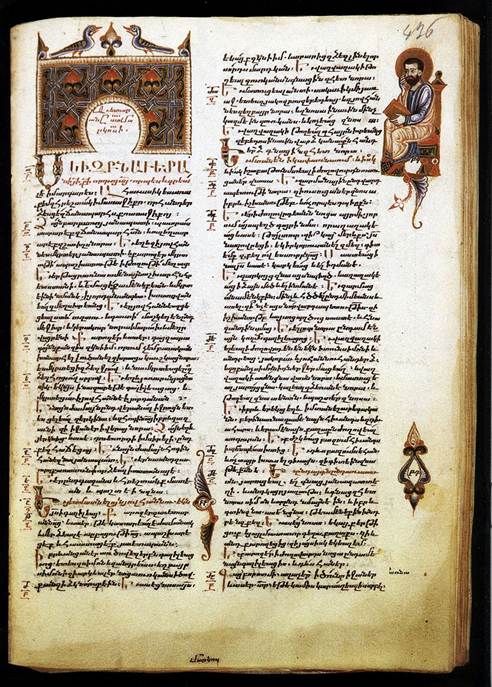
66 Gospel
of Mark is written, the first of four synoptic gospels It tells of the ministry of Jesus from his baptism by John the
Baptist to his death, the burial of his body, and the discovery of his empty
tomb. It portrays Jesus as a teacher, an exorcist, a healer, and a miracle
worker, though it does not mention a miraculous birth or divine
pre-existence.[4] Jesus refers to himself as the Son of Man. He is called the
Son of God but keeps his messianic nature secret; even his disciples fail to
understand him. All this is in keeping with the Christian interpretation of
prophecy, which is believed to foretell the fate of the messiah as a
suffering servant.
|

|
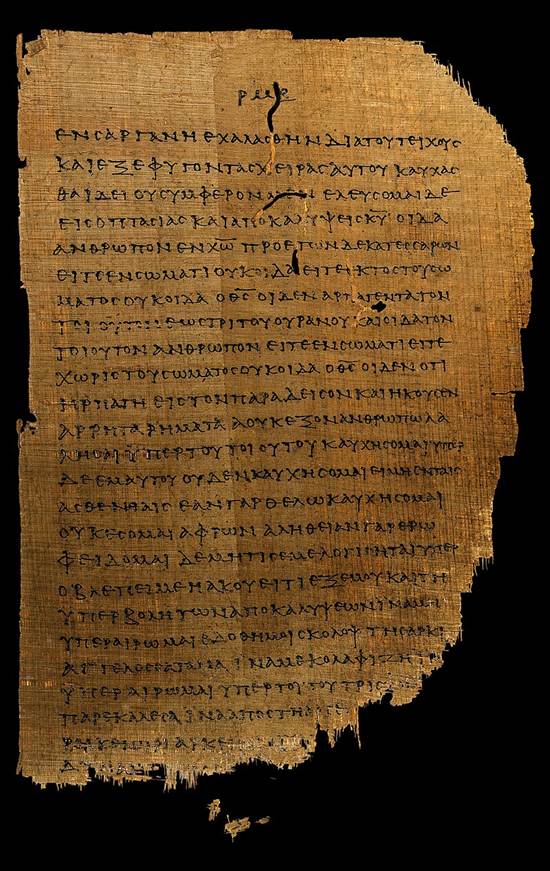
70 The
Gospel Matthew portion of the bible is written, is the first book of the new
testament of the bible. The Gospel of Matthew tells how Jesus, believed by the author to
be Israel's messiah, fulfills Jewish prophecy through his life, teachings,
death, and resurrection. The gospel highlights tensions between Jewish
Christians and other Jews, critiques religious leaders, and stresses that the
Kingdom of Heaven is now for the church. It frames Jesus as Son of David, Son
of Man, and Son of God, and organizes his ministry around narratives and
discourses, culminating in the Passion, Resurrection, and Great Commission.
|

|
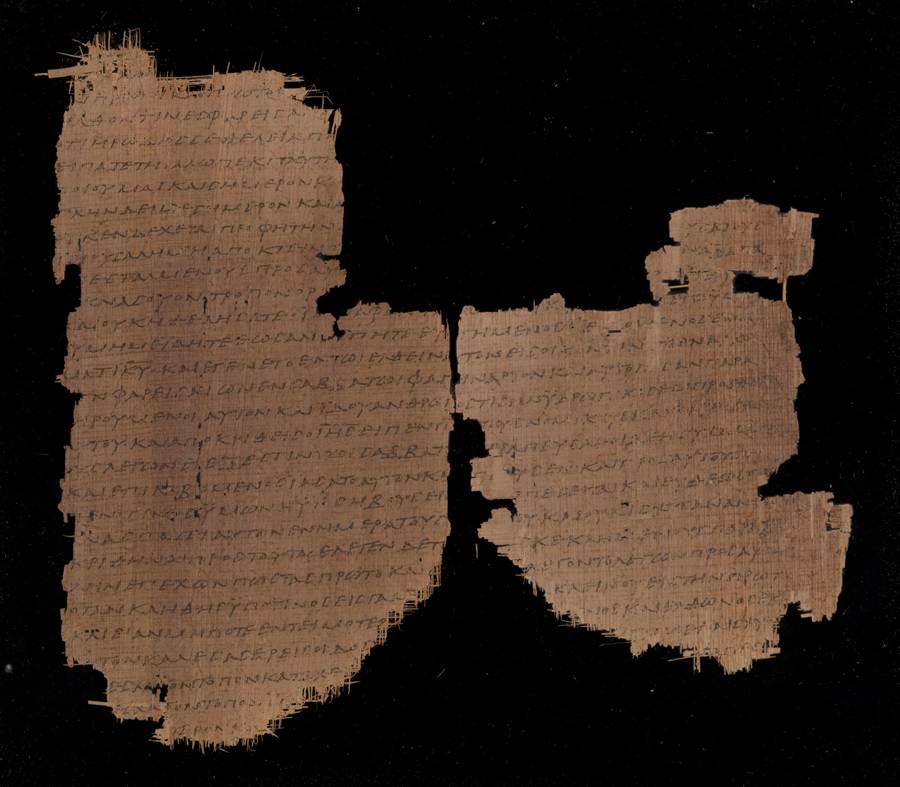
75 The
Gospel Luke portion of the bible is written, the third of the New Testament's four
canonical Gospels. It tells of the origins, birth, ministry, death,
resurrection, and ascension of Jesus. Together with the Acts of the Apostles,
it makes up a two-volume work which scholars call Luke–Acts, accounting for
27.5% of the New Testament. The combined work divides the history of
first-century Christianity into three stages, with the gospel making up the
first two of these – the life of Jesus the messiah (Christ) from his birth to
the beginning of his mission in the meeting with John the Baptist, followed
by his ministry with events such as the Sermon on the Plain and its
Beatitudes, and his Passion, death, and resurrection.
|

|
80 The
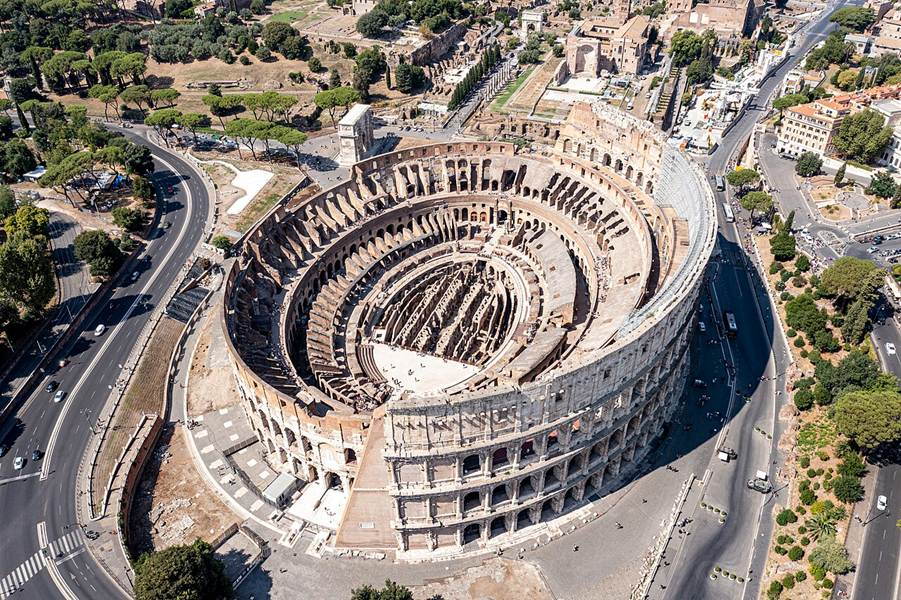
Roman Colosseum completed, is an
elliptical amphitheater in the center of the city of Rome, Italy, just east
of the Roman Forum. It is the largest ancient amphitheater ever built, and is
the largest standing amphitheater in the world. Construction began under the
Emperor Vespasian.
Colosseum
2021 |
|
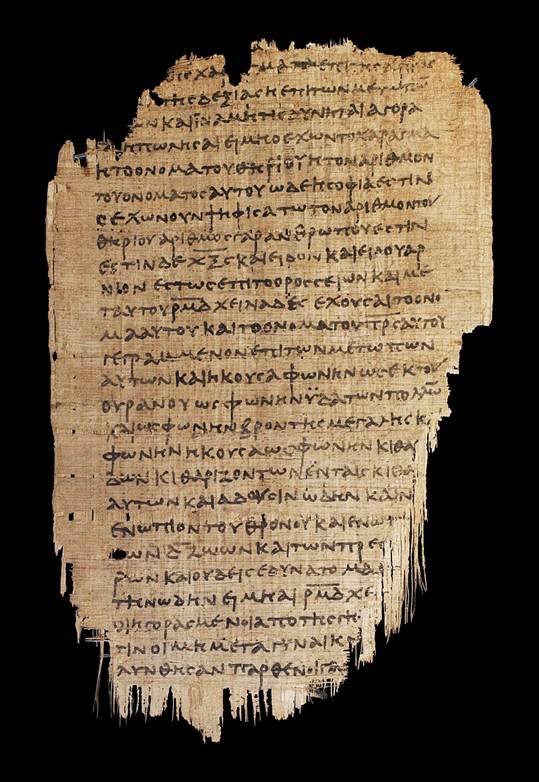
95 The Gospel John and
the book of Revelations is written, is canonically the last book of
the New Testament. Written in Greek, its title is derived from the first word of
the text, apocalypse, which means "revelation" or
"unveiling". The Book of Revelation is the only apocalyptic book in
the New Testament canon, and occupies a central place in Christian
eschatology.
|
|
105 🌍 237 million Paper
making in China, a
thin nonwoven material traditionally made from a combination of milled plant
and textile fibers. The first paper-like plant-based writing sheet was papyrus in
Egypt, but the first true papermaking process was documented in China,
traditionally attributed to the court official Cai Lun. This plant-puree
conglomerate produced by pulp mills and paper mills was used for writing,
drawing, and money. Paper played a pivotal role in early Chinese written culture,
and a "strong reading culture seems to have developed quickly after its
introduction. Paper had immense consequences for the book world. It meant
books would no longer have to be circulated in small sections or bundles, but
in their entirety. Books could now be carried by hand rather than transported
by cart. As a result, individual collections of literary works increased in
the following centuries.
|


|
126 The
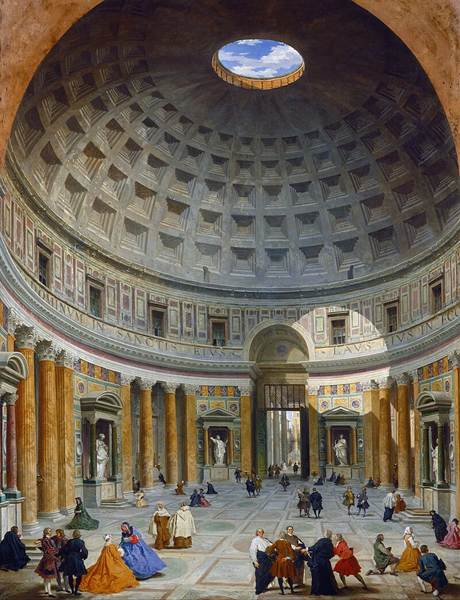
Roman Pantheon is built in Rome, Built on the site of an earlier
temple, which had been commissioned by Marcus Vipsanius Agrippa during the
reign of Augustus . After the original burnt down, the present building was
ordered by the emperor Hadrian. Its date of construction is uncertain,
because Hadrian chose to re-inscribe the new temple with Agrippa's original
date inscription from the older temple. The building is round in plan, except for the portico with large
granite Corinthian columns under a pediment. A rectangular vestibule links
the porch to the rotunda, which is under a coffered concrete dome, with a
central opening (oculus) to the sky. Almost two thousand years after it was built, the Pantheon's
dome is still the world's largest unreinforced concrete dome. The height to
the oculus and the diameter of the interior circle are the same, 142 ft. It is one of the best-preserved of all Ancient Roman buildings,
in large part because it has been in continuous use throughout its history.
Since the 7th century, it has been a church dedicated to St. Mary and the
Martyrs), known as "Santa Maria Rotonda". The square in front of the Pantheon is called Piazza della
Rotonda. The Pantheon is a state property, managed by Italy's Ministry of
Cultural Heritage and Activities and Tourism through the Polo Museale del
Lazio.
|

|
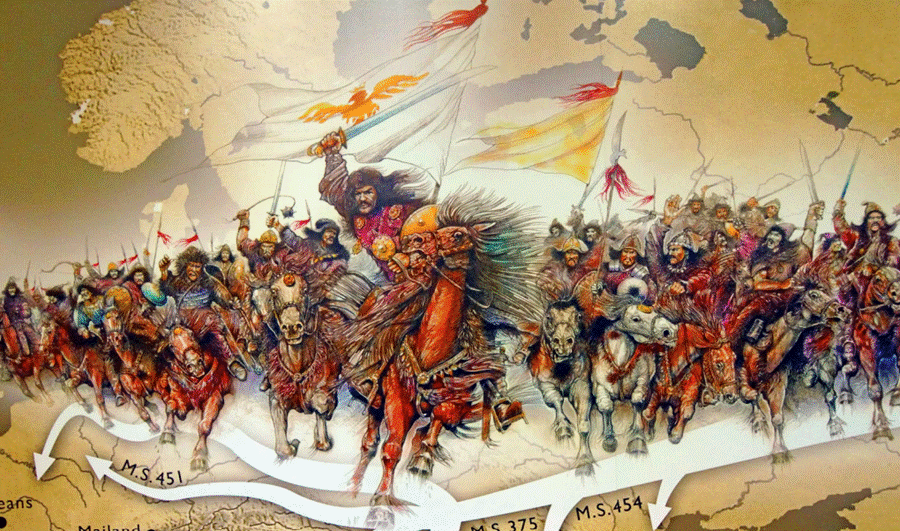
406 🌍 241 million Birth
of Attila the hun, was
the king of the Huns from 434 to 453 (ruling jointly with his elder brother
Bleda until 445). He was one of the greatest rulers among those groups that
the Romans referred to as barbarians. Attila assailed the Roman Empire by
invading the southern Balkan provinces and Greece and then Gaul and Italy Attila is often embraced in Hungarian folklore as a heroic
ancestor. While the Huns and Magyars (early Hungarians) were distinct
peoples, medieval chroniclers and later nationalists linked them to create a
sense of ancient continuity. The name Attila is popular in Hungary today, and
many Hungarian men bear it proudly. Both the Huns and Magyars settled in the
Pannonian Basin, which includes much of modern Hungary. This geographic
overlap helped fuel the myth of ancestral connection. Around 445, Attila became the sole ruler of the Huns after the
death of his brother Bleda. In 447, he launched a large-scale campaign
against the Eastern Roman Empire, focusing on the provinces of Lower Scythia
and Moesia in southeastern Europe, which was further east than previous
campaigns. Subsequently, Attila's forces moved through the Balkan provinces
and advanced into Greece, where progress was halted at Thermopylae. Attila’s next great campaign was the invasion of Gaul in 451. He
appears to have been on friendly terms with the Roman general Aetius, the
real ruler of the West at this time, and his motives for marching into Gaul
have not been recorded. He announced that his objective in the West was the
kingdom of the Visigoths and that he had no quarrel with the Western emperor,
Valentinian III. But in the spring of 450, Honoria, the emperor’s sister,
sent her ring to Attila, asking him to rescue her from a marriage that had
been arranged for her. Attila claimed Honoria as his wife and demanded half the Western
Empire as her dowry. When Attila had already entered Gaul, Aetius reached an
agreement with the Visigothic king, Theodoric I, to combine their forces in
resisting the Huns. Attila almost succeeded in occupying Aurelianum (Orléans)
before the allies arrived. Indeed, the Huns had already gained footing inside
the city when Aetius and Theodoric forced them to withdraw. The decisive
engagement was the Battle of the Catalaunian Plains, or, according to some
authorities, of Maurica (both places are unidentified). After fierce
fighting, in which the Visigothic king was killed, Attila withdrew and
shortly afterward retired from Gaul. This was his first and only defeat. In 452, the Huns invaded Italy and sacked several cities,
including Aquileia and Milan; Aetius was unable to stop them. However, famine
and disease forced the Huns to withdraw before crossing the Apennines. In 453, Attila planned to attack the Eastern Empire after
Emperor Marcian refused to pay subsidies, but died suddenly in his sleep
after his marriage. The Huns killed those who buried him and his riches to
keep the grave's location secret. His sons inherited and divided the empire. Priscus, who visited Attila's camp in 448, described him as
short and stocky with a large head, deep-set eyes, flat nose, and thin beard.
Despite being irritable and forceful, Attila was a skilled negotiator and not
without compassion. At a banquet, Priscus observed Attila eating simply while
his lieutenants dined in luxury. While detailed accounts of his generalship
are lacking, his earlier victories indicate he was an exceptional commander.
|