Home
About
Links
Hobbycraft
Photos
Downloads
2348 BC
|
World
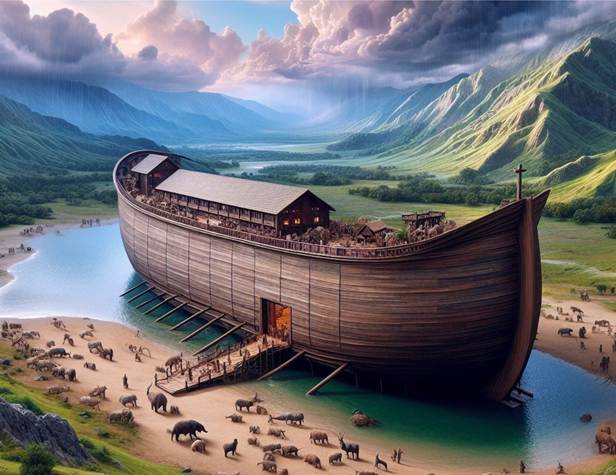
wide flood, referred to as Noah’s Flood |
|
Mainstream geology does not support a global flood in recent
human history. However, there are records of massive regional floods, such as
the flooding of the Black Sea basin around 5600 BC, which some researchers
speculate may have inspired flood legends. |
|
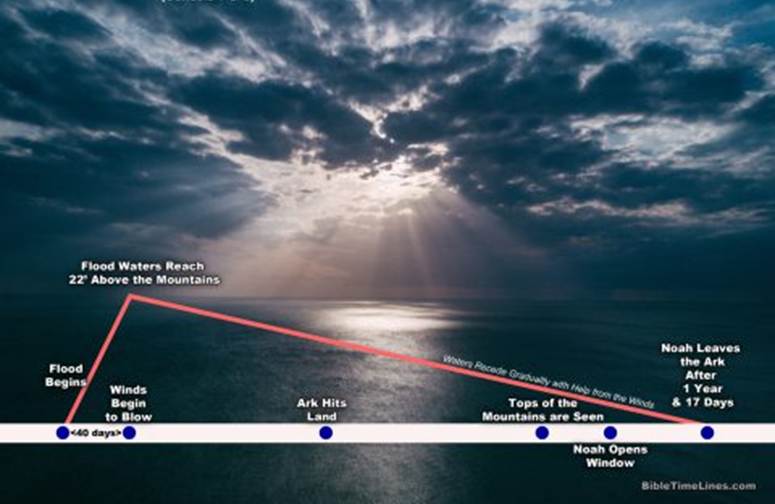
“God saw that the earth was corrupt and filled with violence,
and he decided to destroy what he had created. But God found one righteous
man, Noah, and to him he confided his intention: "I am about to bring on
the Flood ... to eliminate everywhere all flesh in which there is the breath
of life ... ." So God instructed him to build an ark, and Noah entered
the Ark in his six hundredth year [of life], and on the 17th day of the
second month of that year "the fountains of the Great Deep burst apart
and the floodgates of heaven broke open" and rain fell for forty days
and forty nights until the highest mountains were covered to a depth of 15
cubits, and all life perished except Noah and those with him in the Ark.
After 150 days, "God remembered Noah ... and the waters subsided"
until the Ark rested on the mountains of Ararat, and on the 27th day of the
second month of Noah's six hundred and first year the earth was dry. Then
Noah built an altar and made a sacrifice, and God made a covenant with Noah
that man would be allowed to eat every living thing but not its blood, and
that God would never again destroy all life by a flood.” |
1525 BC 🌍 73 million
|
Birth
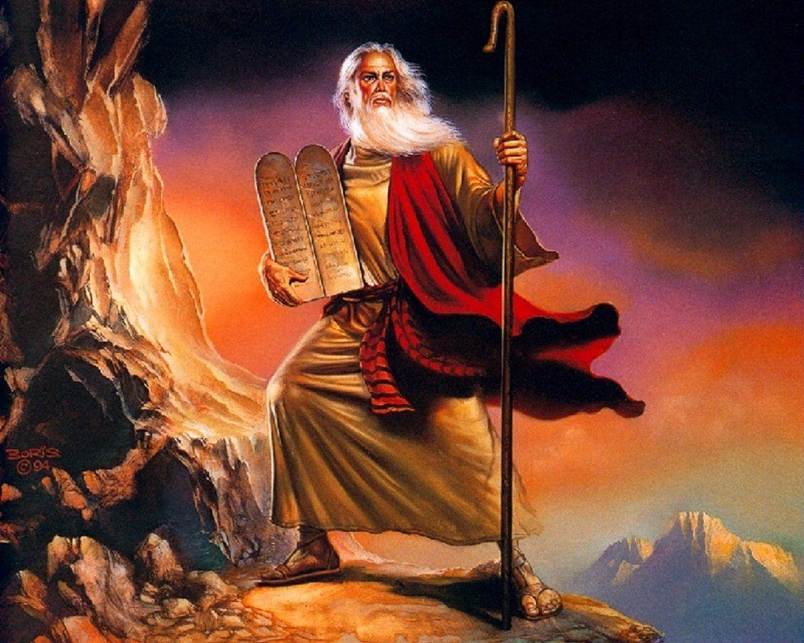
of Moses, considered one of the most important
religious leaders in world history. He is claimed by the religions of
Judaism, Christianity, Islam and Bahai as an important prophet of God and the
founder of monotheistic belief. There’s no definitive archaeological proof of
Moses as a historical figure. However, some inscriptions, geographic
correlations, and cultural memory lend weight to the possibility that his
story reflects real events or people from ancient Semitic history. Moses
lived to be 120 years old, according to the Bible. |
|
Moses is best known from the story in the biblical Book of
Exodus and Quran as the lawgiver who met God face-to-face on Mount Sinai to
receive the Ten Commandments after leading his people, the Hebrews, out of
bondage in Egypt and to the "promised land" of Canaan. The story of
the Hebrew Exodus from Egypt is only found in the Penteteuch, the first five
books of the Bible, and in the Quran which was written later. |
|
No other ancient sources corroborate the story and no
archaeological evidence supports it. This has led many scholars to conclude
that Moses was a legendary figure and the Exodus story a cultural myth. |
776 BC 🌍 110 million
|
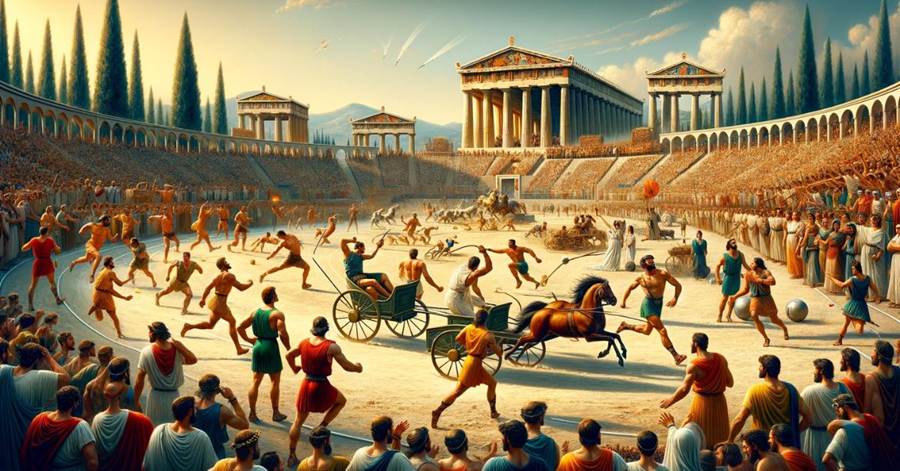
Olympic games are established, recurring set of athletic competitions are held every four
years. |
|
An Olympic truce ensured athletes' safe passage, and victors
received olive wreaths. The games served as a platform for political
declarations, alliances, and religious ceremonies, while also promoting
Hellenistic culture across the Mediterranean. |
563 BC
|
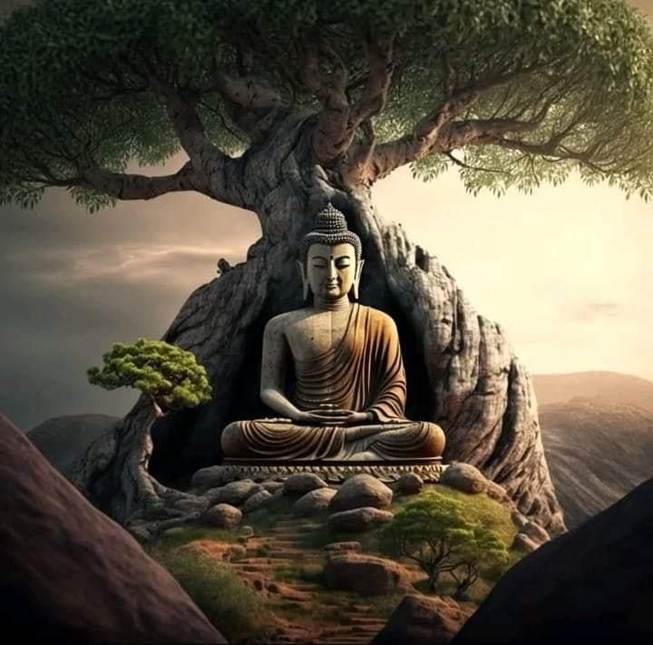
Buddha
is born, a spiritual teacher and founder of Buddhism, one of the
world’s major religions. His life story is both historically rich and
spiritually profound. According to Buddhist tradition, the Buddha taught a
Middle Way between sensual indulgence and severe asceticism, leading to
freedom from ignorance, craving, rebirth, and suffering |
500 BC
|
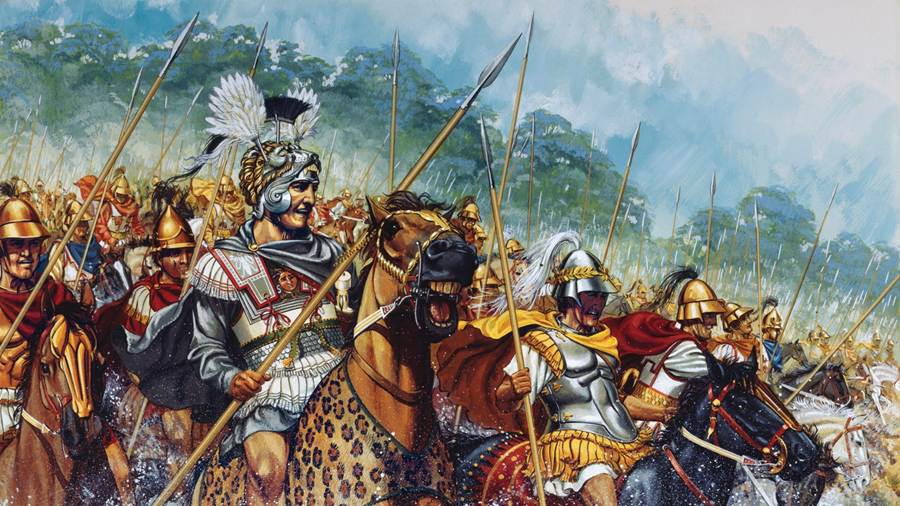
Military
campaigns by ethnic groups, they
fought against neighboring tribes. These early conflicts were crucial in
establishing territorial control and expanding influence. |
|
490 BC First
marathons, with someone running.26.2 miles. Greek soldier named Pheidippides ran from the battlefield of
Marathon to the city of Athens to deliver news of a Greek victory over the
invading Persians, covering a distance of roughly 25 miles in the process. As
the story goes, he burst into the assembly of Athenians, shouted “Nike! Nike!
Nenikekiam!” (“Victory! Victory! Rejoice, we conquer!”), then collapsed from
exhaustion and died. When London hosted the Olympics in 1908, organizers originally
planned a marathon route of 26 miles, starting at Windsor Castle and ending
at the entrance of the White City Stadium, which had been specially built for
the Games. The decision was made to have the finish line extended so the race
ended inside the stadium and in front of the royal box where King Edward VII
and Queen Alexandra would be in attendance. This alteration lengthened the
race from 26 miles to 26 miles and 385 yards — or exactly 26.2 miles.
|

|
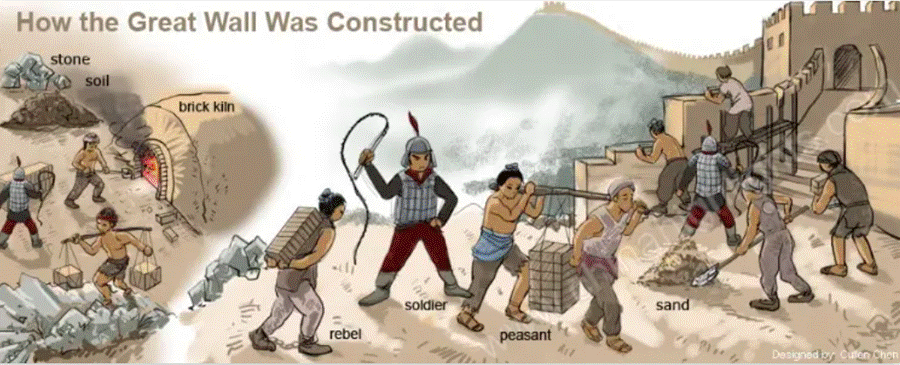
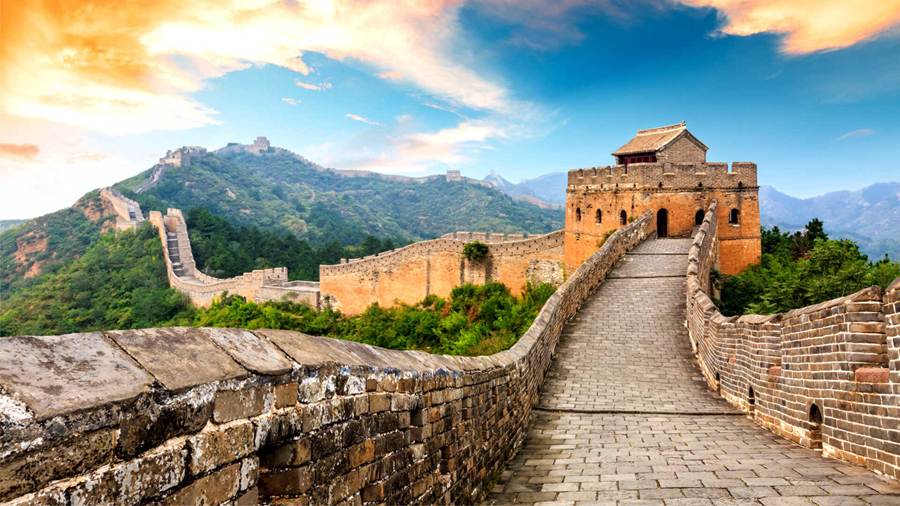
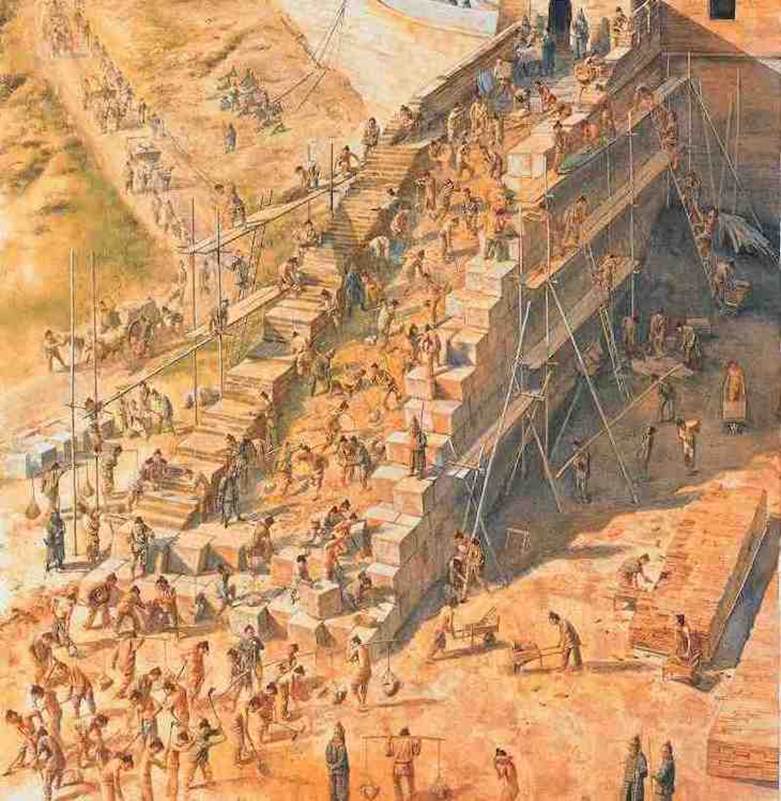
214 BC The
great wall of China construction begins, The main purpose of the Great
Wall was for border defense but it also transmitted messages using beacon
towers (communication) and allowed troops to travel in a faster way Glutinous rice mortar was used to bind the Great Wall bricks,
which is much stronger than ordinary lime mortar, and also water-resistant.
Arsenic, "the poison of kings" was used to prevent erosion of the
Wall by insects like ants
Over a million people worked on the Wall, many of them prisoners
of war, soldiers, and convicts. To distinguish outlaw laborers from their
civilian colleagues, authorities shaved the heads and bound the limbs of the
former in chains. This custom was especially common during the Qin and Han
dynasties. Crimes ranging from murder to tax evasions could be publishable by
wall duty. Responsibilities included keeping watch during the day and
building at night.
Working on the Great Wall was dangerous. According to some
estimates, about 400,000 workers perished while building it. |