Home
About
Links
Hobbycraft
Photos
Downloads
7500 BC
|
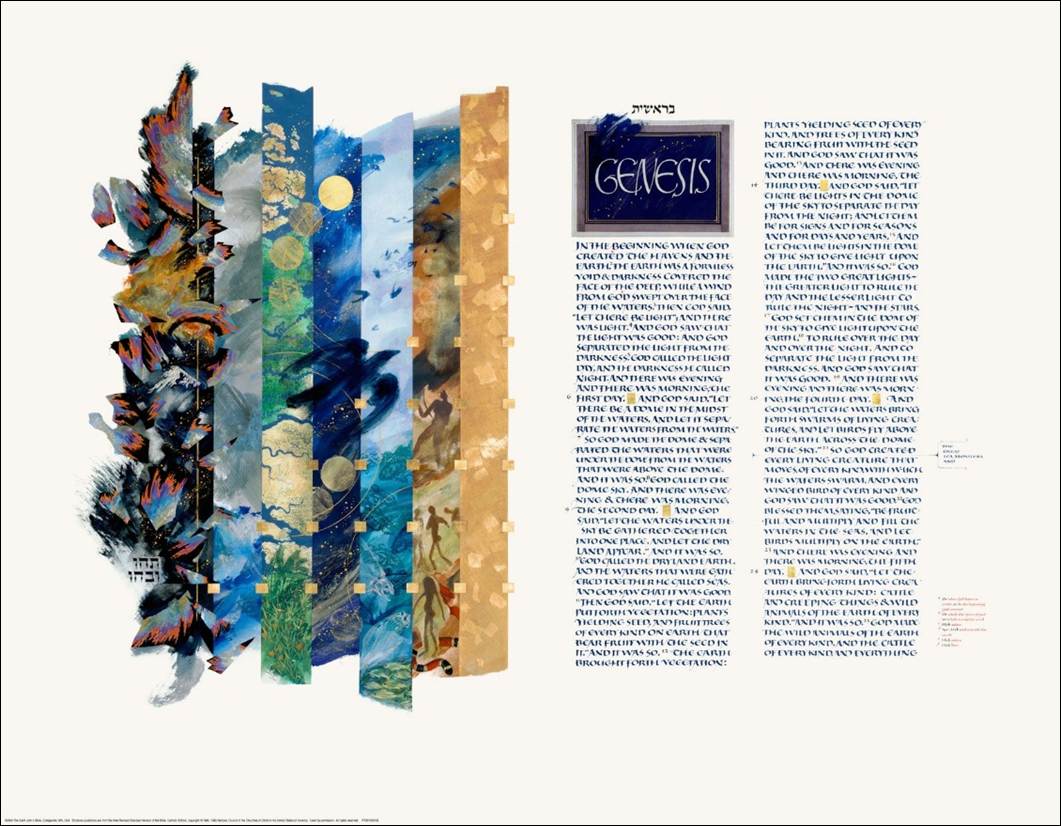
God created the universe in
six literal 24-hour days, based on a direct reading of Genesis the first book
of the Bible. Young Earth Creationists believe the universe was created 6,000
to 10,000 years ago to look like it was 13.8 billion years old with all the
details found in science. 1. In the beginning God created the heaven and
the earth. 2. And the earth was without form, and void;
and darkness was upon the face of the deep. And the Spirit of God moved upon
the face of the waters. 3. And God said, Let there be light: and there
was light. 4. And God saw the light, that it was good:
and God divided the light from the darkness. 5. And God called the light Day, and the
darkness he called Night. And the evening and the morning were the first day. 6. And God said, Let there be a firmament in the
midst of the waters, and let it divide the waters from the waters. 7. And God made the firmament, and divided the
waters which were under the firmament from the waters which were above the
firmament: and it was so. 8. And God called the firmament Heaven. And
the evening and the morning were the second day. 9. And God said, Let the waters under the
heaven be gathered together unto one place, and let the dry land appear: and
it was so. 10. And God called the dry land Earth; and the
gathering together of the waters called he Seas:
and God saw that it was good. 11. And God said, Let the earth bring forth
grass, the herb yielding seed, and the fruit tree yielding fruit after his
kind, whose seed is in itself, upon the earth: and it was so. 12. And the earth brought forth grass, and herb
yielding seed after his kind, and the tree yielding fruit, whose seed was in
itself, after his kind: and God saw that it was good. 13. And the evening and the morning were the
third day. 14. And God said, Let there be lights in the
firmament of the heaven to divide the day from the night; and let them be for
signs, and for seasons, and for days, and years: 15. And let them be for lights in the firmament
of the heaven to give light upon the earth: and it was so. 16. And God made two great lights; the greater
light to rule the day, and the lesser light to rule the night: he made the
stars also. 17. And God set them in the firmament of the
heaven to give light upon the earth, 18. And to rule over the day and over the
night, and to divide the light from the darkness: and God saw that it was
good. 19. And the evening and the morning were the
fourth day. 20. And God said, Let the waters bring forth
abundantly the moving creature that hath life, and fowl that may fly above
the earth in the open firmament of heaven. 21. And God created great whales, and every
living creature that moveth, which the waters
brought forth abundantly, after their kind, and every winged fowl after his
kind: and God saw that it was good. 22. And God blessed them, saying, Be fruitful,
and multiply, and fill the waters in the seas, and let fowl multiply in the
earth. 23. And the evening and the morning were the
fifth day. 24. And God said, Let the earth bring forth the
living creature after his kind, cattle, and creeping thing, and beast of the
earth after his kind: and it was so. 25. And God made the beast of the earth after
his kind, and cattle after their kind, and every thing
that creepeth upon the earth after his kind: and
God saw that it was good. 26. And God said, Let us make man in our image,
after our likeness: and let them have dominion over the fish of the sea, and
over the fowl of the air, and over the cattle, and over all the earth, and
over every creeping thing that creepeth upon the
earth. 27. So God created man in his own image, in the
image of God created he him; male and female created he them. 28. And God blessed them, and God said unto
them, Be fruitful, and multiply, and replenish the earth, and subdue it: and
have dominion over the fish of the sea, and over the fowl of the air, and
over every living thing that moveth upon the earth. 29. And God said, Behold, I have given you
every herb bearing seed, which is upon the face of all the earth, and every
tree, in the which is the fruit of a tree yielding seed; to you it shall be
for meat. 30. And to every beast of the earth, and to
every fowl of the air, and to every thing that creepeth upon the earth, wherein there is life, I have
given every green herb for meat: and it was so. 31. And God saw everything that he had made,
and, behold, it was very good. And the evening and the morning were the sixth
day.
|
7000 BC
🌍 9.7 million
|
A great earthquake destroys the city of Jericho. The City
of Jericho is widely recognized as one of the oldest continuously inhabited
cities in the world, with roots tracing back to the New Stone age. Located
near the Jordan River in the West Bank, early Jericho was more than a simple
settlement—it was a pioneering human community that showcased major
milestones in prehistoric development. In the
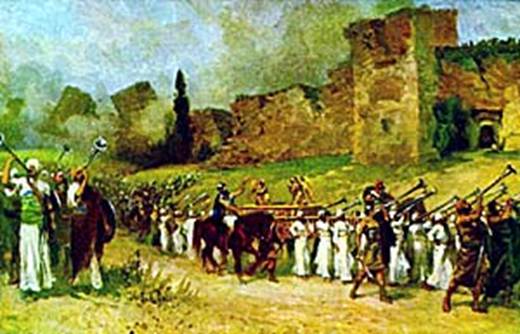
Old Testament, in Joshua chapter 6, we have an account of the Israelites
defeating the city of Jericho when they came into the Promised Land after
wandering in the wilderness for 40 years. According to the biblical account,
after the Israelites marched around the city once a day for six days, on the
seventh day they encircled the city seven times. On the seventh time around,
the priests blew the trumpets, the people shouted and the walls fell flat. |
|
The
nature of the earthquake was unusual. It struck in such a way as to allow a
portion of the city wall on the north side of the site to remain standing,
while everywhere else the wall fell. |
6800 BC
|
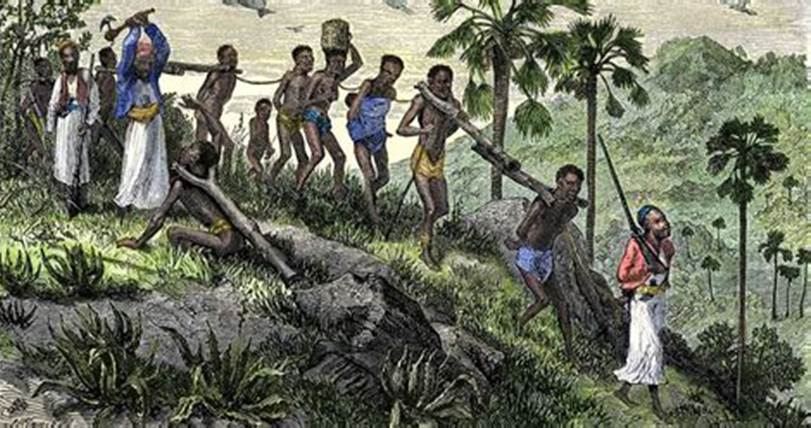
Beginning of
slavery,
dates
back to prehistoric times, likely emerging alongside the development of
agriculture. The earliest recorded instances of slavery can be traced to
ancient civilizations such as those in Mesopotamia, where it was recognized
in legal codes like the Code of Hammurabi around 1750 BC. |
6500 BC
|
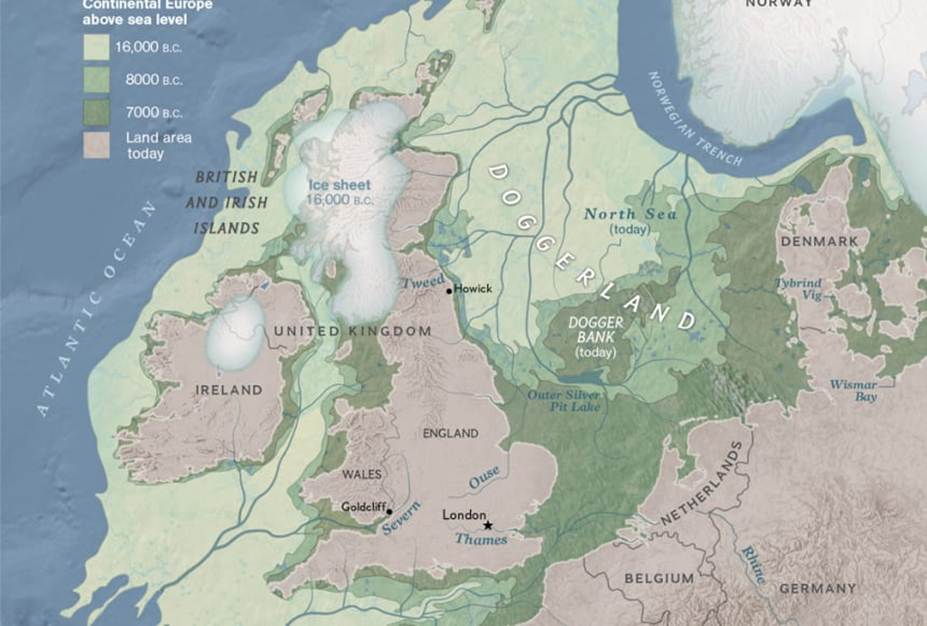
The oceans and sea’s rise, England is cut off from
Europe by land. As the ice melted at the end of the last glacial period of
the current ice age, sea levels rose, and the land began to tilt in an
isostatic adjustment as the huge weight of ice lessened. Called Doggerland eventually became submerged, cutting off what
was previously the British peninsula from the European mainland |
6,100 BC
|
First
Agricultural Revolution marked
the shift during the New Stone Age from hunting and gathering to agriculture
and settled communities. This transition enabled population growth and led to
plant domestication as people learned how crops developed. Change from a hunter-gatherer lifestyle to one of
settlement. Human
activity resulted in the selective breeding of cereal grasses (beginning with
emmer, einkorn and barley), and not simply of those that favored greater
caloric returns through larger seeds. Plants with traits such as small seeds
or bitter taste were seen as undesirable. Plants that rapidly shed their
seeds on maturity tended not to be gathered at harvest, therefore not stored
and not seeded the following season; successive years of harvesting
spontaneously selected for strains that retained their edible seeds longer.
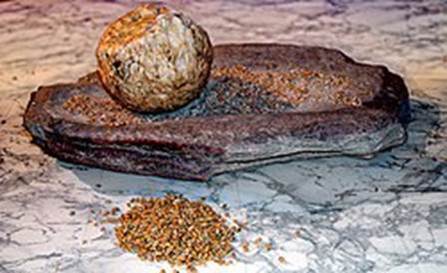
Grindstone for processing grain |
6000 BC
🌍 13.3
million
|
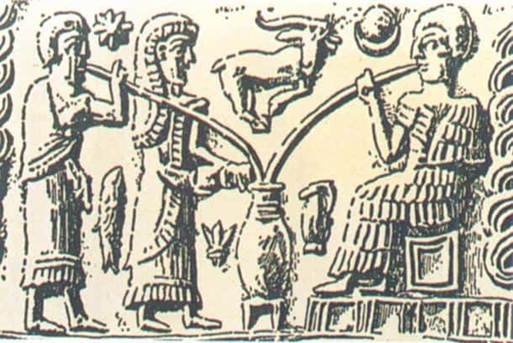
First beer is brewed from grain in the
near East Beer
likely originated from an accidental fermentation process. Early humans would
soak grains in water, which, due to wild yeasts, began to ferment. This
process transformed the mixture into a rudimentary form of beer, marking a
significant development in human culture. In
ancient societies, beer was more than just a drink; it played a vital role in
social and religious practices. It was consumed daily and used in rituals,
often seen as a gift from the gods. In Egypt, beer was so important that
laborers were sometimes paid in beer, and it was used in various medical
remedies. The
practice of brewing beer probably developed independently in different
cultures around the world. |
5000 BC
|
Maltese dog
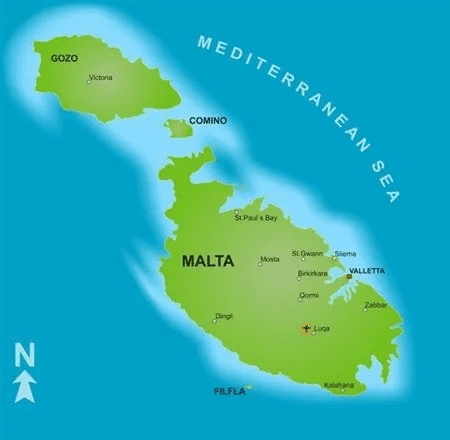
originated, originated on the Island of Malta–they called the breed
the Melitaie Dog. Melitaie
being the ancient name for Malta. There is really no evidence that proves the
dog was indigenous to the Island. Rather that the Maltese is descended from a
Spitz-type dog bred by the peoples of the area. Which is now south central
Europe. |
|
The
Maltese was one of the dogs worshipped by the ancient Egyptians. Numerous
pictorial representations of the Maltese occur in Greek ceramic art, such as
the vases found at Vulci (about 500 B.C.). The dog
is also mentioned in the writings of many Greek and Roman philosophers, and
other ancient poets and historians, including: Aristotle, Timon, Callimachus,
Aelian, Artimidorus, Epaminodus,
Martial, Strabo, Pliny the Elder and Saint Clement of Alexandria. Notable
ancient owners of Maltese include Roman Emperor Claudius and Publius, Roman
governor of Malta. |
|
The
Maltese emerged untarnished from the Dark Ages and recorded as a prized dog. Especially by the
upper class, aristocrats, states persons and royalty. Maltese were believed
to possess medicinal powers of healing. The ailing would place the dog on
their stomach or chest for comfort. Because of this practice, and the dogs
warm, affectionate nature and small size, which made it easy to hold in ones
arms or lap, the Maltese became known as the “Comforter.” The dog was
particularly popular in England during Elizabethan times (the late 16th
century). Two notable owners of Maltese in those times Queen Elizabeth I and
Mary Queen of Scots. |

4500 BC
|
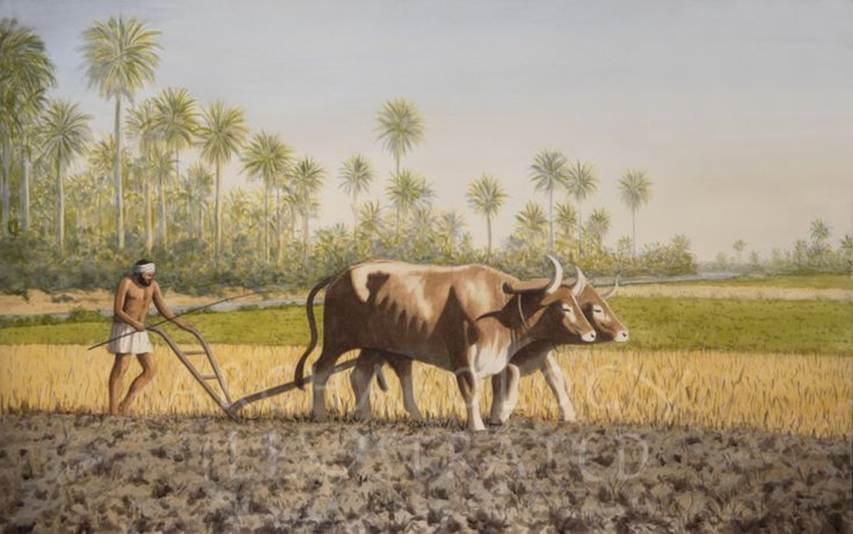
Humans learn to use
the plow,
most important agricultural implement since the beginning of history, used to
turn and break up soil, to bury crop residues, and to help control weeds. The
earliest plows were doubtless digging sticks fashioned with handles for
pulling or pushing. By Roman times, light, wheelless plows with iron shares
(blades) were drawn by oxen; these implements could break up the topsoil of
the Mediterranean regions but could not handle the heavier soils of
northwestern Europe. The wheeled plow, at first drawn by oxen but later by
horses, made possible the northward spread of European agriculture. |
4250 BC
|
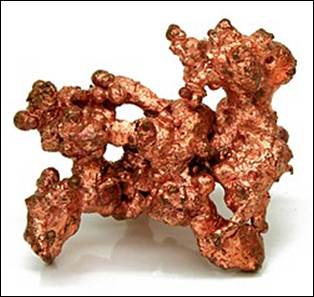
Development of
copper and bronze metallurgy, copper occurs naturally as native metallic copper and was
known to some of the oldest civilizations on record. The Bronze Age was
formerly termed the Chalcolithic period (copper-stone), when copper tools
were used with stone tools. Copper
is one of the few metals that can occur in nature in a directly usable,
unalloyed metallic form. This means that copper is a native metal. This led
to very early human use in several regions. It was the first metal to be
smelted from sulfide ores, the first metal to be cast into a shape in a
mold, and the first metal to be
purposely alloyed with another metal, tin, to create bronze. |
Copper
4242 BC
|
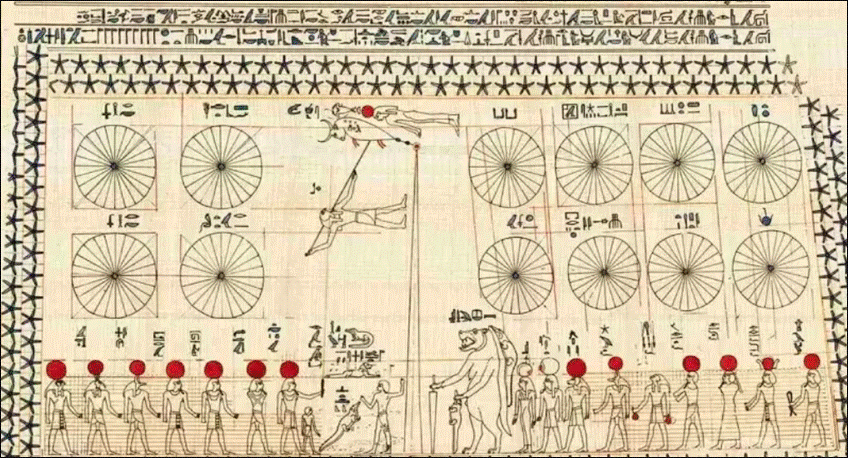
First year of Egyptian calendar, the ancient Egyptian calendar was a solar calendar
consisting of 365 days, divided into three seasons of 120 days each, plus
five additional days. It was used for civil purposes and was based on the
agricultural cycles associated with the Nile River. The
Egyptian civil calendar was altered by Julius Caesar about 46 BC with the
addition of a leap-year day occurring once every four years; the revised
system forms the basis of the Western calendar still used in modern times. In
addition to the solar calendar, the Egyptians also used a lunar calendar for
religious purposes. This calendar consisted of 12 months, with each month
lasting 29 or 30 days. A 13th month was added every few years to align it
with the solar year. |
4000 BC 🌍 30 million
|
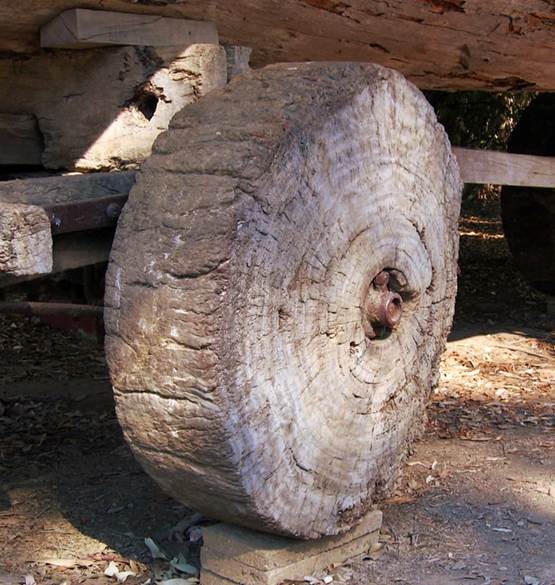
The wheel is
invented, early
wheels were simple wooden disks with a hole for the axle. Some of the earliest
wheels were made from horizontal slices of tree trunks. Because of the uneven
structure of wood, a wheel made from a horizontal slice of a tree trunk will
tend to be inferior to one made from rounded pieces of longitudinal boards.
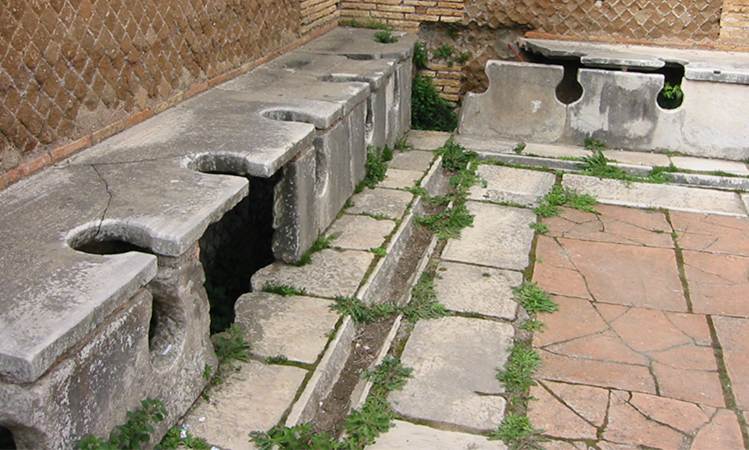
3800 BC
|
3500 BC
|
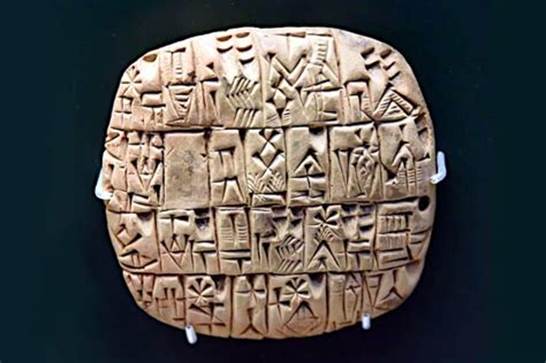
The earliest written
religious texts emerged as cultures sought to explain natural events and
life's uncertainties through beliefs in supernatural beings. Religions often
viewed humans as collaborators with deities, working to maintain order
against chaos. Prominent figures in these beliefs included Atar (fire god),
Mithra (god of the rising sun and covenants), Hvar Khshsata
(full sun god), and Anahita (goddess of fertility, water, health, healing,
and wisdom).
Sumerian
tablet |
3200 BC
|
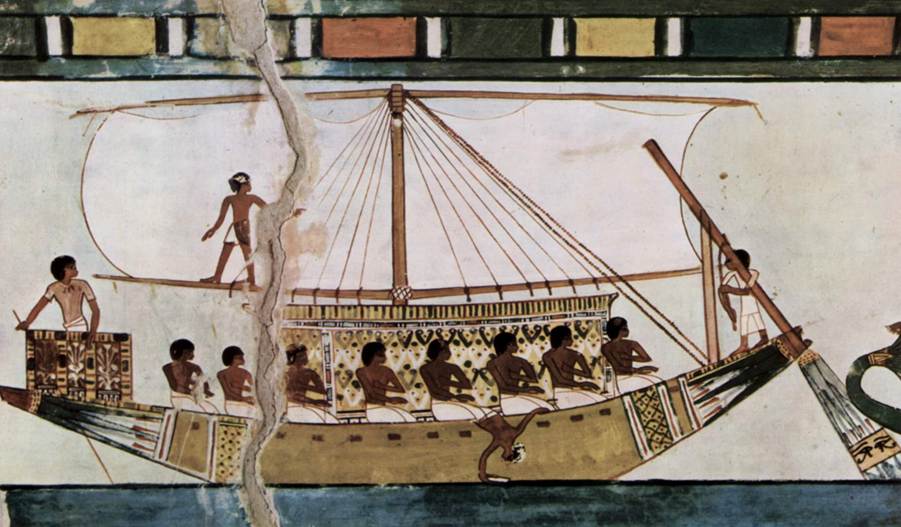
Boats use sails on
the Nile River, the invention of the sail was a technological advance of
equal or even greater importance than the invention of the wheel Yet it is
not known when or where this invention took place. Sails from ancient Egypt
are depicted where reed boats sailed upstream against the River Nile's
current. |
3100 BC
|
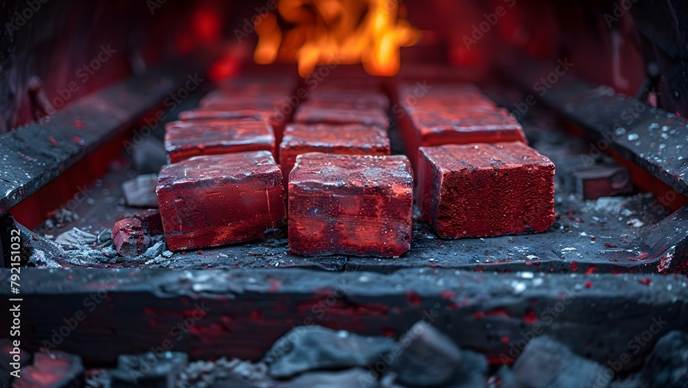
Bricks are made by a
fired process,
they were made from clay and baked in kilns. This innovation allowed for
stronger and more durable bricks compared to sun-dried mud bricks. The
transition from sun-dried to fired bricks marked a significant advancement in
building technology, allowing for the construction of more complex and
lasting structures. |
3000 BC
🌍 45 million
|
Palaces/castles are
starting to build; palaces are grand residences often associated with royalty
and nobility. Castles are primarily military strongholds to protect royalty
and territory. Many of the oldest structures still stand today, showcasing
rich histories and architectural styles. |
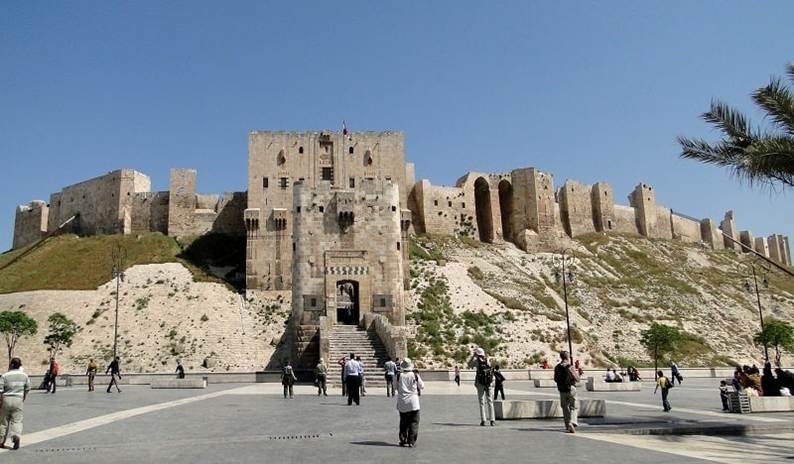
The
Citadel of Aleppo in Syria is one of the oldest and largest castles in the
world.
2667 BC
|
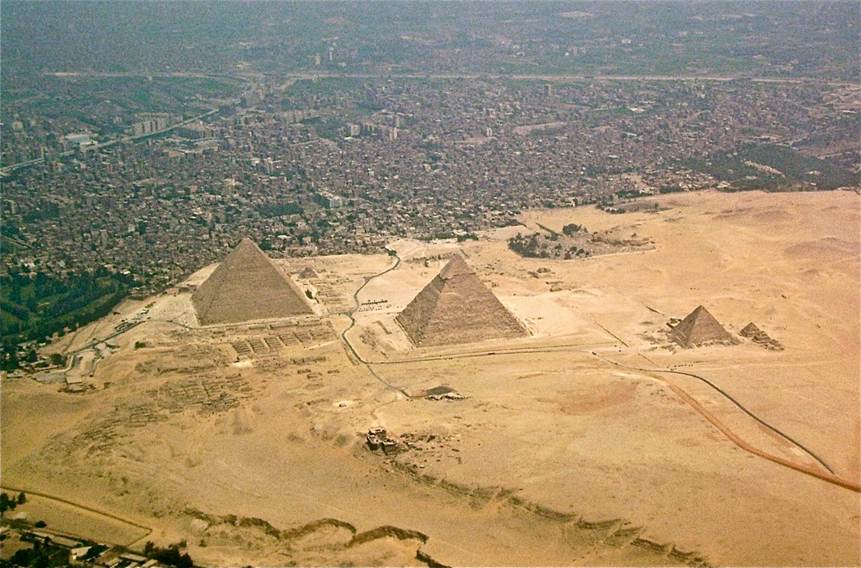
First pyramids, shape of Egyptian pyramids is thought to represent the
primordial mound from which the Egyptians believed the earth was created. The
shape of a pyramid is also thought to be representative of the descending
rays of the sun, and most pyramids were faced with polished, highly
reflective white limestone, in order to give them a brilliant appearance when
viewed from a distance. Pyramids were often also named in ways that referred
to solar luminescence. While it
is generally agreed that pyramids were burial monuments, there is continued disagreement
on the particular theological principles that might have given rise to them.
One suggestion is that they were designed as a type of "resurrection
machine." The
Egyptians believed the dark area of the night sky around which the stars
appear to revolve was the physical gateway into the heavens. One of the
narrow shafts that extend from the main burial chamber through the entire
body of the Great Pyramid points directly towards the center of this part of
the sky. This suggests the pyramid may have been designed to serve as a means
to magically launch the deceased pharaoh's soul directly into the abode of
the gods. |