Home
About
Links
Hobbycraft
Photos
Downloads
|
1902 JCPenney
founded, evolved from a single dry goods store to
a major American retail chain, facing numerous challenges and transformations
along the way. JCPenney was founded in 1902 as a group of dry goods stores that
James Cash Penney managed as part of the Golden Rule chain.
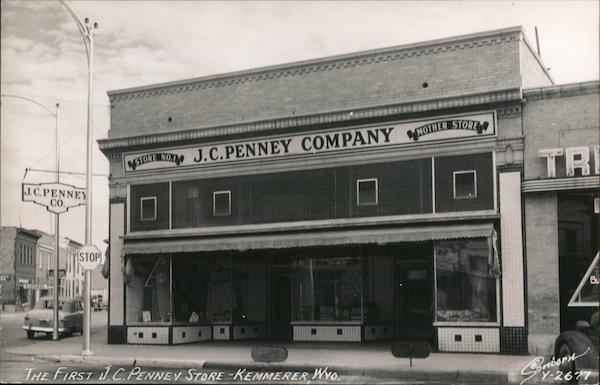
First JCPenney store Kemmerer, WY The stores were initially located in downtown areas but shifted
to shopping malls during the 1960s. James Cash Penney was born in Hamilton, Missouri. After
graduating from high school, Penney worked for a local retailer. He relocated
to Colorado at the advice of a doctor, hoping that a better climate would
improve his health.
In 1898, Penney went to work for Thomas Callahan and Guy
Johnson, who owned dry goods stores called Golden Rule stores in Colorado and
Wyoming. In 1899, Callahan sent Penney to Evanston, Wyoming, to work with
Johnson in another Golden Rule store. Callahan and Johnson asked Penney to
join them in opening a new Golden Rule store. Using money from savings and a
loan, Penney joined the partnership and moved with his wife and infant son to
Kemmerer, Wyoming, to start his own store. Penney opened the store on April
14, 1902. He participated in the creation of two more stores and purchased
full interest in all three locations when Callahan and Johnson dissolved
their partnership in 1907. In 1909, Penney moved his company headquarters to
Salt Lake City, Utah, to be closer to banks and railroads. By 1912, Penney
had 34 stores in the Rocky Mountain States. In 1913, the company was incorporated under the new name, J. C.
Penney Company, with William Henry McManus as a co-founder. In 1914, the
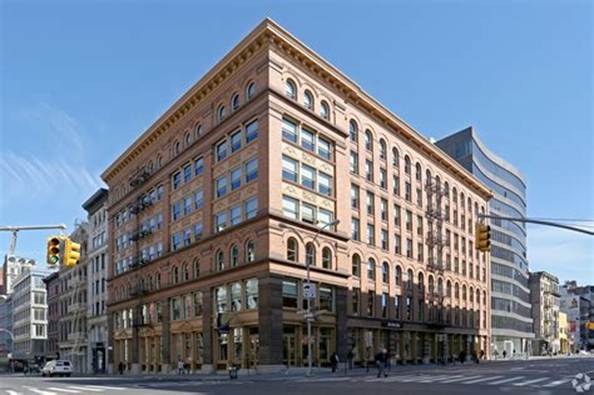
headquarters was moved to New York City to simplify buying, financing, and
transportation of goods.
JCPenney offices in New York city By 1917, the company operated 175 stores in 22 states in the
United States. J. C. Penney acquired The Crescent Corset Company in 1920, the
company's first wholly owned subsidiary. In 1922, the company's oldest active
private brand, Big Mac work clothes, was launched. The company opened its
500th store in 1924 in Hamilton, Missouri, James Cash Penney's hometown. By
the opening of the 1,000th store in 1928, gross business had reached $190
million (equivalent to $3.48 billion in 2024). In 1940, Sam Walton began working at a J. C. Penney in Des
Moines, Iowa. Walton subsequently founded retailer Walmart in 1962. By 1941,
J. C. Penney operated 1,600 stores in all 48 states. In 1956, J. C. Penney
started national advertising with a series of advertisements in Life
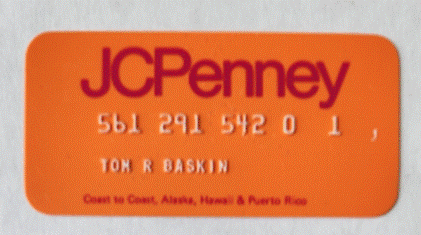
magazine. J. C. Penney credit cards were first issued in 1959.
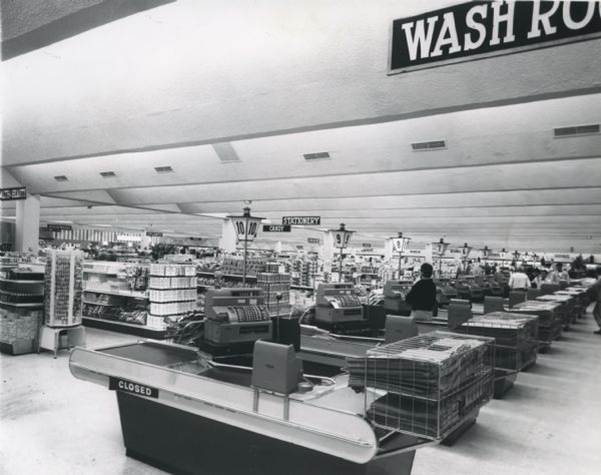
The company dedicated its first full-line shopping-center
department store in 1961. This store was located at Black Horse Pike Center
in Audubon, New Jersey. The second full-line shopping center store was
dedicated, at King of Prussia Plaza in King of Prussia, Pennsylvania in late
1962. Those stores expanded the lines of merchandise and services that an
average J. C. Penney carried to include appliances (manufactured by General
Electric), sporting goods, tools, garden\lawn merchandise, restaurants, beauty
salons, portrait studios, auto parts, and auto centers. In 1962, J. C. Penney entered discount merchandising with the
acquisition of General Merchandise Company which gave them The Treasury
stores. Treasure Island was founded as GMC's discount store division, with
stores that measured 200,000 square feet and a conveyor belt that took
purchased items outside to be placed in customer’s cars. Its first location
opened in Appleton, Wisconsin, on November 24, 1961.
Treasure Island store These discount operations proved unsuccessful and were shuttered
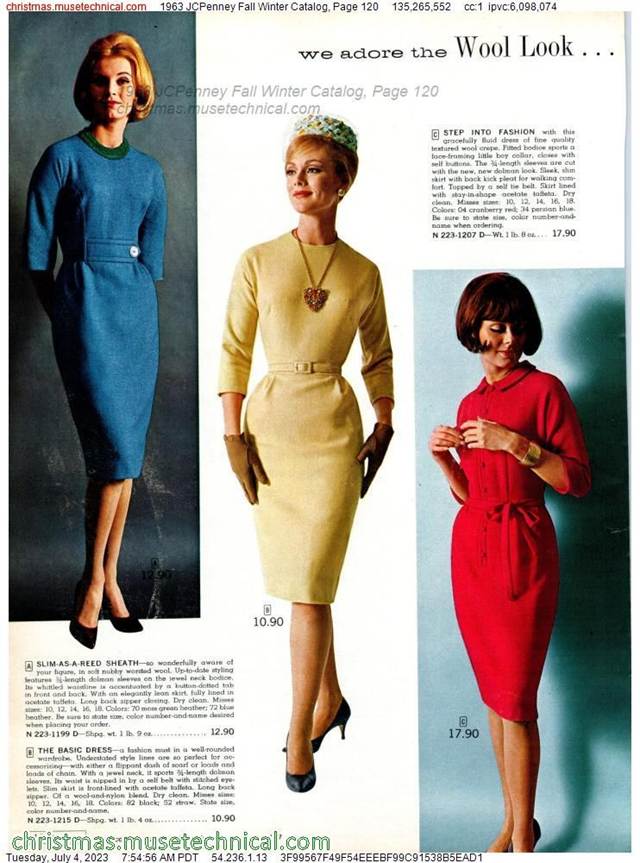
in 1981. In 1963, J. C. Penney issued its first catalog.
The company operated in-store catalog desks in eight states. The
catalogs were distributed by the Milwaukee Catalog distribution center. In 1969, the company acquired Thrift Drug, a chain of drugstores
headquartered in Pittsburgh, Pennsylvania. It also acquired Supermarkets
Interstate, an Omaha-based food retailer which operated leased departments in
J. C. Penney stores, The Treasury stores, and Thrift Drug stores. In the 1960s, JCPenney expanded to include Alaska, Hawaii, and
Puerto Rico. Stores were opened in Anchorage and Fairbanks, Alaska in 1962,
followed by Honolulu, Hawaii in 1966, and Puerto Rico in 1968. The Penney
Building in Anchorage partially collapsed and was damaged beyond repair in
the 1964 Alaska earthquake. The company rebuilt the store as a shorter
building on a larger footprint and followed up by building Anchorage's first
public parking garage, which opened in 1968. The Honolulu store was located at
Ala Moana Center, and closed in 2003, along with all remaining locations in
the state, making Hawaii the only U.S. state to not currently have a JCPenney
store. The Penney store at Plaza Las Américas mall
in San Juan, Puerto Rico, which opened in 1968, featured three levels and
261,500 square feet. It was the largest JCPenney until a 300,000-square-foot
store was dedicated at Greater Chicago's Woodfield Mall in 1971. The
Woodfield Mall store served as the largest in the chain until a replacement
store opened at Plaza Las Américas in 1998, which
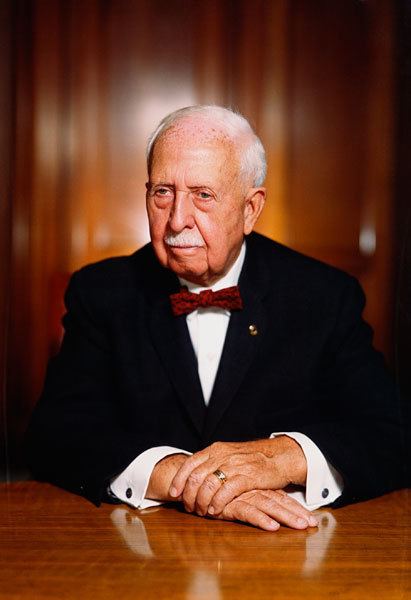
is 350,000 square feet in size. On February 12, 1971, James Cash Penney died at the age of 95;
the company's stores were closed the morning of his funeral on February 16. That year, the company adopted the JCPenney style in
advertising. and its revenues reached $5 billion (equivalent to $38.8 billion
in 2024) for the first time and catalog business made a profit for the first
time. JCPenney reached its peak number of stores in 1973, with 2,053
stores, 300 of which were full-line establishments. However, the company was
hard hit by the 1974 recession with its stock price declining by two-thirds. In 1977, J. C. Penney sold its four stores in Italy to Italian
department store chain La Rinascente; Penneys had
opened in Italy in 1970 but left due to difficulties encountered when trying
to expand in Italy and had only ever opened stores in the Lombardy region. In
the same year they also closed down their unprofitable Supermarkets
Interstate supermarket brand, which operated in Treasury discount stores;
however, the stores that were not in Treasury locations remained open. In 1978, the J. C. Penney Historic District in Kemmerer,
Wyoming, was designated a U.S. National Historic Landmark. In 1979, JCPenney
stores started accepting Visa cards. MasterCard was accepted the following
year. In 1980, the company closed the unprofitable Treasury discount
stores to focus resources on its core retail stores. In 1983, JCPenney discontinued its appliance, hardware, outdoor
equipment, and auto center departments, the store attached auto centers
became additional store and warehouse space, the free-standing automotive
centers were sold to Firestone. Also in 1983, it began selling goods online
through the Viewtron videotex service. That same
year, fashion designer Roy Halston, signed a
six-year, $1 billion deal with JCPenney to sell a line of affordable
clothing, accessories, cosmetics, and perfumes ranging in price from $24 to
$200. The move was considered controversial then as no other high-end
designer up to that point in time had licensed their designs to a mid-price
retailer. The line, named Halston III, would not last long, as it would be
poorly received and discontinued after about a year. However, the business
move paved the way for other such high-end designers to sell their products
at stores of varying price ranges in the future. In 1984, JCPenney acquired the First National Bank of
Harrington, Delaware, and renamed it J. C. Penney National Bank. No physical
“JCPenney bank” ever existed, it was not a real bank, had no tellers or
public banking services, existed purely as a credit-card issuing bank on
paper. With the acquisition of the bank, the company became able to
issue its own Mastercard and Visa Inc. cards. The company also began
accepting American Express cards. Also that year,
Thrift Drug began co-locating stores with Weis Markets, and
acquired many former Pantry Pride properties. In April 1987, the company
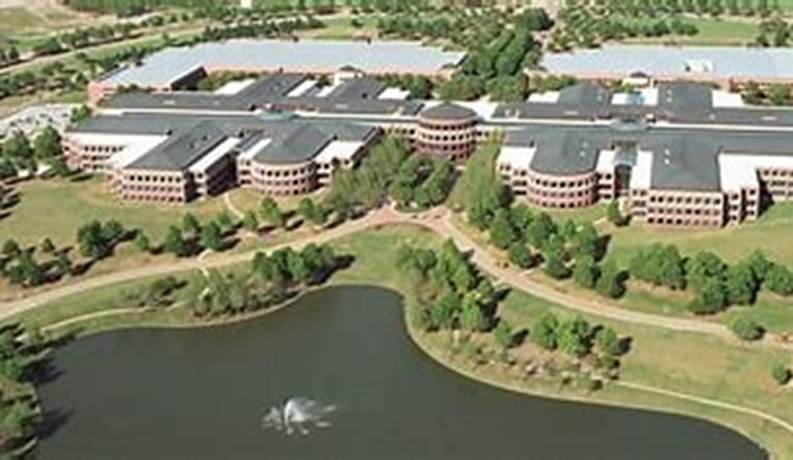
announced that it was moving its headquarters to Plano, Texas. Construction on the new company headquarters in Plano, Texas, broke ground in 1990 and was completed in 1992.
A signature feature of the Plano HQ is its multi‑story glass atrium,
which brings natural light deep into the building. Built on a massive multi‑acre site in the Legacy business
district. Designed as a single integrated headquarters for all corporate
functions. The original Plano headquarters (occupied from 1992 until the
pandemic) was 1.8 million square feet, but JCPenney now leases a 320,000‑sq‑ft
portion of that campus. After several years of development, the JCPenney Television
Shopping Channel appeared on cable systems beginning in 1989. By the
mid-1980s, all JCPenney stores had discontinued sales of firearms. Before
this point, JCPenney carried rifles and shotguns branded as JCPenney but
produced by numerous established firearms manufacturers. In the 1980s
JCPenney's also stopped selling outdoor equipment and hardware such as lawn
mowers and tools. When Sears closed its catalog business in 1993, JCPenney became
the largest catalog retailer in the United States. In 1995 the chain expanded
to Chile with a store in the capital, Santiago. In 1995, the drug store
business was expanded with the acquisition of Kerr Drug and again in 1996
with the purchase of Fay's Drug. Then in November 1996 they acquired the
Eckerd chain. Fay's, Kerr, and Eckerd merged into J. C. Penney's drug store
subsidiary Thrift Drug. Fay's, most Kerr, and Thrift drug stores were re-branded
Eckerd in 1997. (Kerr Drug stores in The Carolinas remained branded as such
because they were part of a group of stores that were divested because of
trade competition issues raised during the merger. On January 24, 2011, JCPenney shut down its catalog business and
19 outlet stores. Seven additional stores and two call centers also closed. On May 15, 2020, JCPenney filed for Chapter 11 bankruptcy and
announced that there would be an additional 242 store closings, blaming the
COVID-19 pandemic for its action. By June 17, JCPenney reopened approximately
827 stores; most of the 154 scheduled for permanent closure in 2020 were
among those reopened, with final closing sales in progress. On June 22,
JCPenney identified an additional 13 stores that would be permanently closed.
On June 4, 2020, JCPenney released a list of 148 stores slated
to close starting in late June 2020, with eleven additional store closures
announced on June 22 and two additional stores on July 7, with the previously
announced store closing locations remaining on hold pending further review,
for a planned closing a total of 242 stores On September 9, 2020, Brookfield Property Partners and Simon
Property Group agreed to purchase JCPenney for about $800 million, including
$300 million in cash and assuming $500 million of debt, which was later
approved by the court on November 10, 2020. It had been established that once
the company emerges from bankruptcy it is poised to save nearly 60,000 jobs,
according to various independent studies. The company was paying $2.45
million in monthly rent at the time it sold its headquarters offices in Plano,
Texas in 2017; the location was vacated in November 2020.
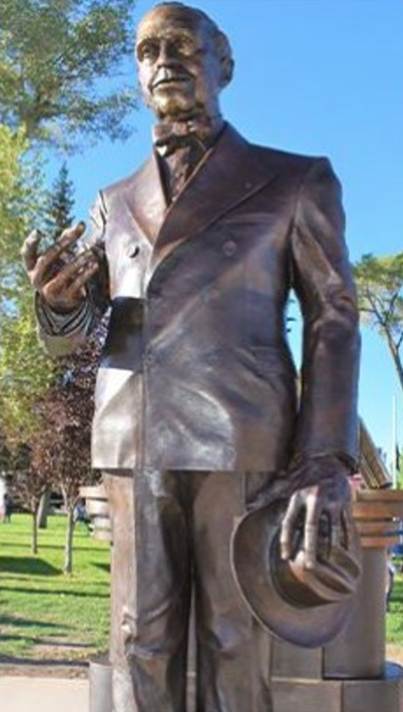
Bronze statue of JCP founder James Cash Penney was unveiled at
its new permanent home in Kemmerer, Wyoming,
by three of his grandchildren during the community’s first annual Golden
Rule Days celebration (2021) In April 2022, JCPenney's owners—Simon and Brookfield—offered
$8.6 billion to purchase Kohl's. Sephora had already announced plans to
contract exclusively with Kohl's by 2023, and had piloted Sephora Inside
Kohls at select store locations. With this deal, Sephora would remain
affiliated with, and under control of, the Simon and Brookfield retail
portfolio, therefore superseding and annulling previous agreements for
Sephora to leave JCPenney in favor of Kohl's. The company returned to its Plano, Texas, headquarters in July
2023. The reopened headquarters contains over 2,000 workers and occupies
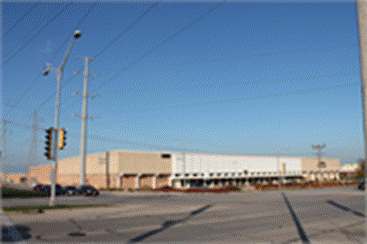
three floors. * * * I joined JCPenney in 1983, at the General Merchandise Company
Distribution Center at 11800 W Burleigh St in Wauwatosa WI.
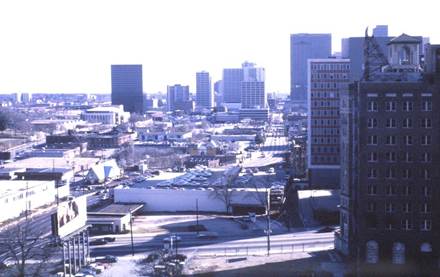
A year later I was transferred to Atlanta, GA working at 730 Peachtree
St NE (not sure of exact address).
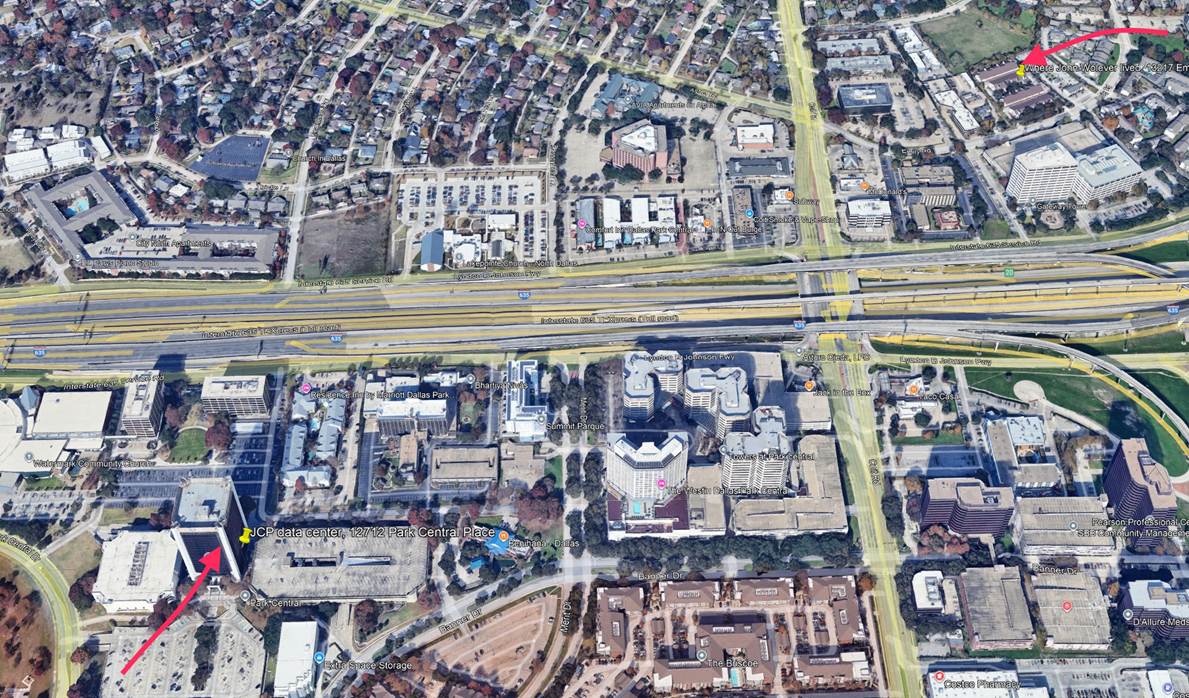
About September 1989 I was transferred to the Dallas TX JCPenney
data center.
Upper right red arrow is where I lived Lower left red arrow is where I walked to work
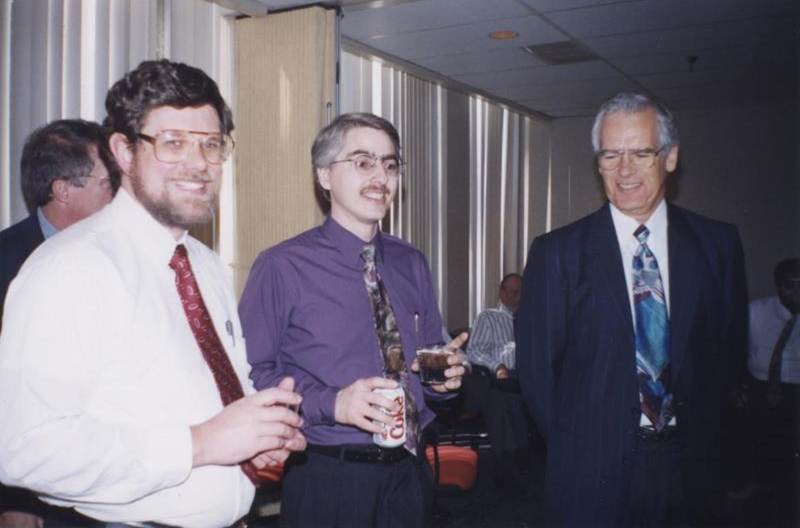
My retirement, April 1998 John Burns, Stan Mann, and me |