Home
About
Links
Hobbycraft
Photos
Downloads
|
1903 First
airplane, the
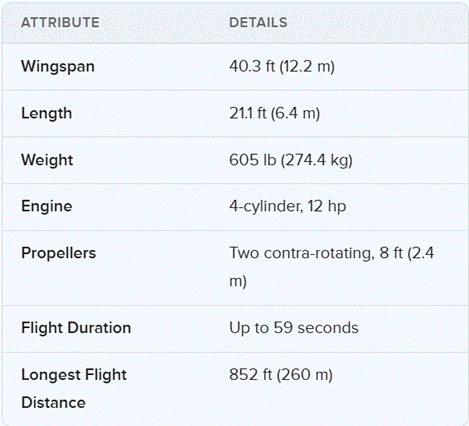
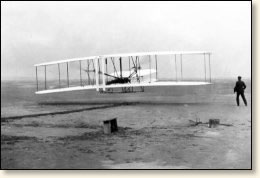
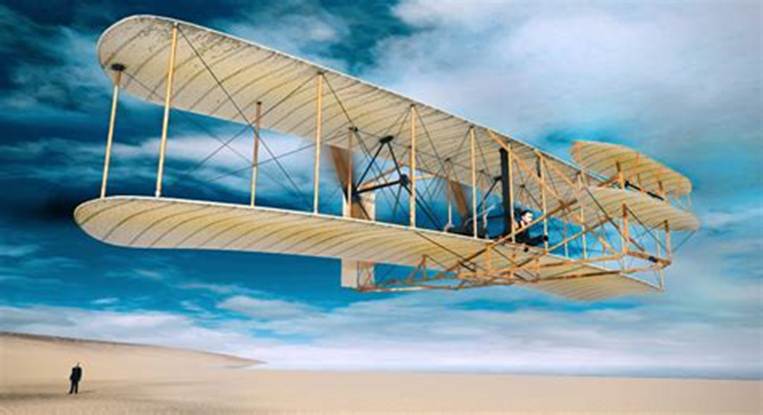
controlled, sustained flight of an engine-powered, heavier-than-air aircraft. Wright
brothers, Orville and Wilbur, at Kitty Hawk, North Carolina. Orville piloted
the Wright Flyer, which flew 120 feet in 12 seconds, marking a significant
milestone in aviation history.
Beginning
of the Cadillac automobile, is among the first automotive
brands in the world, fourth in the United States only to Autocar Company (1897)
and fellow GM marques Oldsmobile (1897) and Buick (1899). It was named after
Antoine de la Mothe Cadillac (1658–1730), the French explorer who founded
Detroit, Michigan. The Cadillac crest is based on his coat of arms. By the time General Motors purchased the company in 1909,
Cadillac had already established itself as one of America's premier luxury
car makers. The complete interchangeability of its precision parts had
allowed it to lay the foundation for the modern mass production of
automobiles. Cadillac was formed from the remnants of the Henry Ford Company.
After a dispute between Henry Ford and his investors, Ford left the company
along with several of his key partners in March 1902. Ford's financial
backers William Murphy and Lemuel Bowen called in engineer Henry M. Leland of
Leland & Faulconer Manufacturing Company to appraise the plant and
equipment in preparation for liquidating the company's assets. Instead,
Leland persuaded the pair to continue manufacturing automobiles using Leland's
proven single-cylinder engine. A new company called the Cadillac Automobile
Company was established on August 22, 1902, converting the Henry Ford Company
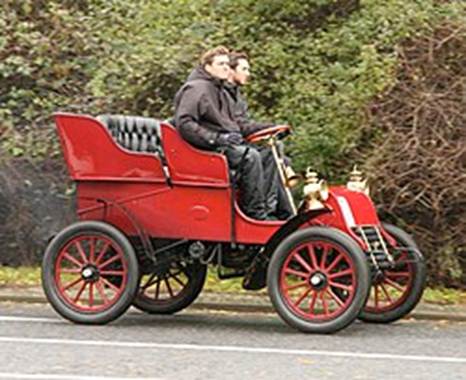
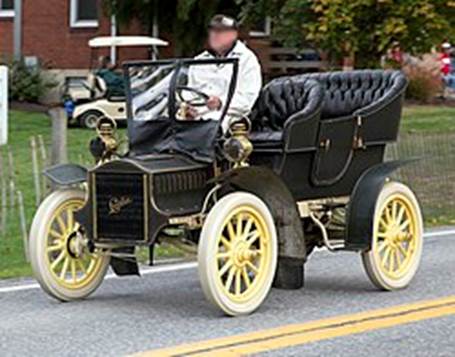
factory at Cass Street and Amsterdam Avenue. The one cylinder Cadillac continued to be offered through 1908
in the runabout, tonneau or delivery bodies under a variety of Model
designations. The Models A, B, C, E, and F shared a single-cylinder 98.2 cu
in engine rated from 6.5 to around 9 hp depending on model. The cylinder was
horizontal, pointing rearward, and was cast from iron with a copper water
jacket. Bore and stroke were square at 5 in. The engine was named by its
manufacturers, Leland and Faulconer, "Little Hercules". Throughout 1903, 2,497 units were built. The 2-seater runabout
cost $750 ($26,247 in 2024 dollars).
The Model F was the primary new Cadillac model of 1905 priced at
$950. It had a sharper hood and radiator.
On July 29, 1909, Cadillac was purchased by the General Motors
(GM) conglomerate. Cadillac became General Motors' prestige division, devoted
to the production of large luxury vehicles. The Cadillac line was also GM's
default marque for "commercial chassis" institutional vehicles,
such as limousines, ambulances, hearses and funeral home flower cars, the
last three of which were custom-built by aftermarket manufacturers. It became
positioned at the top of GM's vehicle hierarchy, above Buick, Oldsmobile,
Oakland, and later, Chevrolet. In 1912, Cadillac was the first automobile manufacturer to
incorporate an electrical system enabling starting, ignition, and lighting. In 1915, Cadillac introduced a 90-degree flathead V8 engine with
70 horsepower at 2400 rpm and 180 pound force-feet of torque, allowing its
cars to attain 65 miles per hour. This was faster than most roads could
accommodate at the time. Cadillac pioneered the dual-plane V8 crankshaft in
1918. In 1928, Cadillac introduced the first clashless Synchro-Mesh manual
transmission, utilizing constant mesh gears. In 1930, Cadillac implemented
the first V-16 engine, with a 45-degree overhead valve, 452 cubic inches, and
165 horsepower, one of the most powerful and quietest engines in the United
States. The development and introduction of the V8, V16 and V12 helped to
make Cadillac the "Standard of the World". A later model of the V8
engine, with overhead valves, set the standard for the entire American
automotive industry in 1949. In 1934, Henry F. Phillips introduced the Phillips screw and
screwdriver to the market. He entered into talks with General Motors and
convinced the Cadillac group his new screws would speed assembly times and
therefore increase profits. Cadillac was the first automaker to use the
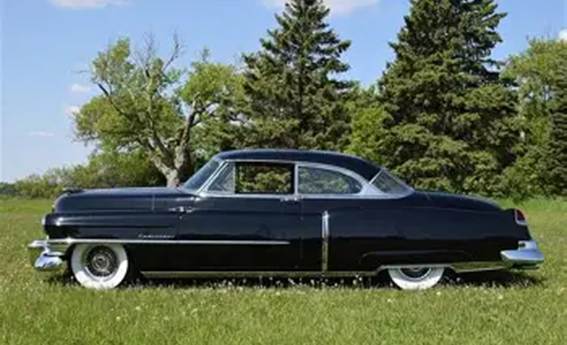
Phillips technology. On November 25, 1949, Cadillac produced its one-millionth car, a
1950 Coupe de Ville.
In 1953, the "Autronic Eye" was introduced. This
feature would automatically dim high-beam headlamps for the safety of
oncoming motorists. The dual-reservoir brake master cylinder, with separate front
and rear hydraulic systems, was introduced in 1962, six years ahead of the
federal requirement. The first fully automatic heater–air conditioning system
also appeared, as did the three-speed Turbo-Hydramatic automatic
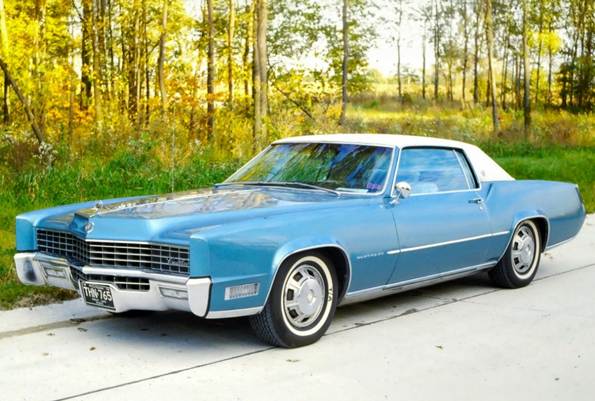
transmission; it would become the GM standard model for several decades. The front-wheel drive Eldorado was launched in 1967, setting a
new standard for a personal luxury car.
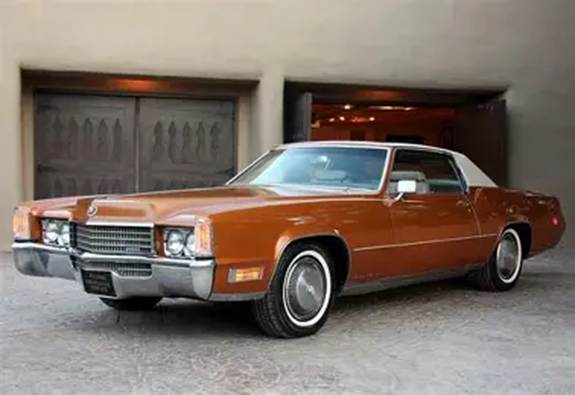
1967 Eldorado The 1970s saw new extremes in vehicle luxury and dimension. The
Fleetwood had grown to a length of 225.5 inches (18.79 feet) and a width of
79.6 inches, and a height of 55.5 inches.
1970 Fleetwood 1977 was Cadillac's 75th anniversary and saw the introduction of
the downsized de Ville coupes and sedans. The redesigned Fleetwood Brougham
was now similar in appearance to the lesser Sedan de Ville. Other than the
name, there were only subtle exterior differences between a Fleetwood
Brougham and Sedan de Ville. The interior of the Fleetwood was plusher and
offered more features as standard. These new cars featured a higher roofline,
resulting in a vehicle that was more than nine inches shorter, four inches
narrower, and half a ton lighter than the previous year, but with a larger
trunk and more headroom and legroom. lineup included the two-door Coupe
de Ville ($9,654) and the four-door Sedan de Ville ($9,864). 1985 saw the new front-wheel-drive de Ville and Fleetwood models
released.
The late 1990s saw Cadillac field its first-ever entry in the
growing SUV segment. The Escalade, introduced in 1999, was marketed to
compete with the Lincoln Navigator and luxury SUVs from various import
brands. In 1991, Cadillac introduced the Northstar engine, which was a
family of high-performance 90° V engines produced by General Motors from 1991
to 2010. Regarded as GM's most technically complex engine, the original
double overhead cam, four valve per cylinder, aluminum block/aluminum head V8
design. In 2005, the Cadillac STS was introduced as the successor to the
Cadillac Seville, which beginning in 1988 was available as an upscale
performance-oriented STS (for Seville touring sedan) version, and
comfort-oriented SLS (for Seville luxury sedan). The following year, STS
received Cadillac's then-new Northstar System, including the aluminum DOHC
L37 Northstar V8 engine. In 2016, the Cadillac CT6 was introduced and was the brand's
first full-size rear-wheel-drive sedan since the discontinuation of the
Fleetwood in 1996. The Cadillac XT6, a new seven-seat luxury mid-size crossover
SUV, went on sale in the third quarter of 2019 as a 2020 model *
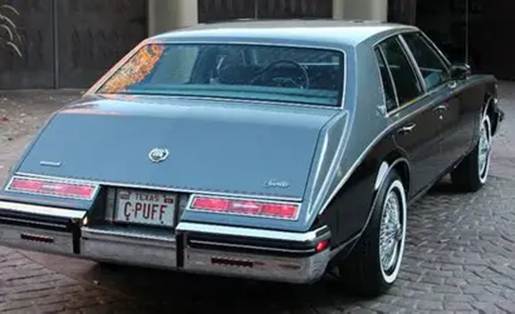
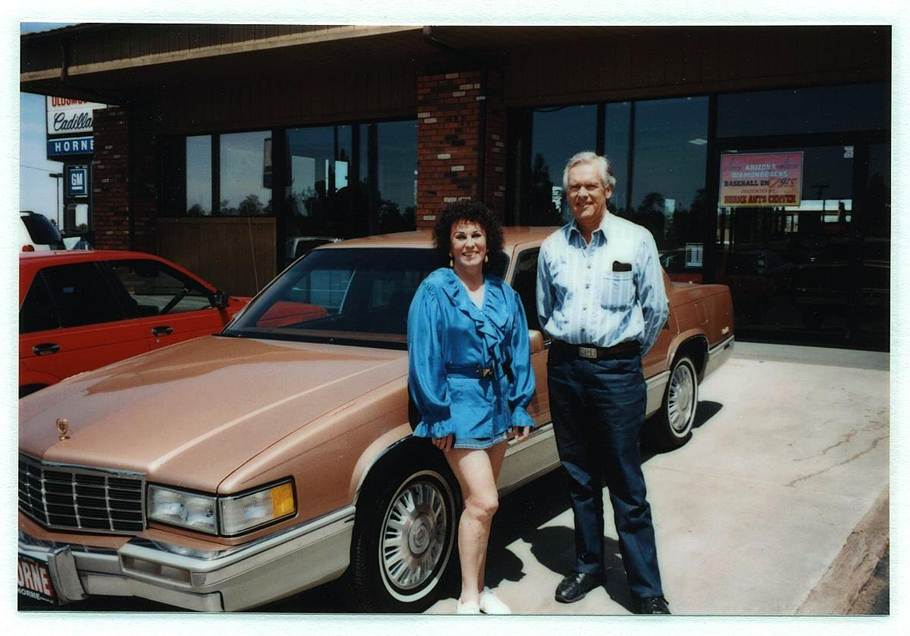
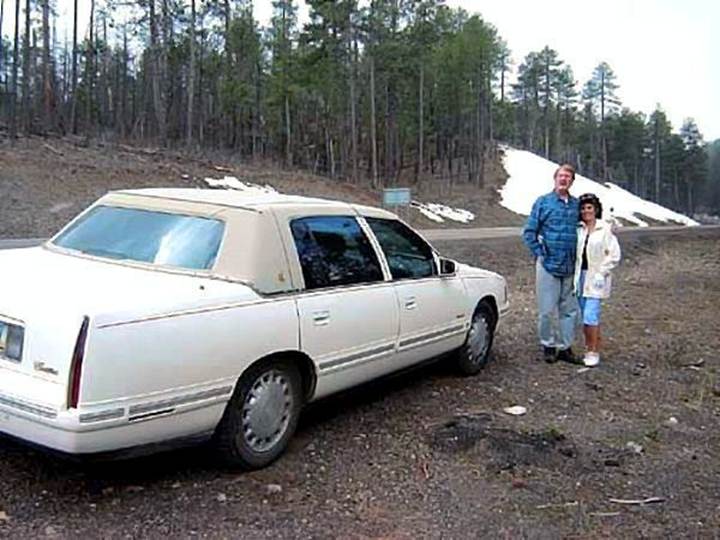
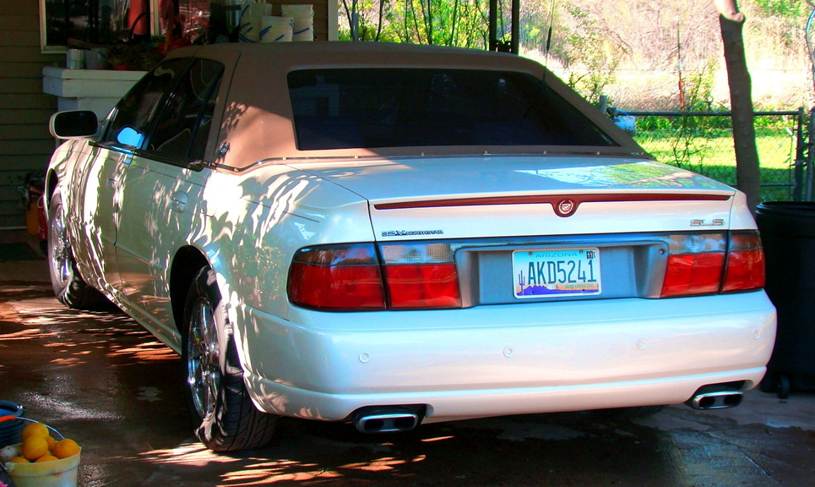
* * My Cadillacs:
1993 Cadillac Deville
1997 Cadillac Deville (Ervin and Mary)
2002 Cadillac Seville
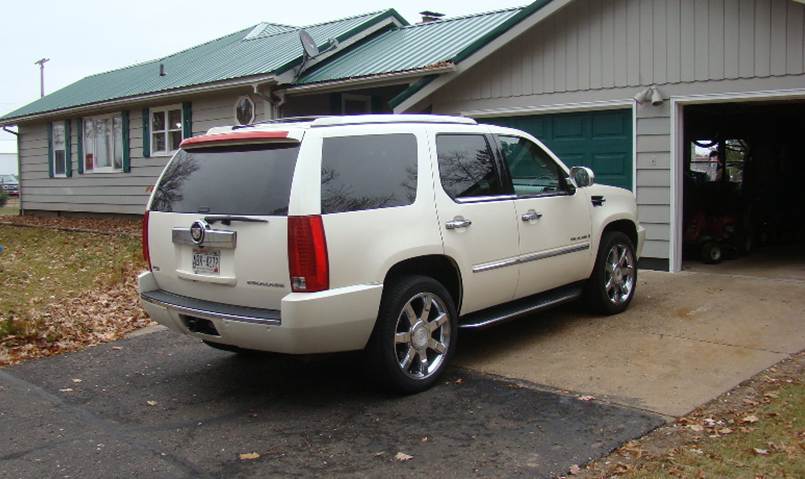
2009 Cadillac Escalade |