Home
About
Links
Hobbycraft
Photos
Downloads
|
1905 Hydro
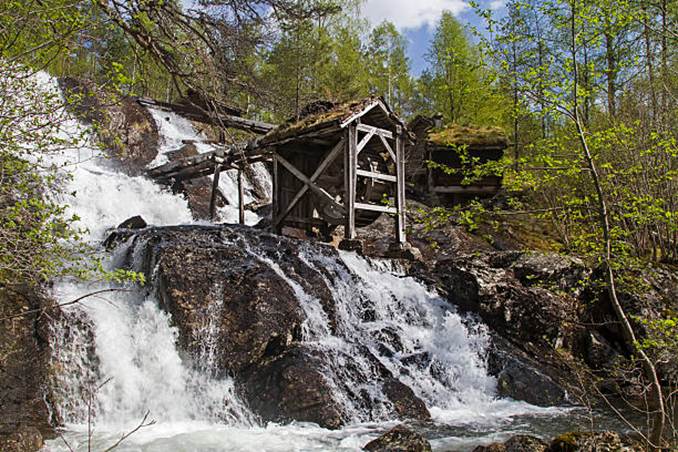
company founded in Norway, with a bold idea to turn
waterfalls into fertilizer to feed a starving world, Hydro quickly became
more than an industrial venture. It became a driver of national development,
community growth, and eventually, global impact. From early hydropower innovations
to modern aluminum and renewable energy solutions
Hydro’s first and most important product, mineral fertilizer,
attracted attention from the rest of the world, but far more important was
the fact that this gave farmers the means of increasing their harvests and
fostered optimism. Established Norway's first integrated aluminum company in 1915,
developed more hydropower and created yet another small town: Høyanger. In 1917 he also started refining activities in Holmestrand and laid the foundation for successful
businesses in canned packaging and aluminum cookware.
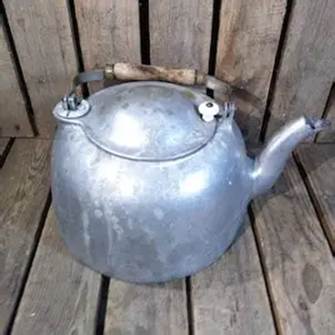
Vintage Hydro aluminum kettle The interwar period was challenging. Financial losses, cost
cuts, layoffs and pay cuts for those who had jobs.
In 1931, Hydro became the arena for Norwegian history's most dramatic labor
conflict: the Menstad battle at the plant between
Skien and Porsgrunn. The police and military were deployed against striking
workers. It was a valuable learning experience. Hydro became a supplier of aluminum plates for the occupying
power's fighter aircraft. At Herøya, Hydro
collaborated with Hermann Göring's Luftwaffe to build a light metal plant. In
1943, the Allies put an end to Hydro's aluminum dream; 1,650 bombs killed 55
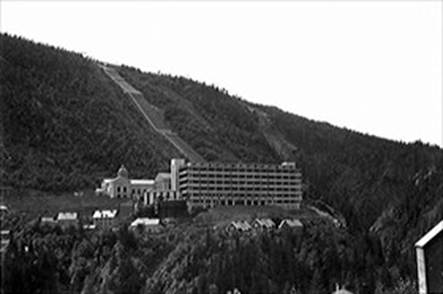
and destroyed the plants. Hydro's plant in Rjukan was bombed in 1943 and subjected to one
of World War II's most spectacular sabotage operations in 1944. The target
was a by-product of fertilizer production: heavy water.
The Allies feared that the precious drops from Telemark County
could help Adolf Hitler develop a nuclear bomb. This export was finally
stopped for good when the railway ferry ‘Hydro’ was sunk on Lake Tinnsjøen. During World War II, Hydro became more and more German. After
the war, the German shares were confiscated by the Norwegian authorities. The
Norwegian state thereby acquired majority ownership of Hydro. For a long
period, the state owned more than half of the shares. Its ownership share was
later reduced to a third. In 1951, on the ruins of the wartime
production of aluminum, production began of magnesium and the plastic raw
material PVC. These materials were used in everything from Volkswagen's
popular Beetle to vinyl records by The Beatles. In 1963 the company switched from electrochemical to
petrochemical production of fertilizers, began construction of a new aluminum
plant in Karmøy and joined in the exploration for
oil in the North Sea. The aluminum investment and oil exploration took place
in cooperation with international partners. In 1969, Hydro was the only Norwegian partner when the first oil
discovery was made on the Norwegian continental shelf. Within a few years,
both Hydro and Norway experienced a new reality. Oil revenues and technology
development laid the foundation for unparalleled growth. Hydro grew dramatically in breadth and depth in the 1970s and
1980s. Much happened in cooperation with other companies. In 1986, Hydro
acquired the Norwegian aluminum company Årdal and Sunndal
Verk (ÅSV). The industrialist Sigurd Kloumann's aluminum businesses in Høyanger and Holmestrand were
then united with the company he built up from 1905 onwards. Hydro, which had grown in many directions through the 1980s,
began selling off businesses: explosives producer Dyno, chocolate producer
Freia-Marabou, the world's largest fish-farming company Hydro Seafood, and
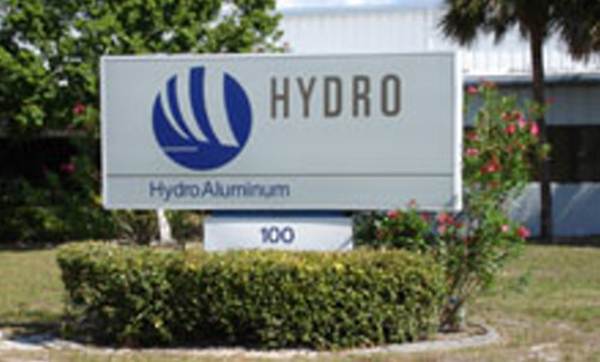
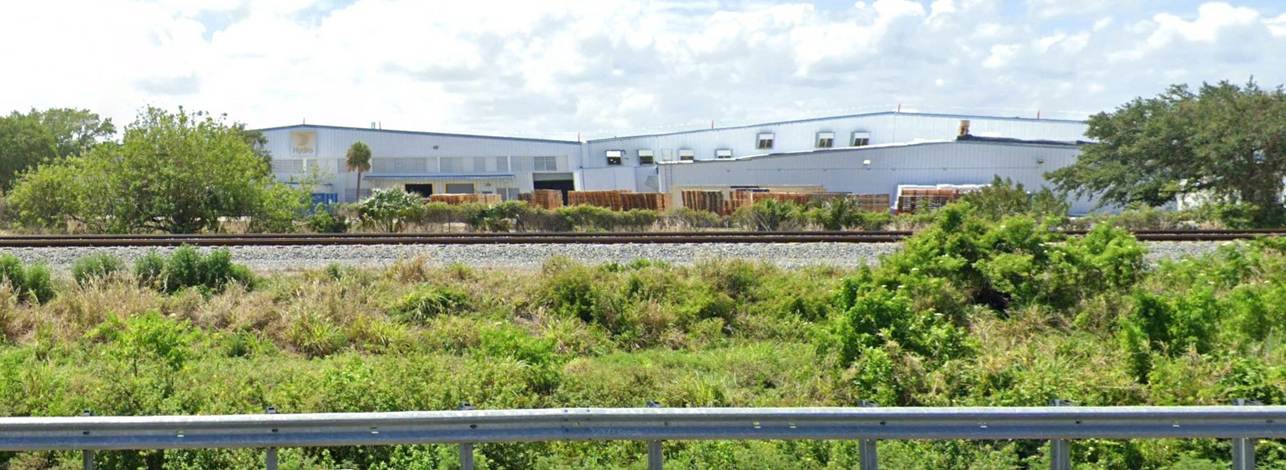
the pharmaceutical companies. In 2003 the Hydro Precision Tubing USA plant in Rockledge
Florida was incorporated. The site of Saga Precision Tubing since 1963.
In 2007, Hydro's oil and gas business was merged with Statoil,
known today as Equinor. After the petrochemicals business was also sold,
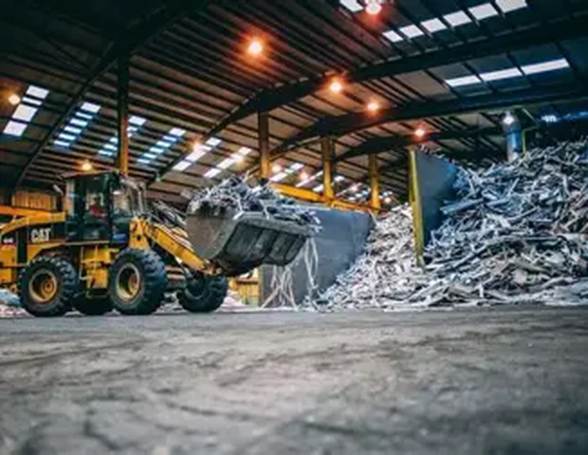
Hydro was able to concentrate fully on aluminum, a business area where the
company, through several major acquisitions – including ÅSV in Norway in 1986
and VAW in Germany in 2002 – had established itself as a leading market
player. In 2010, Hydro acquired the Brazilian mining company Vale's
aluminum business and strengthened its position as a leading integrated
aluminum company. This included large bauxite deposits and the world's
largest alumina refinery, Alunorte. Following the
acquisition of Sapa in 2017, Hydro also became a global leader in extruded
products. Hydro’s acquisition of Sapa (2017), which consolidated many
extrusion and tubing plants into Hydro. In 2021, Hydro sold its rolling business area as part of a
strategy to strengthen its position in low-carbon aluminum, while exploring
new growth areas. The transaction included seven plants, one R&D center,
global sales offices and around 5,000 employees. Hydro is a leading aluminum and renewable energy company that
builds businesses and partnerships for a more sustainable future. They have
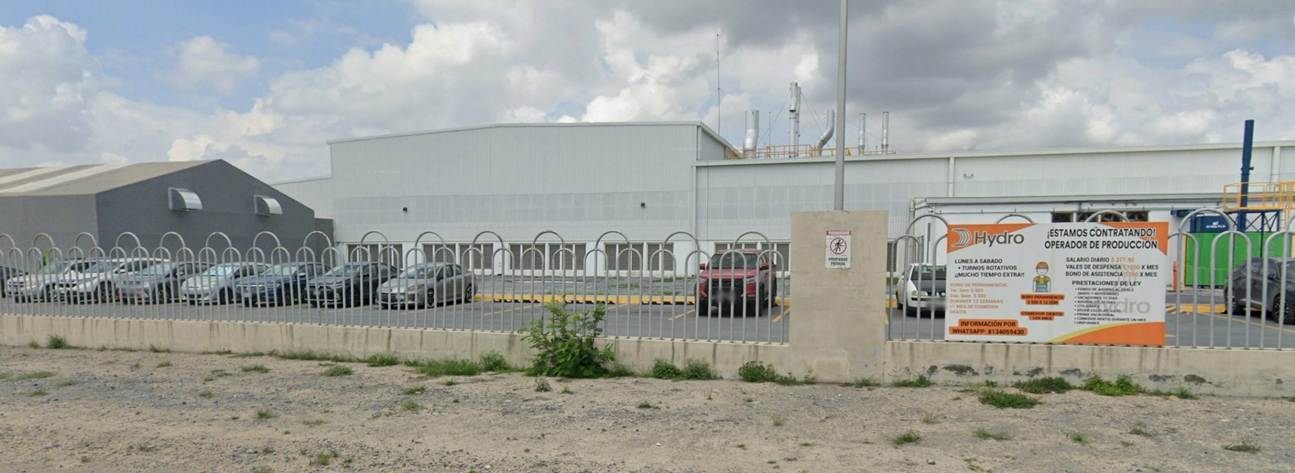
32,000 employees in more than 140 locations and 42 countries. Hydro has two manufacturing plants in Mexico, located in
Monterrey and in Reynosa. Both are aluminum tubing sites, delivering heat
exchange solutions mainly to customers in the automotive and HVACR
industries. *
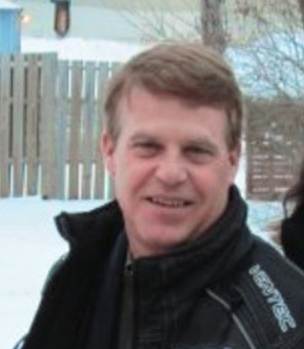
* * The Hydro precision tubing plant in Rockledge FL is where my son
in law (Scott Church) is employed as plant manager (as of this document
2026).
He also oversees the Monterrey sister plant in Mexico.
Scott Church
1912 |
|
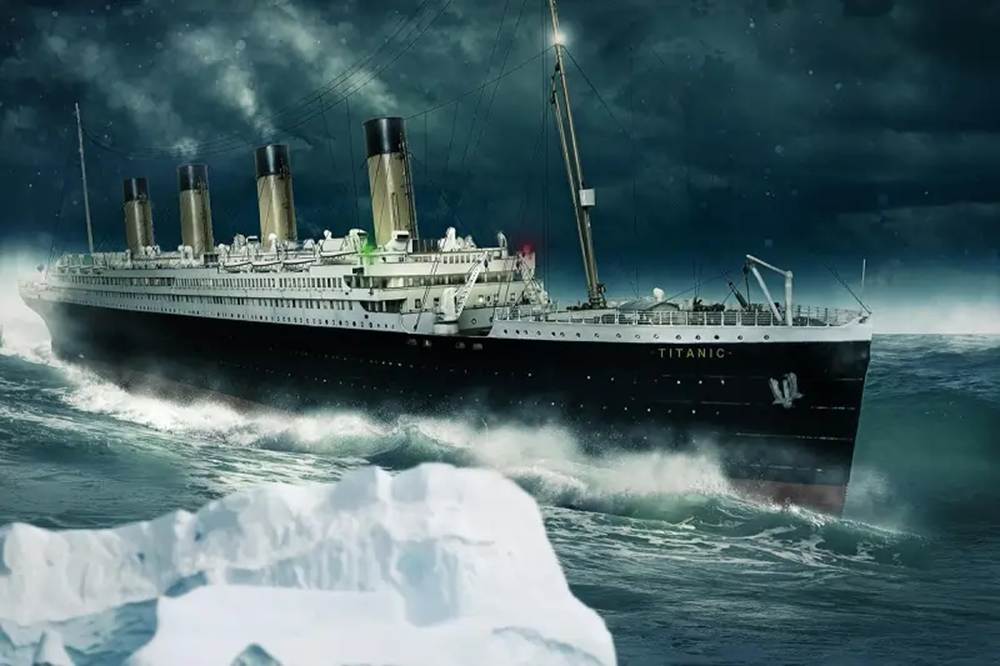
Titanic
sinking, after
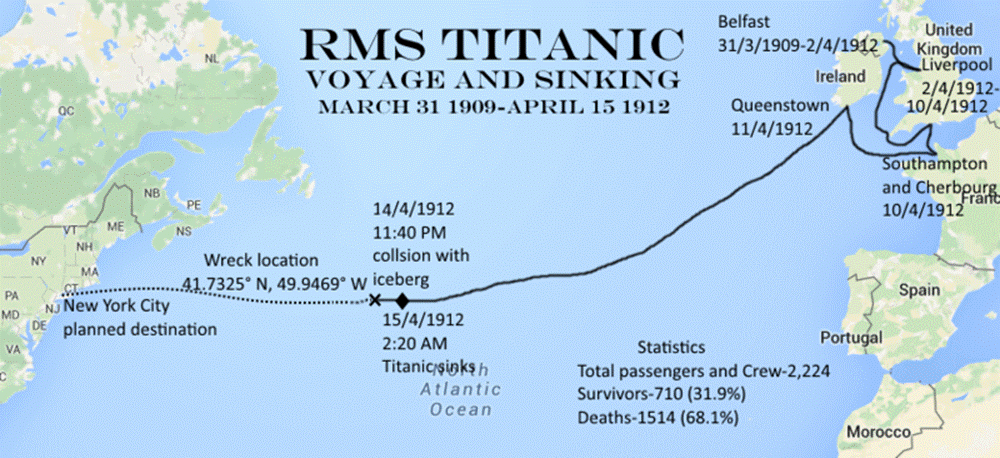
striking an iceberg during her maiden voyage. The
largest ocean liner in service at the time, Titanic was four days into her
maiden voyage from Southampton, England, to New York City, United States,
with an estimated 2,224 people on board when she struck an iceberg at 23:40
on 14 April. She sank two hours and forty minutes later at 02:20 ship's time
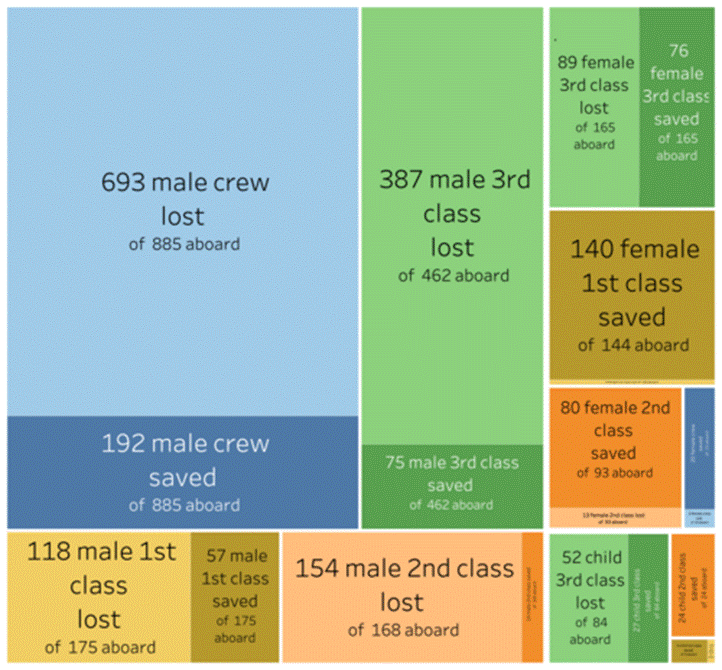
on 15 April, resulting in the deaths of up to 1,635 people, making it one of
the deadliest peacetime maritime disasters in history. The
Titanic could carry 3,547 people in speed and comfort, and
was built on an unprecedented scale. Her reciprocating engines were the
largest that had ever been built, standing 40 feet high and with cylinders 9
feet in diameter, requiring the burning of 610 tons of coal per day.
The
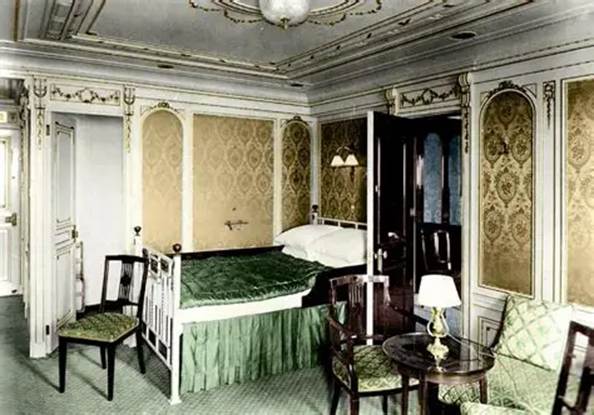
passenger accommodation, especially the first-class section, was said to be
"of unrivalled extent and magnificence", indicated by the fares
that first-class accommodation commanded. The Parlour
Suites, with private promenade cost over $4,350
(equivalent to $142,000 today) for a one-way transatlantic passage.
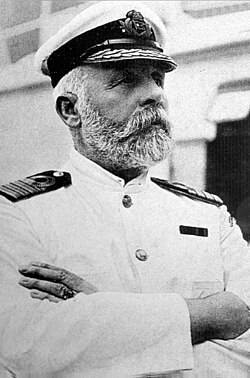
Captain
Smith (age 62) had four decades of seafaring experience and had served as
captain of RMS Olympic, from which he was transferred to command the Titanic.
The
vast majority of the crew who served under him were not trained sailors, but
were either engineers, firemen, or stokers, responsible for looking after the
engines; or stewards and galley staff, responsible
for the passengers. The six watch officers and 39 able seamen constituted
only around five percent of the crew, with the majority having been taken on
at Southampton, and as a result lacked the time to familiarise
themselves with the ship.
Titanic's
radio operators received six messages from other ships warning of drifting
ice, which passengers on Titanic had begun to notice during the afternoon.
The ice conditions in the North Atlantic were the worst of any April in the
previous 50 years (which was the reason why the lookouts were unaware that
they were about to steam into a line of drifting ice several miles wide and
many miles long). These conditions were attributed to a mild winter that
caused large numbers of icebergs to shift off the west coast of Greenland.
The radio operators did not relay all of these messages; at the time, all
wireless operators on ocean liners were employees of the Marconi's Wireless
Telegraph Company and not members of their ship's crew. As such, their
primary responsibility was to send messages for the
passengers, with weather reports as a secondary concern. Titanic
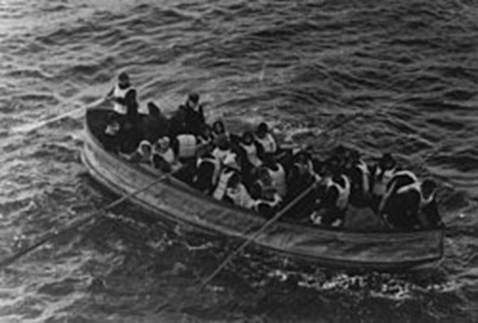
had a total of 20 lifeboats, comprising 16 wooden boats on davits, eight on
either side of the ship, and four collapsible boats with wooden bottoms and
canvas sides. The collapsibles were stored upside
down with the sides folded in, and would have to be
erected and moved to the davits for launching. Two were stored under the
wooden boats and the other two were lashed atop the officers' quarters. The
position of the latter would make them extremely difficult to launch, as they
weighed several tons each and had to be manhandled down to the boat deck.
Collectively the 20 lifeboats could accommodate 1,178 – barely half the
number of people on board and a third of the number the ship was licensed to
carry. The shortage of lifeboats was not because of a lack of space nor
because of cost. Titanic had been designed to accommodate up to 68 lifeboats
(capacity for 4,624).
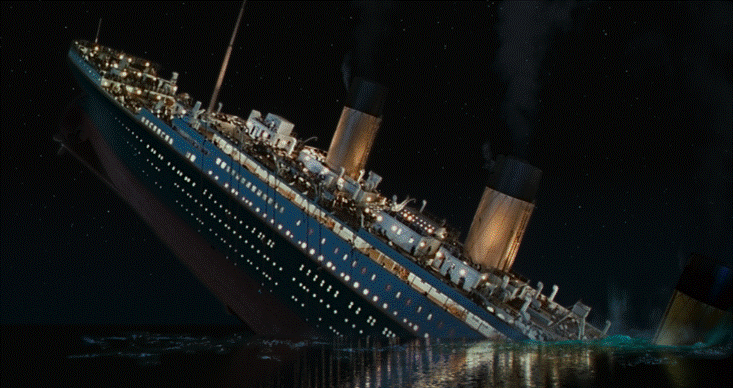
Titanic
was subjected to extreme opposing forces – the flooded bow pulling her down
while the air in the stern kept her to the surface – which were concentrated
at one of the weakest points in the structure, the area of the engine room
hatch. Shortly after the lights went out, Titanic's structure failed and the
ship split apart. The submerged bow may have remained attached to the stern
by the keel for a short time, pulling the stern to a high angle before
separating and leaving the stern to float for a few moments longer. The
forward part of the stern will have flooded very rapidly, causing it to tilt
and then settle briefly until sinking.
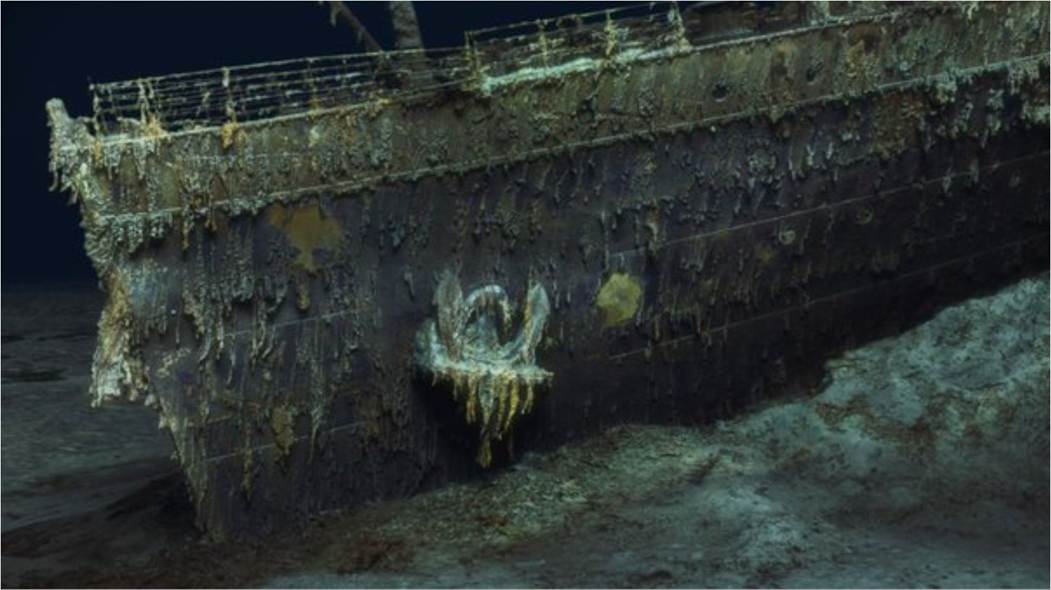
The
wreck is steadily decaying, with an estimated 0.5–1 ton of metal turning to
oxide per day (assuming one ten-thousandth of an inch per day on all
surfaces). Eventually Titanic's structure will collapse, and she will be
reduced to a patch of rust on the seabed, with any remaining scraps of the
ship's hull mingled with her more durable fittings, like the propellers,
bronze capstans, compasses and the telemotor.
|