Home
About
Links
Hobbycraft
Photos
Downloads
|
1492 🌍 503
million Christopher
Columbus discovers America, played a pivotal—though complex—role
in the European "discovery" of the Americas. Here's how his actions
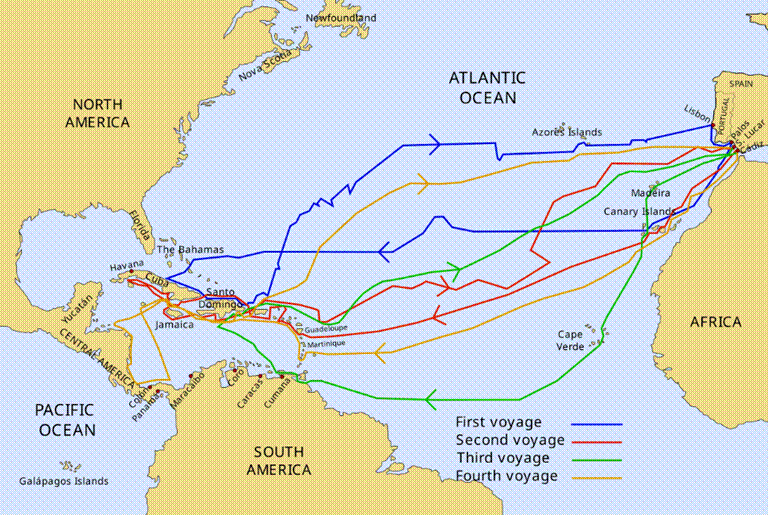
shaped that moment in history: Voyage in 1492: Columbus set sail from Spain with three ships
(the Niña, the Pinta, and the Santa María) aiming to find a westward sea
route to Asia. Instead, he landed in the Bahamas on October 12, 1492, marking
the first known European contact with the Caribbean islands. Subsequent Exploration: He went on to explore parts of Cuba,
Hispaniola (modern Haiti and Dominican Republic), and Central and South
America during four voyages between 1492 and 1504. Colonial Impact: Columbus established settlements, notably La
Navidad in Hispaniola, and initiated the Columbian Exchange—a massive
transfer of plants, animals, people, and diseases between the Old and New
Worlds. What He Didn’t Do: He didn’t reach mainland North America (like the U.S. or
Canada). He wasn’t the first European to reach the Americas—Norse
explorer Leif Erikson likely landed in Newfoundland around 1000 CE. He didn’t realize he had found a new continent. Columbus
believed he had reached the outskirts of Asia and never fully accepted that
he had encountered a previously unknown landmass. Columbus’s governance in the colonies was marked by brutality,
including enslavement and violence against Indigenous peoples. His legacy has become deeply contested: once hailed as a heroic
discoverer, he’s now also recognized as a symbol of colonial exploitation and
Indigenous suffering. In short, Columbus didn’t “discover” America in the sense of
being the first human or even the first European to arrive—but his voyages
triggered centuries of European exploration, conquest, and colonization that
reshaped the world.
|

|
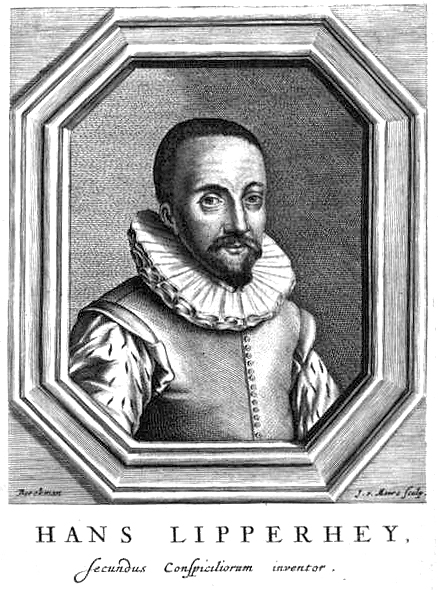
1608 🌍 516 million Telescope
invented, Hans Lipperhey applied to the States General of the
Netherlands for a patent for his instrument "for seeing things far away
as if they were nearby." Lipperhey's original instrument consisted of either two convex
lenses with an inverted image or a convex objective and a concave eyepiece
lens so it would have an upright image.
|

1620
|
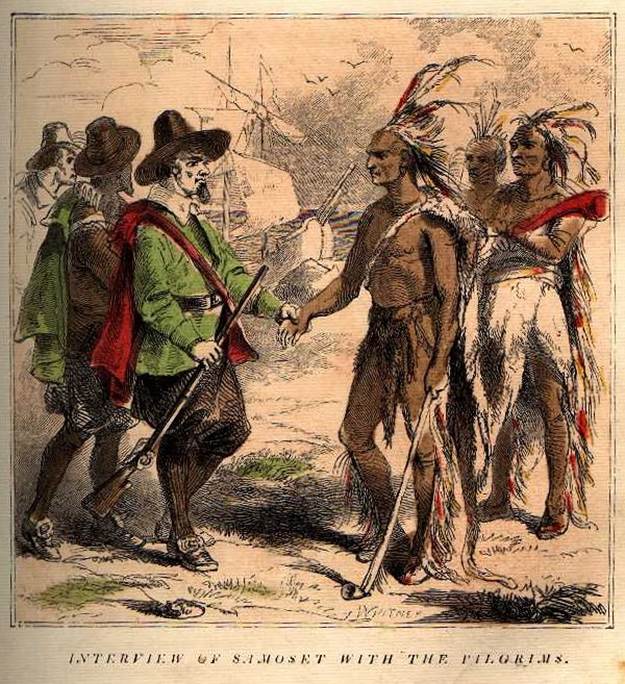
Pilgrim
from England arrive in America, intertwined in the story of early
American colonization. The Pilgrims were English Separatists, a radical faction of
Puritans who broke away from the Church of England. Seeking religious freedom, they first fled to Leiden, Holland in
the early 1600s, but eventually decided to establish a new colony in the
Americas to preserve their English identity and faith. In September 1620, about 100 Pilgrims and other settlers (called
"Strangers") sailed from Plymouth, England aboard the Mayflower. After 66 days at sea, they landed at Cape Cod, and eventually
settled at Plymouth Rock in December 1620, founding Plymouth Colony, the
first permanent European settlement in New England. 📜 The Mayflower Compact Before disembarking, they drafted the Mayflower Compact, a
pioneering document of self-governance and majority rule. It laid the
foundation for democratic principles in the New World. 🌽 Survival and Thanksgiving The first winter was brutal—over half the settlers died. With help from the Wampanoag tribe, especially Squanto, they
learned to grow crops and survive. In 1621, they celebrated a harvest feast with the Wampanoag,
which became the basis for the modern Thanksgiving holiday.
|

|
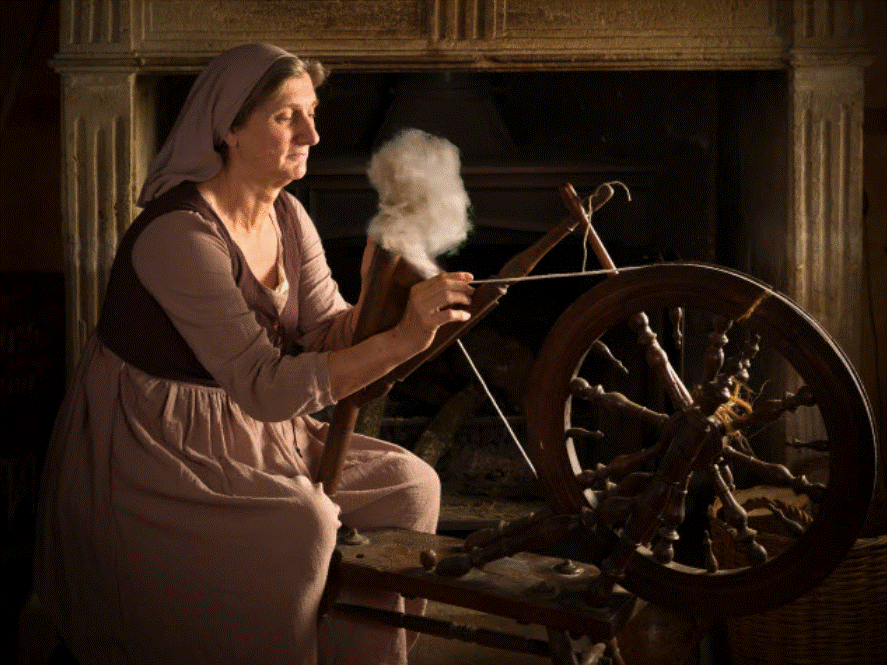
1625? North
America use of spinning wheel, likely originated from India, but
the exact details of their origin are lost to time. Colonists brought spinning wheels and sheep with them to North
America in the 16th century. Spinning was primarily done by women in the home
as a way to make thread for clothes and fabric for other industries.
|

|
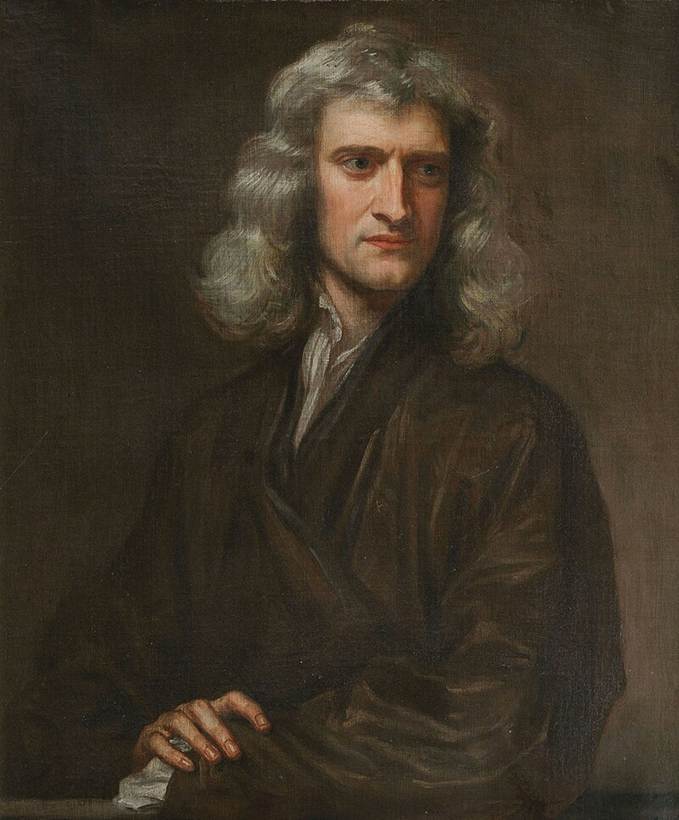
1686 🌍 595 million Issac
Newton laws of motion, three physical laws that describe the
relationship between the motion of an object and the forces acting on it.
These laws, which provide the basis for Newtonian mechanics, can be
paraphrased as follows: A body remains at rest, or in motion at a constant speed in a
straight line, unless it is acted upon by a force. At any instant of time, the net force on a body is equal to the
body's acceleration multiplied by its mass or, equivalently, the rate at
which the body's momentum is changing with time If two bodies exert forces on each other, these forces have the
same magnitude but opposite directions.
|

|
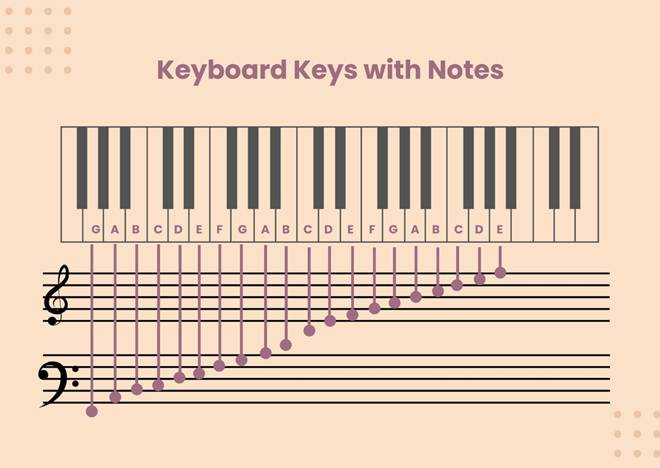
1709 The
first piano, a keyboard instrument that produces sound
when its keys are depressed, activating an action mechanism where hammers
strike strings. Modern pianos have a row of 88 black and white keys, tuned to a
chromatic scale in equal temperament. A musician who specializes in piano is
called a pianist. There are two main types of piano: the grand piano and the
upright piano. The grand piano offers better sound and more precise key
control, making it the preferred choice when space and budget allow. The
grand piano is also considered a necessity in venues hosting skilled
pianists. The upright piano is more commonly used because of its smaller size
and lower cost. When a key is depressed, the strings inside are struck by
felt-coated wooden hammers. The vibrations are transmitted through a bridge
to a soundboard that amplifies the sound by coupling the acoustic energy to
the air. When the key is released, a damper stops the string's vibration,
ending the sound. Most notes have three strings, except for the bass, which
graduates from one to two. Notes can be sustained when the keys are released
by the use of pedals at the base of the instrument, which lift the dampers off
the strings. The sustain pedal allows pianists to connect and overlay sound,
and achieve expressive and colorful sonority. In the 19th century, influenced by Romantic music trends, the
fortepiano underwent changes such as the use of a cast iron frame, which
allowed much greater string tensions. Aliquot stringing gave grand pianos a
more powerful sound, a longer sustain, and a richer tone. Later in the
century, as the piano became more common it allowed families to listen to a
newly published musical piece by having a family member play a simplified
version.
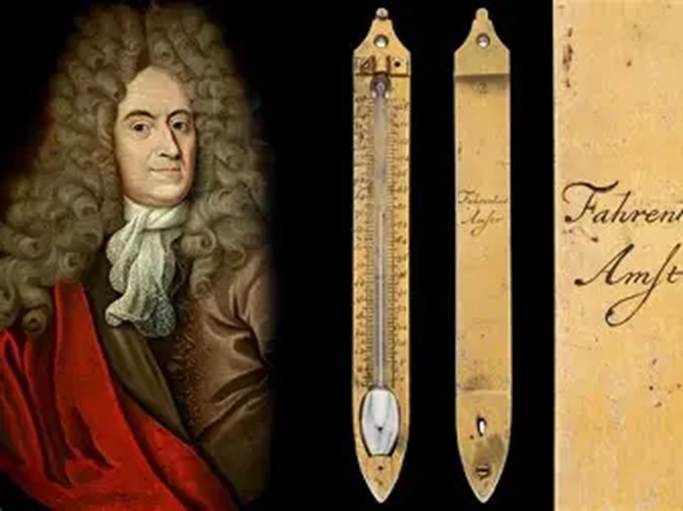
1714 The
first modern thermometer, the mercury thermometer with a
standardized scale, was invented by Daniel Gabriel Fahrenheit in 1714. Thermometers measure temperature by using materials that change
in some way when they are heated or cooled. In a mercury thermometer, the
liquid expands as it is heated and contracts when it is cooled, so the length
of the liquid column is longer or shorter depending on the temperature. Daniel Gabriel Fahrenheit was the German physicist who invented
the alcohol thermometer in 1709 and the mercury thermometer in 1714. In 1724,
he introduced the standard temperature scale that bears his name—Fahrenheit
scale—that was used to record changes in temperature in an accurate fashion.
The Fahrenheit scale divided the freezing and boiling points of
water into 180 degrees; 32 degrees was the freezing point of water and 212
degrees was its boiling point. Zero degrees was based on the temperature of
an equal mixture of water, ice, and salt. Fahrenheit based his temperature
scale on the temperature of the human body. Originally, the human body
temperature was 100 degrees on the Fahrenheit scale, but it has since been
adjusted to 98.6 degrees. |


|
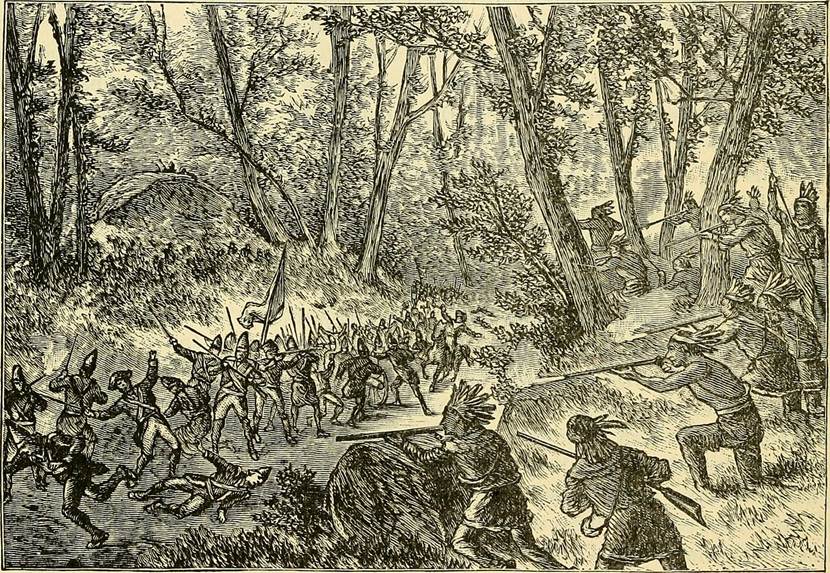
1754 🌍 770 million French and Indian war, 1754 to 1763, Great Britain and France, along with their Native
American allies, fought in North America. This conflict is generally seen as
part of the Seven Years' War, but in the United States, it is often viewed as
a separate war. Trade tensions after the Treaty of Aix-la-Chapelle led to
disputes over the Forks of the Ohio and Fort Duquesne. The fighting began
when George Washington's Virginia militia ambushed a French patrol at the
Battle of Jumonville Glen. In 1755, Edward Braddock's four-pronged assault on the French
failed, with his own defeat and death at the Battle of the Monongahela.
British campaigns in Pennsylvania and New York from 1755 to 1757 were
unsuccessful, except for the capture of Fort Beauséjour. Over the next nine
years, French settlers were removed and replaced by New Englanders. The Seven Years' War started in 1756, with British defeats in
1757 contributing to a change in leadership. Under Prime Minister William
Pitt, Britain boosted its military efforts in the colonies as France focused
on Europe. From 1758 to 1760, Britain captured Quebec and Montreal,
effectively ending the conflict in North America. Under the Treaty of Paris (1763), France gave Britain its
Canadian territories and land east of the Mississippi, while transferring
French Louisiana west of the Mississippi to Spain as compensation for losing
Florida. France's presence in North America was reduced to Saint Pierre and
Miquelon, cementing Britain's colonial dominance.
|

|
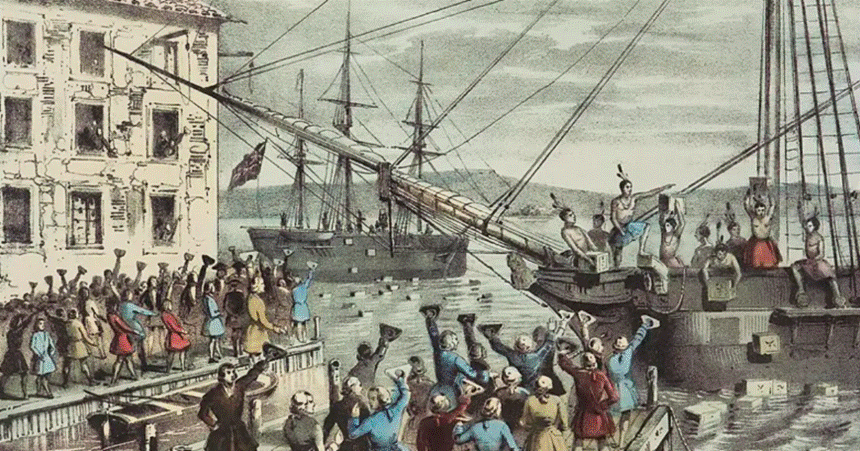
1773 Boston
Tea Party was
a key protest led by the Sons of Liberty in colonial Massachusetts against British
rule. It intensified tensions leading to the American Revolutionary War,
which began with the Battles of Lexington and Concord and resulted in the
independence of the United States. The Boston Tea Party was a protest against the Tea Act, which
allowed the East India Company to sell tea in the colonies while avoiding
certain taxes. In opposition, the Sons of Liberty boarded a British ship on
December 16, 1773, and dumped 342 chests of tea into Boston Harbor. The
British saw this as treason and responded severely. Days later, at the
Philadelphia Tea Party, activists refused to unload a British tea shipment
and sent the ship back to England. In 1774, Parliament passed the Intolerable Acts, ending local
self-government in Massachusetts and shutting down Boston's trade. In
response, colonists protested, formed the First Continental Congress in
Philadelphia to demand repeal, and organized resistance through the articles
of Association.
|