Home
About
Links
Hobbycraft
Photos
Downloads
|
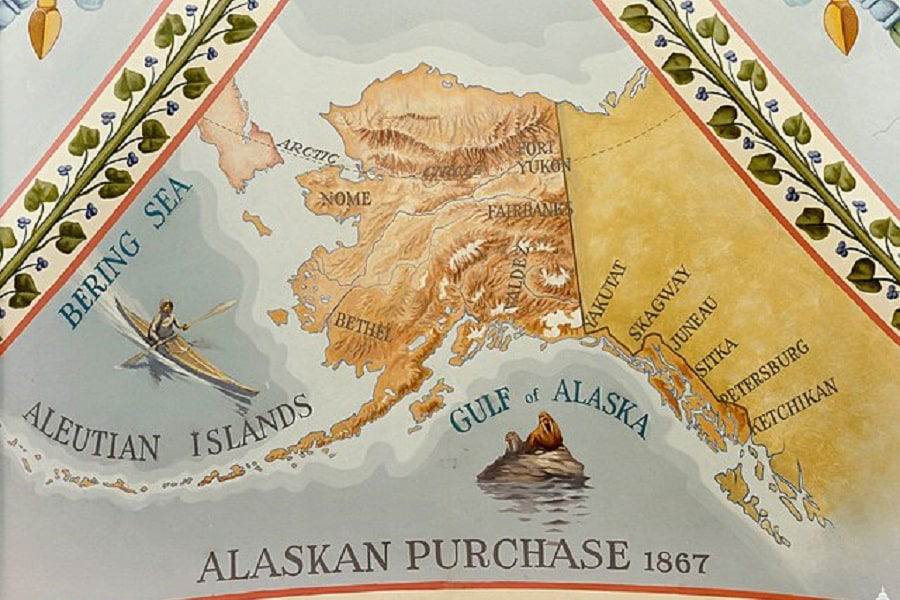
1867 Alaska
is purchased from Russia, for a sum of $7.2
million in 1867 (equivalent to $129 million in 2023). The United States had
grown by 586,412 sq mile. Reactions to the Alaska Purchase among Americans
were mostly positive, as many believed that Alaska would serve as a base to
expand American trade in Asia. Some
opponents labeled the purchase as "Seward's Folly" or
"Seward's Icebox" as they contended that the United States had
acquired useless land. Nearly all Russian settlers left Alaska in the
aftermath of the purchase; Alaska would remain sparsely populated until the
Klondike Gold Rush began in 1896. Originally organized as the Department of
Alaska, the area was renamed the District of Alaska in 1884 and the Territory
of Alaska in 1912, ultimately becoming the modern-day State of Alaska in
1959.
In 1899, gold was found at Nome Alaska, and several towns
subsequently began to be built, such as Fairbanks and Ruby. In 1902, the
Alaska Railroad began to be built, which would connect from Seward to
Fairbanks by 1914, though Alaska still does not have a railroad connecting it
to the lower 48 states today. Still, an overland route was built, cutting
transportation times to the contiguous states by days. The industries of
copper mining, fishing, and canning began to become popular in the early 20th
century, with 10 canneries in some major towns. By 1916, its population was about 58,000. James Wickersham, a
Delegate to Congress, introduced Alaska's first statehood bill, but it failed
due to the small population and lack of interest from Alaskans. Even
President Warren G. Harding's visit in 1923 could not create widespread
interest in statehood. In 1942, the Alaska–Canada Military Highway was completed, in
part to form an overland supply route to the Soviet Union on the other side
of the Bering Strait. Running from Dawson Creek, British Columbia to Delta
Junction, Alaska, the road connected the contiguous United States to Alaska
across Canada. The construction of military bases, such as the Adak base,
contributed to the population growth of some Alaskan cities. Anchorage almost
doubled in size, from 4,200 people in 1940 to 8,000 in 1945. World War II and the Japanese invasion highlighted Alaska's
strategic importance, and the issue of statehood was taken more seriously,
but it was the discovery of oil at Swanson River on the Kenai Peninsula that
dispelled the image of Alaska as a weak, dependent region. President Dwight
D. Eisenhower signed the Alaska Statehood Act into United States law on July
4, 1958, which paved the way for Alaska's admission into the Union on January
3, 1959. Juneau, the territorial capital, continued as state capital, and
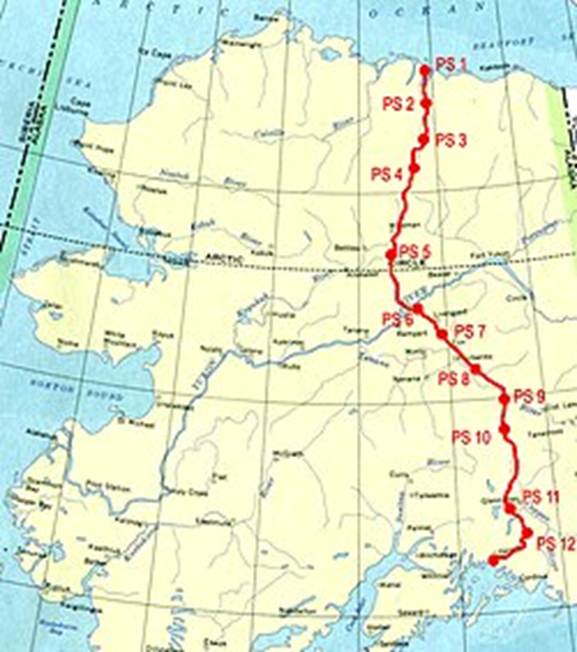
William A. Egan was sworn in as the first governor. Though a pipeline from the North Slope to the nearest ice-free
port, almost 800 miles to the south, was the only way to get Alaska's oil to
market, significant engineering challenges lay ahead. Between the North Slope
and Valdez, there were active fault lines, three mountain ranges, miles of
unstable, boggy ground underlain with frost, and migration paths of caribou
and moose. The Trans-Alaska Pipeline was ultimately completed in 1977 at a
total cost of $8 billion.
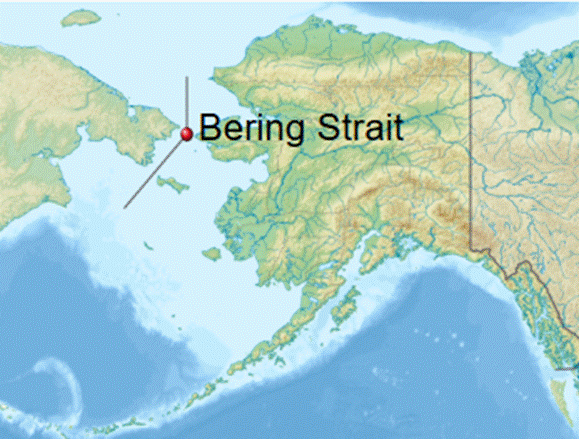
Trans Alaska pipeline The history of Alaska dates back to around 20,000 years ago,
when foraging groups crossed the Bering land bridge into what is now western
Alaska.
|

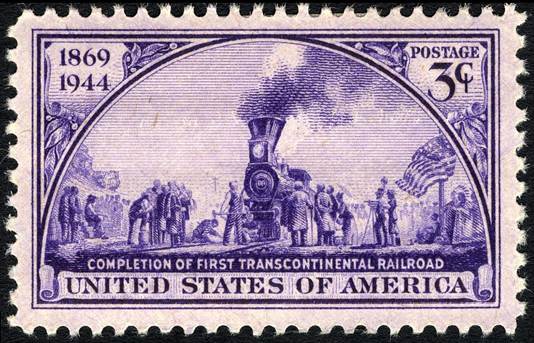
1869
|
Transcontinental
railroad was
a 1,911-mile continuous railroad line built between 1863 and 1869 that
connected the existing eastern U.S. rail network at Council Bluffs, Iowa,
with the Pacific coast at the Oakland Long Wharf on San Francisco Bay. The
rail line was built by three private companies over public lands provided by
extensive U.S. land grants. Building was financed by both state and U.S.
government subsidy bonds as well as by company-issued mortgage bonds. The
Western Pacific Railroad Company built 132 miles of track from the road's
western terminus at Alameda/Oakland to Sacramento, California. The
Central Pacific Railroad Company of California (CPRR) constructed 690 miles
east from Sacramento to Promontory Summit, Utah Territory. The
Union Pacific Railroad (UPRR) built 1,085 miles from the road's eastern terminus at the
Missouri River settlements of Council Bluffs and Omaha, Nebraska, westward to
Promontory Summit. The
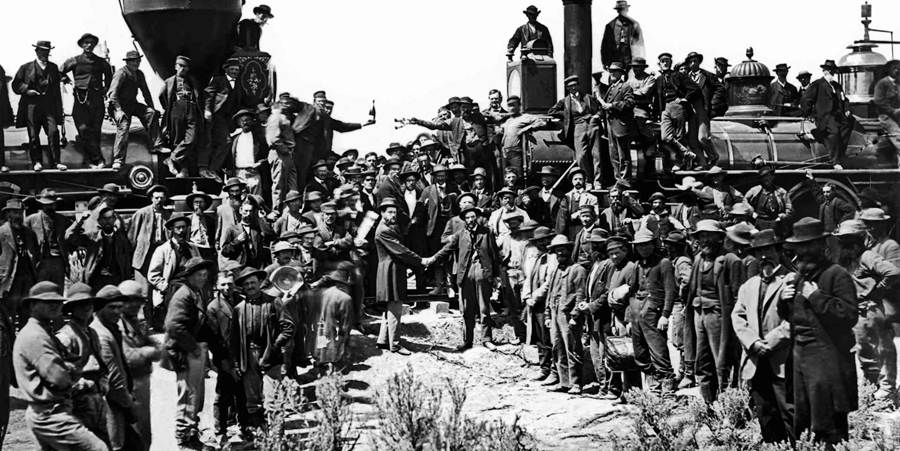
railroad opened for through traffic between Sacramento and Omaha on May 10,
1869, when CPRR President Leland Stanford ceremonially tapped the gold
"Last Spike" (later often referred to as the "Golden
Spike") with a silver hammer at Promontory Summit. In
the following six months, the last leg from Sacramento to San Francisco Bay
was completed. The resulting coast-to-coast railroad connection
revolutionized the settlement and economy of the American West. It brought
the western states and territories into alignment with the northern Union
states and made transporting passengers and goods coast-to-coast considerably
quicker, safer and less expensive. The
first transcontinental rail passengers arrived at the Pacific Railroad's
original western terminus at the Alameda Terminal on September 6, 1869, where
they transferred to the steamer Alameda for transport across the Bay to San
Francisco. The road's rail terminus was moved two months later to the Oakland
Long Wharf, about a mile to the north, when its expansion was completed and
opened for passengers on November 8, 1869.
|

1876
|
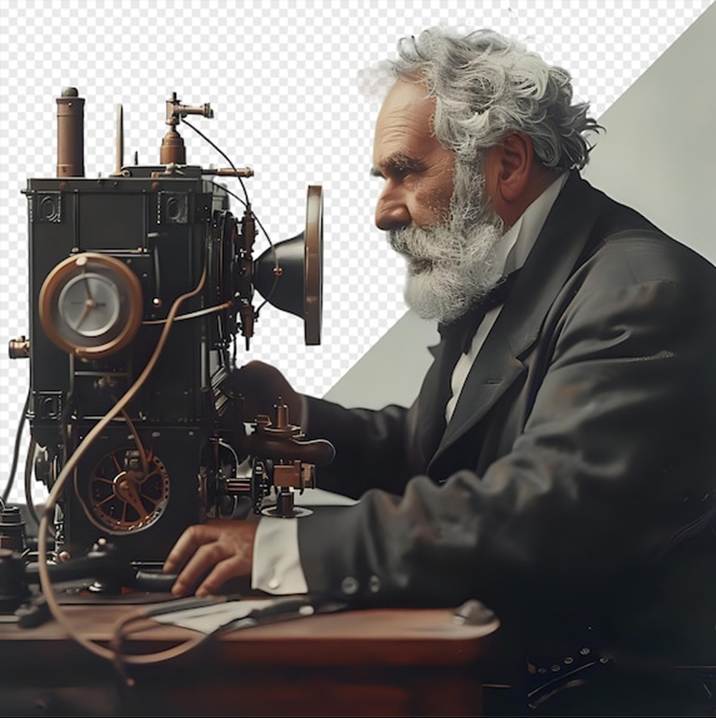
First telephone, Alexander Graham Bell became the first to
obtain a patent for an "apparatus for transmitting vocal or other sounds
telegraphically". The first successful bi-directional transmission of clear speech
by Alexander Bell and Thomas Watson was made on March 10, 1876, when Bell
spoke into the device, "Mr. Watson, come here, I want to see you."
and Watson complied with the request. Bell did for the telephone what Henry Ford did for the
automobile. Although not the first to experiment with telephonic devices,
Bell and the companies founded in his name were the first to develop
commercially practical telephones around which a successful business could be
built and grow.
|

|
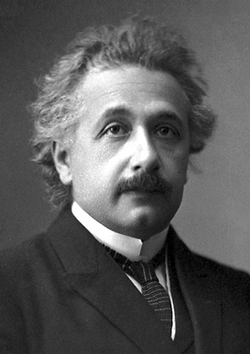
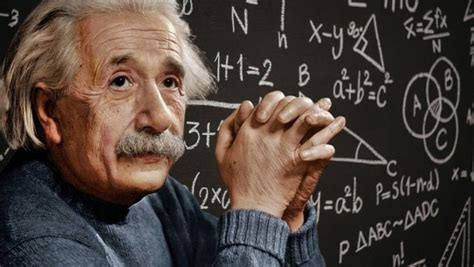
1879 Albert
Einstein born in Germany, was a theoretical physicist
and the most famous scientist in human history. He developed the general
theory of relativity, one of the two pillars of modern physics, alongside
quantum mechanics. He is perhaps best known in popular culture for his
mass/energy equivalence formula E=mc2. In
1921 he received the Nobel Prize in Physics for his “services to theoretical
physics”, and in particular his discovery of the photoelectric effect, a
pivotal step in the evolution of quantum theory. Born
as a subject to the Kingdom of Württemberg, part of the German Empire,
Einstein moved to Switzerland in 1895, forsaking his citizenship the
following year. In 1897, at the age of seventeen, he enrolled in the
mathematics and physics teaching diploma program at the Swiss federal
polytechnic school in Zurich, graduating in 1900. He acquired Swiss
citizenship a year later, which he kept for the rest of his life, and
afterwards secured a permanent position at the Swiss Patent Office in Bern.
In 1905, he submitted a successful PhD dissertation to the University of
Zurich. In 1914, he moved to Berlin to join the Prussian Academy of Sciences
and the Humboldt University of Berlin, becoming director of the Kaiser
Wilhelm Institute for Physics in 1917; he also became a Prussian and
consequently also German citizen again. In 1933, while Einstein was visiting
the United States, Adolf Hitler came to power in Germany. Horrified
by the Nazi persecution of his fellow Jews, he decided to remain in the US,
and was granted American citizenship in 1940. On the eve of World War II, he
endorsed a letter to President Franklin D. Roosevelt alerting him to the
potential German nuclear weapons program and recommending that the US begin
similar research, later carried out as the Manhattan Project. Einstein
excelled at physics and mathematics from an early age, and soon acquired the
mathematical expertise normally only found in a child several years his
senior. He began teaching himself algebra, calculus and Euclidean geometry
when he was twelve; he made such rapid progress that he discovered an
original proof of the Pythagorean theorem before his thirteenth birthday. A
family tutor, Max Talmud, said that only a short time after he had given the
twelve year old Einstein a geometry textbook, the boy "had worked
through the whole book. He thereupon devoted himself to higher mathematics
... Soon the flight of his mathematical genius was so high I could not
follow." Einstein recorded that he had "mastered integral and
differential calculus" while still just fourteen. His love of algebra
and geometry was so great that at twelve, he was already confident that
nature could be understood as a "mathematical structure".
On
17 April 1955, Einstein experienced internal bleeding caused by the rupture
of an abdominal aortic aneurysm, which had previously been reinforced
surgically by Rudolph Nissen in 1948. He took the draft of a speech he was
preparing for a television appearance commemorating the state of Israel's
seventh anniversary with him to the hospital, but he did not live to complete
it. Einstein
refused surgery, saying, "I want to go when I want. It is tasteless to
prolong life artificially. I have done my share; it is time to go. I will do
it elegantly." He died in the Princeton Hospital early the next morning
at the age of 76, having continued to work until near the end. During
the autopsy, the pathologist Thomas Stoltz Harvey removed Einstein's brain
for preservation without the permission of his family, in the hope that the
neuroscience of the future would be able to discover what made Einstein so
intelligent. Einstein's remains were cremated in Trenton, New Jersey, and his
ashes were scattered at an undisclosed location. The
chemical element 99, einsteinium, was named for him in August 1955, four
months after Einstein's death. 2001 Einstein is an inner main belt asteroid
discovered on 5 March 1973 Einstein
quotes:
1.
"My
religion consists of a humble admiration of the illimitable superior spirit
who reveals himself in the slight details we are able to perceive with our
frail and feeble minds. That deeply emotional conviction of the presence of a
superior reasoning power, which is revealed in the incomprehensible universe,
forms my idea of God."
2.
"I'm
not an atheist, and I don't think I can call myself a pantheist. We are in
the position of a little child entering a huge library filled with books in
many languages. The child knows someone must have written those books. It
does not know how. It does not understand the languages in which they are
written. The child dimly suspects a mysterious order in the arrangement of
the books but doesn't know what it is. That, it seems to me, is the attitude
of even the most intelligent human being toward God. We see the universe
marvelously arranged and obeying certain laws but only dimly understand these
laws. Our limited minds grasp the mysterious force that moves the
constellations."
3.
"The
very fact that the totality of our sense experiences is such that by means of
thinking (operations with concepts, and the creation and use of definite
functional relations between them, and the coordination of sense experiences
to these concepts) it can be put in order, this fact is one which leaves us
in awe, but which we shall never understand. One may say 'the eternal mystery
of the world is its comprehensibility.' It is one of the great realizations
of Immanuel Kant that the postulation of a real external world would be
senseless without this comprehensibility.
4.
"In
speaking here of "comprehensibility," the expression is used in its
most modest sense. It implies: the production of some sort of order among
sense impressions, this order being produced by the creation of general
concepts, relations between these concepts, and by definite relations of some
kind between the concepts and sense experience. It is in this sense that the
world of our sense experiences is comprehensible. The fact that it is
comprehensible is a miracle."
5.
"The
fanatical Atheists are like slaves who are still feeling the weight of their
chains which they have thrown off after hard struggle. They are creatures who
– in their grudge against traditional religion as the 'opium of the masses' –
cannot hear the music of the spheres."
6.
"A
new type of thinking is essential if mankind is to survive and move to higher
levels."
7.
The
following is from The Society for General Systems Research, Yearbook of the
Society for General Systems Research (Palo Alto, CA: The Society for General
Systems Research, 1956), "The
world that we have made as a result of the level of thinking that we have
done so far, has created problems we cannot solve at the level of thinking at
which we created them . . . . We shall require a substantially new manner of
thinking if humankind is to survive."
8.
"Thus
I came...to a deep religiosity, which, however, reached an abrupt end at the
age of 12. Through the reading of popular scientific books, I soon reached a
conviction that much in the stories of the Bible could not be
true....Suspicion against every kind of authority grew out of this
experience...an attitude which has never left me."
9.
"I
don't try to imagine a God; it suffices to stand in awe of the structure of
the world, insofar as it allows our inadequate senses to appreciate it." 10.
“Science
without religion is lame, religion without science is blind." 11.
"I
cannot imagine a God who rewards and punishes the objects of his creation,
whose purposes are modeled after our own - a God, in short, who is but a
reflection of human frailty. It is enough for me to contemplate the mystery
of conscious life perpetuating itself through all eternity, to reflect upon
the marvelous structure of the universe which we can dimly perceive and to
try humbly to comprehend even an infinitesimal part of the intelligence
manifested in Nature." 12.
"The
foundation of morality should not be made dependent on myth nor tied to any
authority lest doubt about the myth or the legitimacy of the authority
imperil the foundation of sound judgment and action." 13.
"A
man’s ethical behavior should be based effectually on sympathy, education,
and social ties and needs; no religious basis is necessary. Man would indeed
be in a poor way if he had to be restrained by fear of punishment and hope of
reward after death." 14.
"The
scientist is possessed by the sense of universal causation. His religious
feeling takes the form of a rapturous amazement at the harmony of natural
law, which reveals an intelligence of such superiority that , compared with
it, all the systematic thinking and acting of
human beings is an utterly insignificant reflection." 15.
".
. . In spite of all this, I don't let a single opportunity pass unheeded, nor
have I lost my sense of humor. When
God created the ass he gave him a thick skin." Einstein: The Life and
Times by Ronald W. Clark, Avon Books. 16.
"Where
dull-witted clansmen of our tribe were praying aloud, their faces turned to
the wall, their bodies swaying to and fro. A pathetic sight of men with a
past but without a future”. 17.
“Should
we be unable to find a way to honest cooperation and honest pacts with the
Arabs, then we have learned absolutely nothing during our 2,000 years of
suffering and deserve all that will come to us." 18.
"I
appeal to all men and women, whether they be eminent or humble, to declare
that they will refuse to give any further assistance to war or the
preparation of war." 19.
"It
is my belief that the problem of bringing peace to the world on a
supranational basis will be solved only by employing Gandhi's method (active, disciplined nonviolent resistance
aimed at converting opponents’ hearts through truth, moral force, and
self-suffering rather than coercion) on a larger scale."
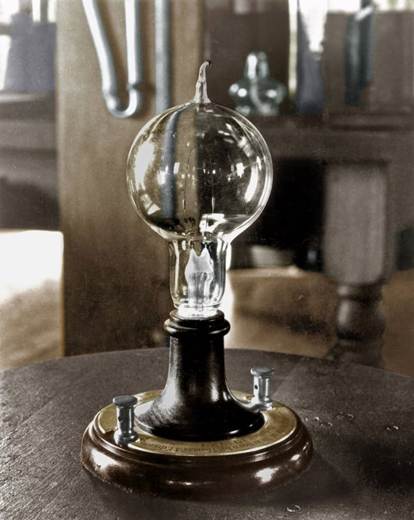
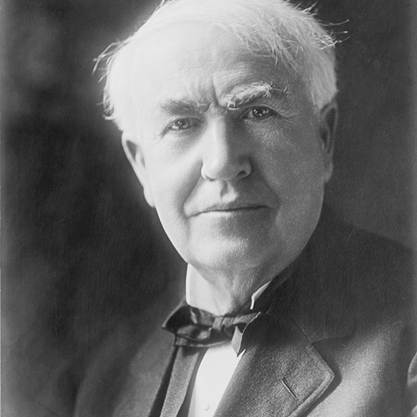
Thomas
Edison invents light bulb,
consisting of a filament housed in a glass vacuum bulb. He had his own glass
blowing shed where the fragile bulbs were carefully crafted for his
experiments. The
success of Edison’s light bulb was instrumental in the establishment of an
electric power distribution network. To meet the growing demand for electric
lighting, Edison founded the Edison Electric Light Company and built the
first commercial power station in New York City in 1882. This facility
generated electricity for hundreds of homes and businesses, laying the
groundwork for the modern electric grid that powers countless cities across
the globe today. Before
he died in 1931, Edison patented 1,093 of his inventions. The wonders of his
mind include the microphone, telephone receiver, universal stock ticker,
phonograph, kinetoscope (used to view moving pictures), storage battery,
electric pen, and mimeograph. Edison improved many other existing devices as
well. From a discovery made by one of his associates, he patented the Edison
effect (now called thermionic diode), which is the basis for all electron
tubes. Edison will forever be remembered for his contributions to the
incandescent light bulb. Even though he didn't dream up the first light bulb
ever crafted, and technology continues to change every day, Edison's work
with light bulbs was a spark of brilliance on the timeline of invention.
|