Home
About
Links
Hobbycraft
Photos
Downloads
|
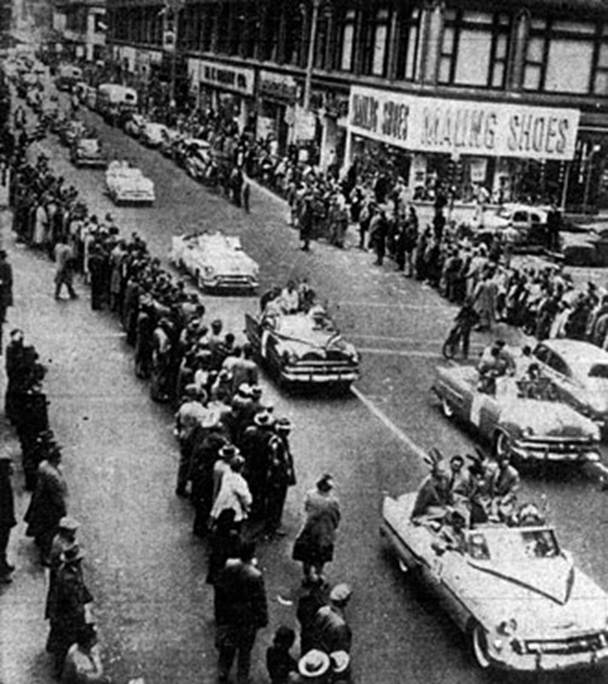
1953 Boston Braves moved
to Milwaukee, having
previously played in Boston, Massachusetts, as the Boston Braves. The
13-season tenure in Milwaukee at Milwaukee County Stadium saw varying degrees
of success for the franchise, winning the 1957 World Series and the National
League pennant in 1958. The team never finished with a losing record. The
Milwaukee Braves had an overall win–loss record of 1,146–890–8 (.563) during
their 13 years in Milwaukee. Milwaukee
went wild over the Braves, who were welcomed as genuine heroes. The Braves
finished 92–62 (.597) in their first season in Milwaukee and drew a then-NL
record 1.8 million fans.
As
the 1950s progressed, the reinvigorated Braves became increasingly
competitive. Sluggers Eddie Mathews and Hank Aaron drove the offense (they
would hit a combined 1,226 home runs as Braves, with 850 of those coming
while the franchise was in Milwaukee), while Warren Spahn, Lew Burdette, and
Bob Buhl anchored the rotation. 1953:
The Braves moved from Boston to Milwaukee 1957:
The Braves won the World Series, led by Hank Aaron and Warren Spahn. 1958:
The Braves repeated as NL champions but lost the World Series to the Yankees.
1965:
Attendance declined, leading to the Braves' relocation to Atlanta. Notable Milwaukee Braves: Hank
Aaron, a
right fielder on the team from 1954 until the team's departure to Atlanta
after 1965. He is considered the team's most accomplished player. He was
inducted into the Hall of Fame in his first year of eligibility in 1982. Joe
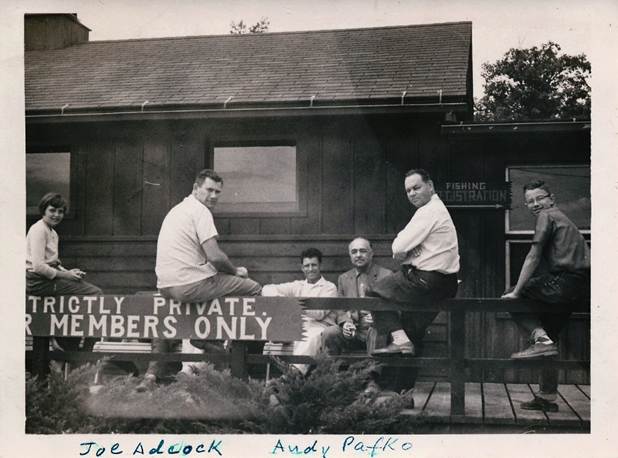
Adcock, a
first baseman on the team from 1953 to 1962. Bill
Bruton, a
center fielder on the team from 1953 to 1960. Bob
Buhl, a pitcher
on the team from 1953 to 1962. Lew
Burdette,
a pitcher on the team from 1953 to 1963. Gene
Conley, a
pitcher on the team from 1954 to 1958. Del
Crandall,
a catcher on the team from before the team's 1953 arrival to Milwaukee to
1963. Johnny
Logan, a
shortstop on the team from before the team's 1953 arrival to Milwaukee to
1961 Eddie
Mathews, a
third baseman on the team from before the team's 1953 arrival to Milwaukee to
after the team's 1966 departure to Atlanta, and is
the only such player to have played on the Braves three home cities. He was
inducted into the Hall of Fame in 1978. Andy
Pafko, a
right fielder on the team from 1953 to 1959. Red
Schoendienst,
a second baseman on the team from 1957 to 1960. He was inducted into the Hall
of Fame in 1989. Warren
Spahn, a
pitcher on the team from before the team's 1953 arrival to 1964. He was
inducted into the Hall of Fame in his first year of eligibility in 1973. The
Warren Spahn Award, given annually to the major leagues' best left-handed
pitcher, is named in his honor. Bobby
Thomson, a
left fielder on the team from 1954 to 1957. Joe
Torre, a
catcher on the team from 1960 to after the team's 1966 departure to Atlanta.
He was inducted into the Hall of Fame in 2014. Bob
Uecker, a
catcher on the team from 1962 to 1963. He was awarded the Ford C. Frick Award
in 2003 by the National Baseball Hall of Fame. * * * Many
of these players would come to the trout farm on their days off.
Silver Moon
Trout Farm
Trout Farm
club house
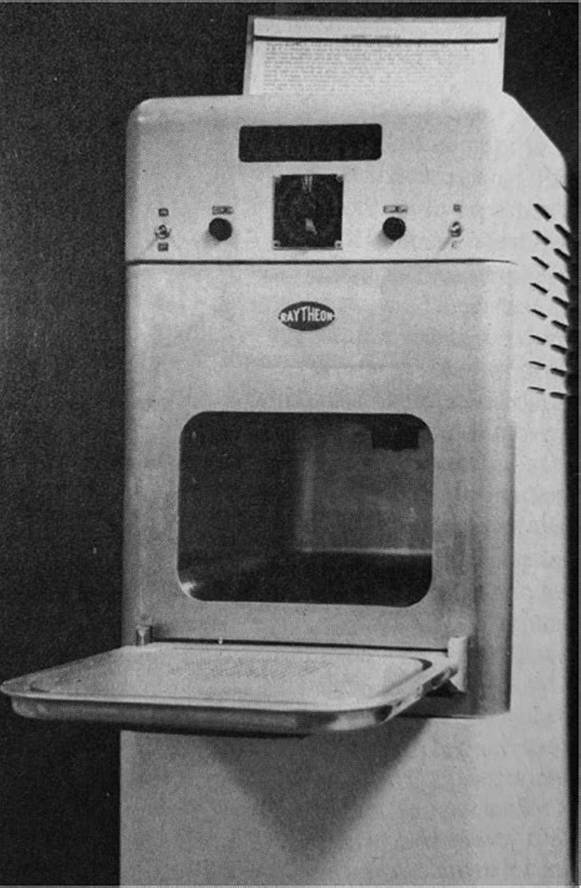
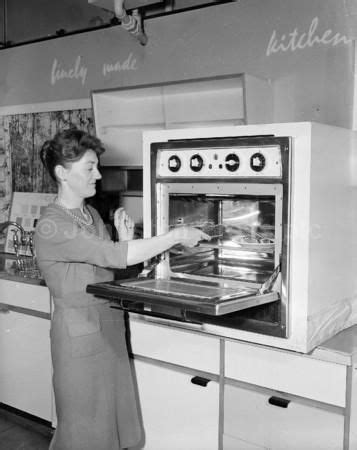
1954 The first microwave oven for home use was
introduced in by Raytheon, the company that had hired Percy Spencer to work
on the development of the Radarange. The first home
microwave oven was called the “Radarange HH-100” and it was a much smaller and more affordable version of
the original Radarange. However, it was still a
relatively expensive appliance, with a price tag of around $5,000, which is
equivalent to around $50,000 today.
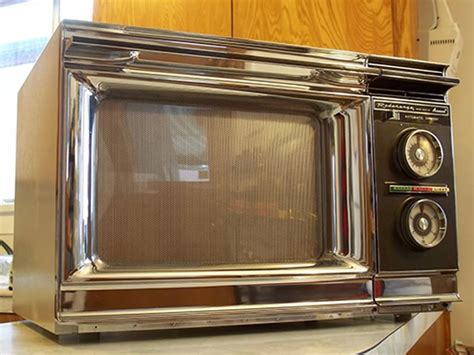
The
Tappan Microwave Oven was introduced in 1955. It was a compact, countertop
appliance that stood about 2 feet tall and weighed around 100 pounds. It was
powered by a magnetron that produced microwave energy at a frequency of 2.45
gigahertz and had a cooking power of 300 watts. The Tappan Microwave Oven was
priced at around $1,300, which is equivalent to around $12,000 today.
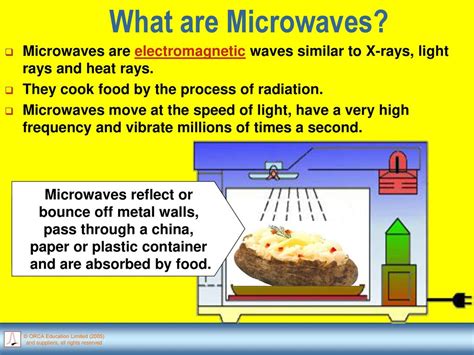
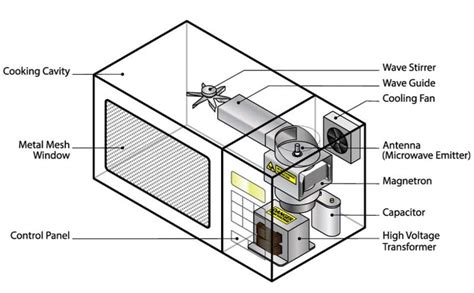
Microwave
ovens cook food using electromagnetic waves called microwaves. These waves
are generated by a component known as a magnetron, which converts electrical
energy into microwave radiation.
One
of the early challenges with microwave ovens was the risk of radiation
exposure. The magnetron in a microwave oven produces high-energy microwaves
that can penetrate the oven cavity and potentially harm people or pets
nearby. To address this concern, manufacturers developed safety features such
as interlocks, which prevent the oven from operating when the door is open,
and radiation shielding, which helps to contain the microwaves within the
oven cavity
Despite
these safety features, there were still concerns about the safety of
microwave ovens in the early years. Some people were worried about the
potential health effects of microwave radiation, and there were reports of
injuries and accidents caused by improper use or malfunctioning ovens. Today,
microwave ovens are considered to be a safe and convenient appliance for
cooking and reheating food, as long as users follow the manufacturer’s
instructions and take basic precautions to avoid accidents. Microwave
ovens have had a profound impact on the way we cook and live. They have
revolutionized the way we prepare and reheat food, making it faster, easier,
and more convenient. With a microwave oven, it is possible to cook a wide
range of foods quickly and efficiently, from frozen
vegetables to leftovers. Microwave ovens have also enabled the development of
new types of food products, such as microwaveable meals and snacks, which are
designed specifically for cooking in a microwave oven. Additionally, microwave
ovens have changed the way we think about mealtimes and food preparation,
making it possible to cook and eat on the go. The
impact of microwave ovens extends beyond the kitchen, as well. They have
helped to change the way we live and work, enabling people to have more free
time and flexibility in their daily lives. With a microwave oven, it is
possible to quickly and easily prepare a meal or snack, making it ideal for
busy lifestyles. Microwave ovens have also enabled the growth of the
convenience food industry, which has transformed the way we eat and live.
Today, microwave ovens are a common appliance in many households around the
world, and they continue to play an important role in modern life. As
technology continues to evolve, it is likely that microwave ovens will
continue to play a major role in shaping the way we cook, live, and interact
with food.
1955 🌍 2.5 billion Start of the Vietnam War, an
armed conflict in Vietnam, Laos, and Cambodia fought between North Vietnam
(Democratic Republic of Vietnam) and South Vietnam (Republic of Vietnam) and
their allies. North Vietnam was supported by the Soviet Union and China,
while South Vietnam was supported by the United States and other
anti-communist nations. The conflict was the second of the Indochina wars and
a proxy war of the Cold War between the Soviet Union and US. The Vietnam War
was one of the postcolonial wars of national liberation, a theater in the
Cold War, and a civil war, with civil warfare a defining feature from the
outset. Direct US military involvement escalated from 1965 until its
withdrawal in 1973. The fighting spilled into the Laotian and Cambodian Civil
Wars, which ended with all three countries becoming communist in 1975. The
war exacted an enormous cost, estimates of Vietnamese soldiers and civilians
killed range from 970,000 to 3 million. Some 275,000–310,000 Cambodians,
20,000–62,000 Laotians, and 58,220 US service members died.
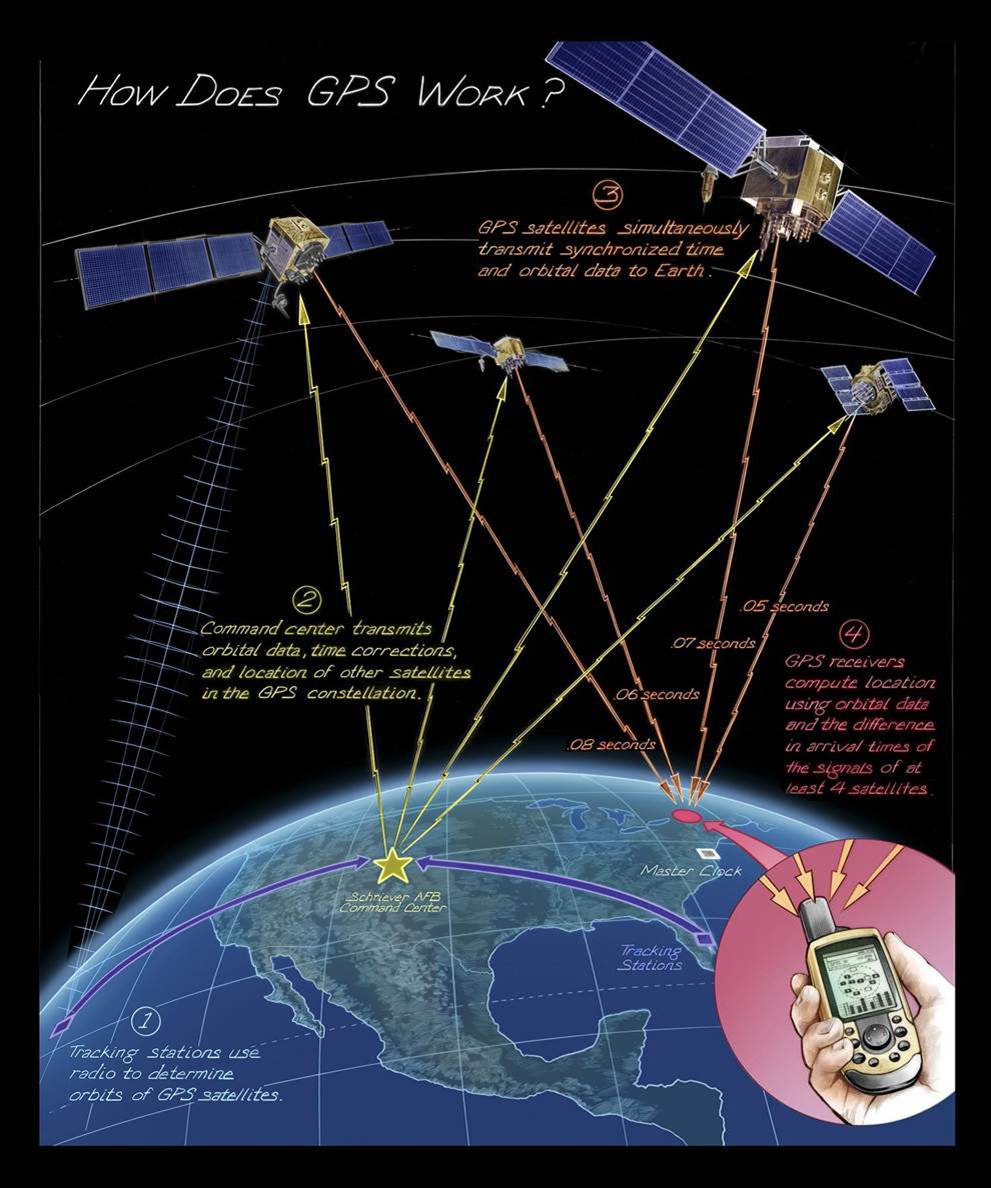
1958 Beginning
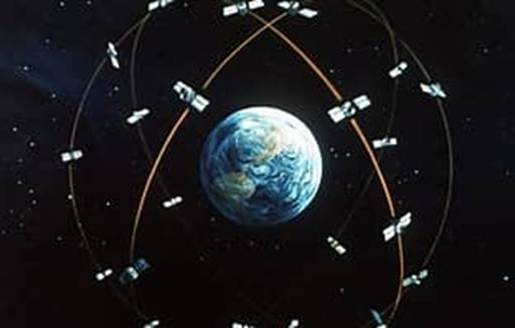
of Global Positioning System (GPS), has
its origins in the Sputnik era when scientists were able to track the
satellite with shifts in its radio signal known as the “Doppler Effect.” The
United States Navy conducted satellite navigation experiments in the mid
1960’s to track US submarines carrying nuclear missiles. With six satellites
orbiting the poles, submarines were able to observe the satellite changes in
Doppler and pinpoint the submarine’s location within a matter of minutes. In the early 1970’s, the
Department of Defense (DoD) wanted to ensure a robust, stable satellite
navigation system would be available. Embracing previous ideas from Navy
scientists, the DoD decided to use satellites to support their proposed
navigation system. DoD then followed through and launched its first
Navigation System with Timing and Ranging (NAVSTAR) satellite in 1978. The 24 satellite system became fully operational in 1993. In 1983, President Ronald
Reagan authorized the use of GPS by civilian commercial airlines in an
attempt to improve navigation and safety for air travel. The authorization to
provide free access to GPS data to industries outside the U.S. military
became the first step towards authorized civilian usage.
By 1989, commercially
available hand-held GPS units hit the market, including the Magellan
Corporation’s Magellan NAV 1000, which weighed 1.5 pounds, offered only a few
hours of battery life, and cost $3,000. GPS technology continued to
improve through the 1980s and 1990s. The production and development phase
began in 1985 and the first operational GPS Block II
satellite was launched on a Delta II rocket in 1989. As GPS coverage continued
to expand to full operational capabilities, so did its reach into the lives
of civilians. GPS technology appeared for the first time in a cellphone in
1999 when Benefon released Benefon Esc!, a
GPS-equipped phone that would lead the way for more. GPS technology also
began to show up in automobiles. In 2000, the government
approved plans to add three additional GPS signals for non-military use. More
importantly, the US government ended the “selective availability” program
that decreased the accuracy achievable by civilian GPS users. As a result of
this decision GPS signals instantly became 10 times more accurate for
civilians overnight. The price of GPS receiver
and processing chips also dropped from roughly $3000 to $1.50. The increase
in accuracy coupled with the decrease in cost led to exponential growth in
GPS usage for in-car navigation, location-based services, personal technology
and usage in shipping, sailing and other industries.
Since
the 1980s, GPS satellites have helped generate nearly $1.4 trillion in
economic benefits. Positional Navigation Timing (PNT) is crucial for running
our data networks and financial systems. We use it for the scientific study
of earthquakes, volcanos, and the movement of the
tectonic plates. Space-based navigation is used to aid construction and
optimize farming, including the application of water and pesticides. A 2019
study estimated that between 2007 and 2017, GPS-enabled location-based
services such as guidance apps helped American consumers save 52 billion
gallons of fuel and drive over one trillion fewer vehicle-miles.
1962 Grounding
Receptacles. The
branch circuit shall include or provide a grounding conductor to which the
grounding contacts of the receptacle or cord connector shall be connected. Because neutral carries current, it develops a small
voltage drop along its length. If neutral and ground are shared anywhere
downstream of the panel, that voltage appears on: ×
appliance chassis ×
metal boxes ×
conduit ×
anything bonded to the grounding system This is how people get
shocked by touching a metal appliance and a faucet at the same time. A dedicated EGC eliminates this hazard.
|