Home About Links Hobbycraft Photos Downloads
Non Evolution examples?
|
A
possible reason evolution didn’t produce everything relates to irreducible
complexity “An irreducible complex system is one that requires several
closely matched parts in order to function and where removal of one of the
components effectively causes the system to cease functioning.” “As
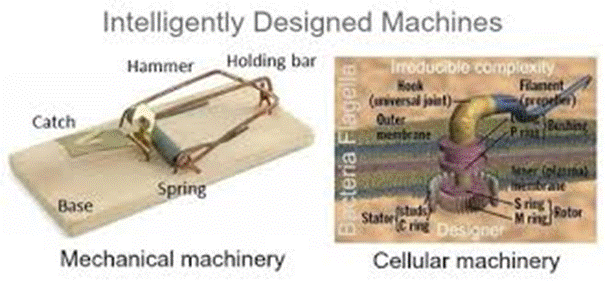
a simple example of irreducible complexity, is the humble mousetrap. It
contains five interdependent parts which allow it to catch mice: the wooden
platform, the spring, the hammer (the bar which crushes the mouse against the
wooden base), the holding bar, and a catch. Each of these components is
absolutely essential for the function of the mousetrap. For instance, if you
remove the catch, you cannot set the trap, and it will never catch mice, no
matter how long they may dance over the contraption. Remove the spring, and
the hammer will flop uselessly back and forth-certainly not much of a threat
to the little rodents. Of course, removal of the holding bar will ensure that
the trap never catches anything because there will again be no way to arm the
system.”
There
are many examples of irreducible complexity in nature. For example, including
the flagellum motor in cells and blood clotting in humans. The enormous
complexity in blood clotting: “As
seen just by eye, clotting seems like a simple process. A small cut or scrape
will bleed for a while and then slow down and stop as the visible blood
congeals. However, studies over the past fifty years have shown that the
visible simplicity is undergirded by a system of remarkable complexity.
(Halkier 1992) In all, there are over a score of separate protein parts
involved in the vertebrate clotting system. The
concerted action of the components results in the formation of a weblike
structure at the site of the cut, which traps red blood cells and stops
bleeding. Most of the components of the clotting cascade are involved not in
the structure of the clot itself, but in the control of the timing and
placement of the clot. After all, it would not do to have clots forming at
inappropriate times and places. A clot that formed in the wrong place, such
as in the heart or brain, could lead to a heart attack or stroke. Yet a clot
that formed even in the right place, but too slowly, would do little good. The
insoluble web-like fibers of the clot material itself are formed of a protein
called fibrin. However, an insoluble web would gum up blood flow before a cut
or scrape happens, so fibrin exists in the bloodstream initially as a
soluble, inactive form called fibrinogen. When the closed circulatory system
is breached, fibrinogen is activated by having a piece cut off from one end
of two of the three proteins which comprise it. This exposes sticky sites on
the protein, which allows them to aggregate. Because of the shape of the
fibrin, the molecules aggregate into long fibers that form the meshwork of
the clot. Eventually,
when healing is completed, the clot is removed by an enzyme called plasmin.
The enzyme which converts fibrinogen to fibrin is called thrombin. Yet the
action of thrombin itself has to be carefully regulated. If it were not, then
thrombin would quickly convert fibrinogen to fibrin, causing massive blood
clots and rapid death. It turns out that thrombin exists in an inactive form
called prothrombin, which has to be activated by another component called
Stuart factor. But by the same reasoning the activity of Stuart factor has to
be controlled too, and it is activated by yet another component. Ultimately
the component that usually begins the cascade is tissue factor, which occurs
on cells that normally do not come in contact with the circulatory system. However,
when a cut occurs, blood is exposed to tissue factor,
which initiates the clotting cascade. Thus in the
clotting cascade, one component acts on another, which acts on the next, and
so forth. I argued the cascade is irreducibly complex because, if a component
is removed, the pathway is either immediately turned on or permanently turned
off. It would not do, I wrote, to postulate that the pathway started from one
end, fibrinogen, and added components, since fibrinogen itself does no good.
Nor is it plausible to start even with something like fibrinogen and a
nonspecific enzyme that might cleave it, since the clotting would not be
regulated and would be much more likely to do harm than good.” The
point is that blood clotting is nearly mind-bogglingly complex. And to remove
even one component in its complexity makes it an unusable system. It takes a
lot of creative writing to imagine a way in which blood clotting could
develop in a naturalistic world, to the point that it’s unreasonable. In
short, the many instances of irreducible complexity we find in nature are
proof that evolution did not produce all living things.
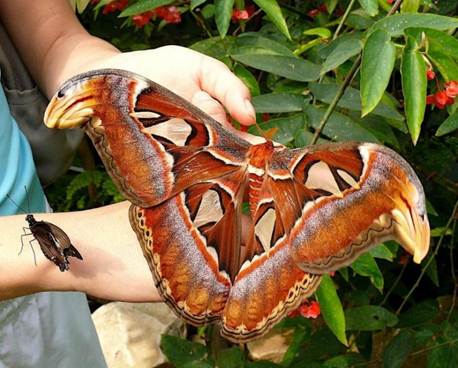
Atlas Moth
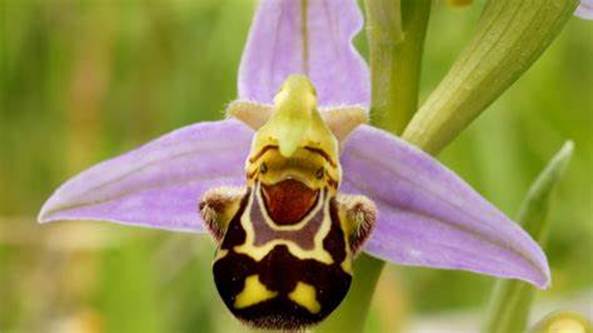
Bee Orchid
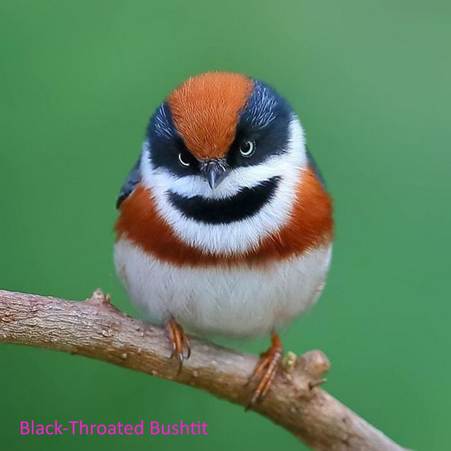
Black Throated
Bushtit
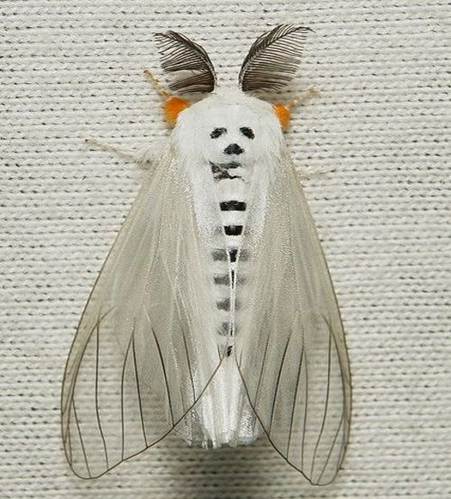
Clearwig Tussock Moth
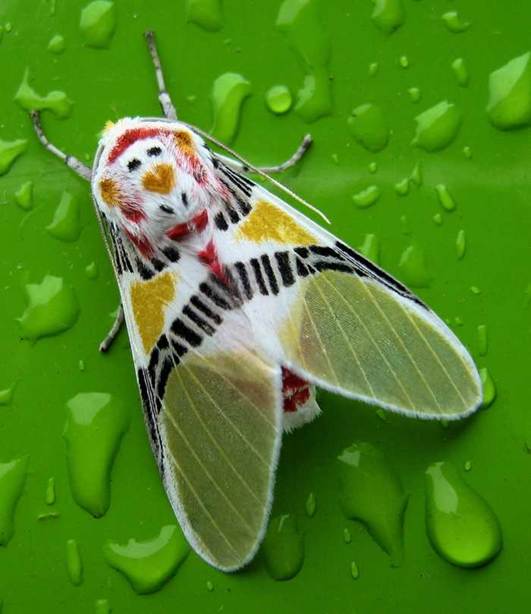
Clown face moth
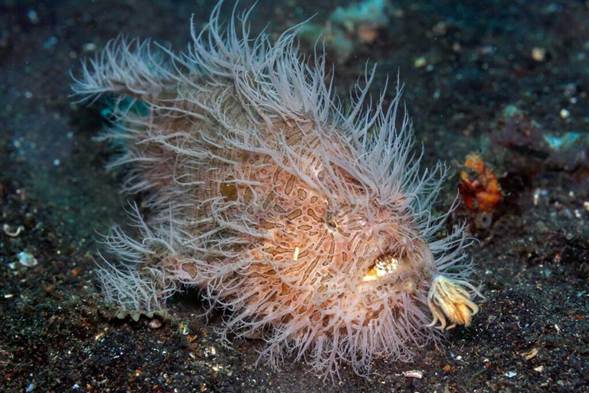
Hairy frogfish
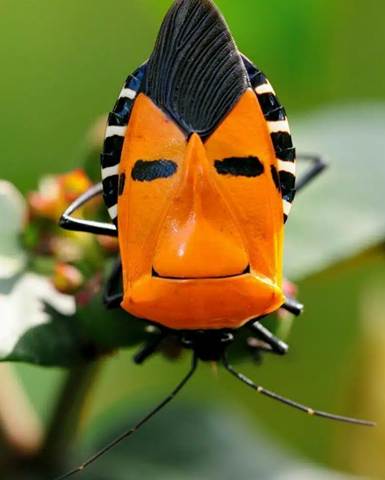
Man faced stink bug
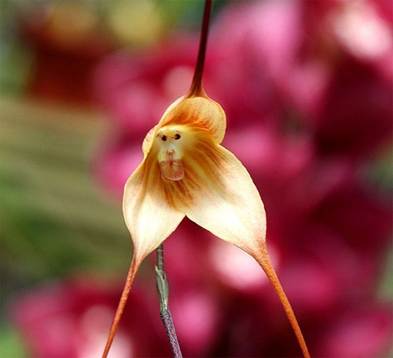
Monkey face orchid
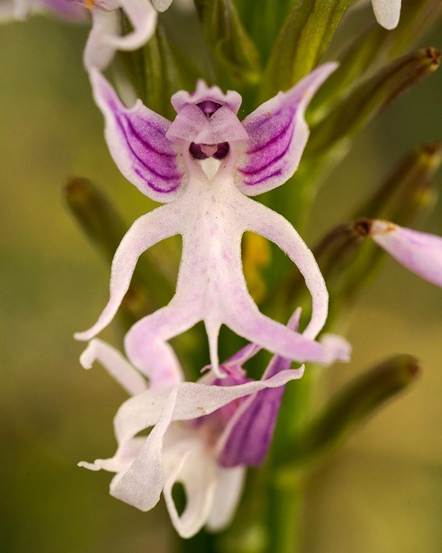
Naked man orchid
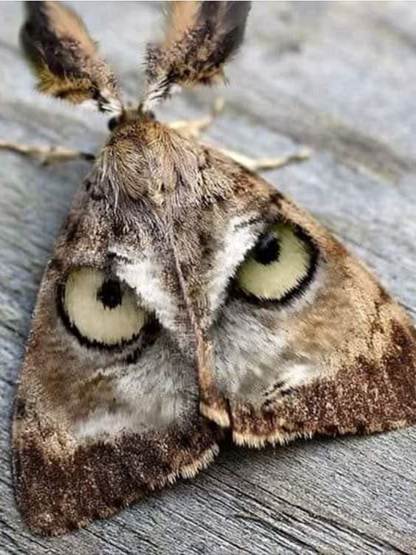
Owl moth
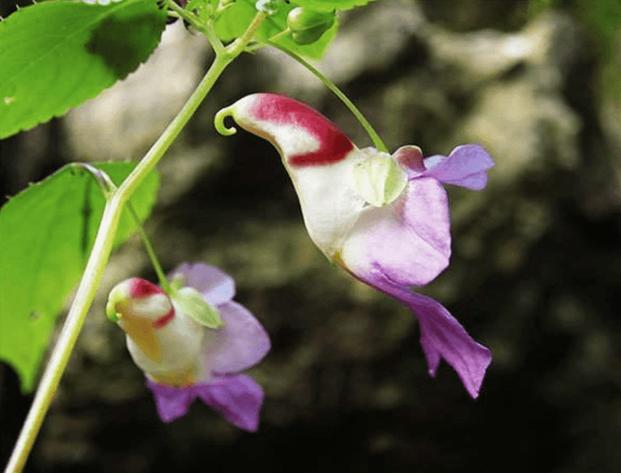
Parrot flower
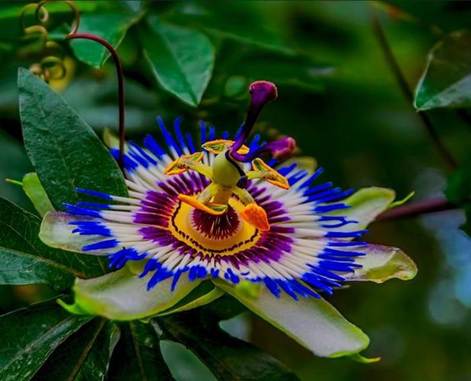
Passionflower
Pyramid monkey orchid
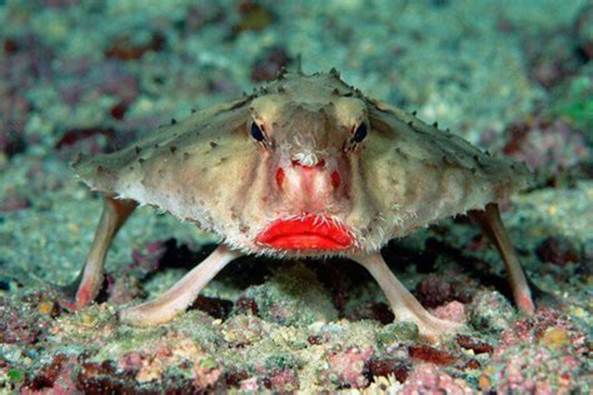
Red lipped batfish
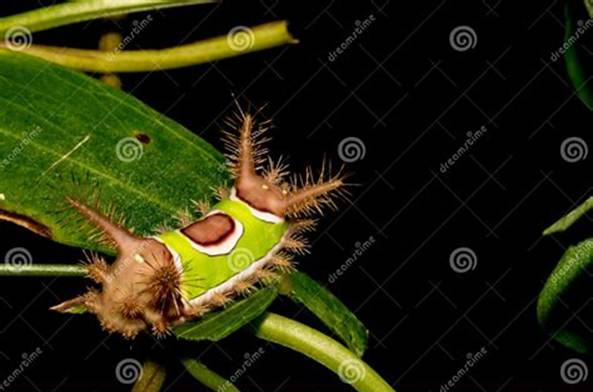
Saddleback
caterpillar
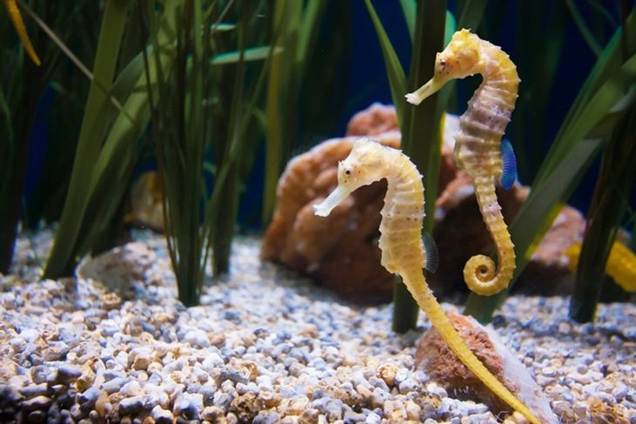
Seahorse
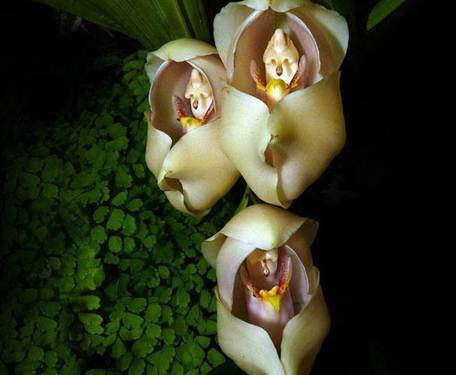
Swaddled babies
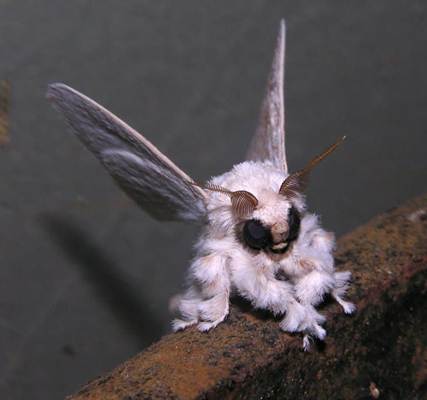
Venezuelan poodle
moth
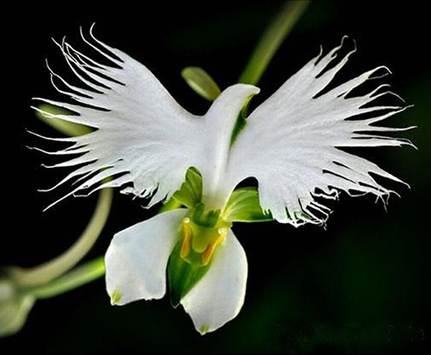
White egret orchid
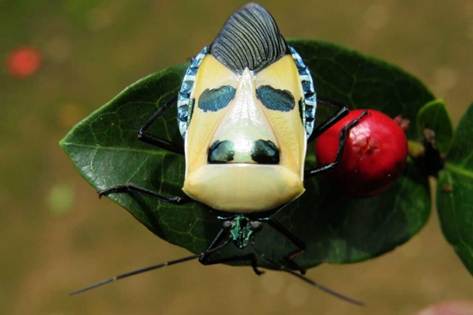
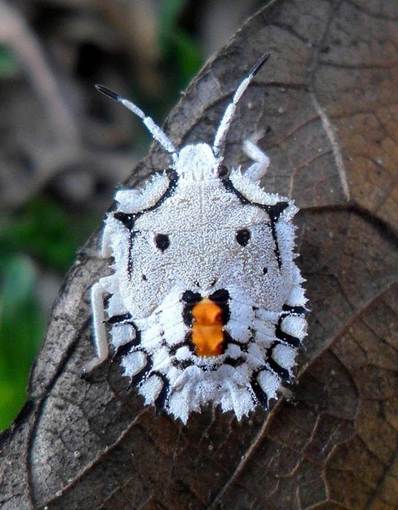
White stink bug |